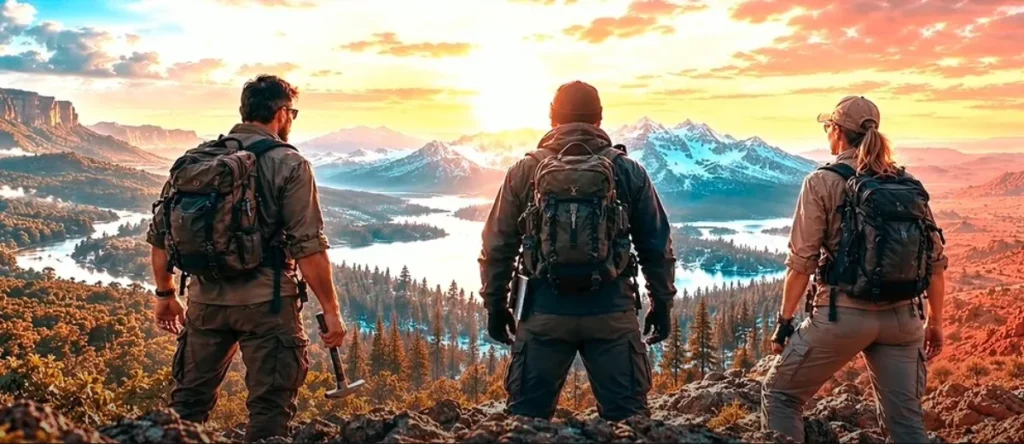
The initiative, which officially debuts at PDAC 2027 in Toronto, honors emblematic figures in mining, highlighting the value of preserving memory and geological data.
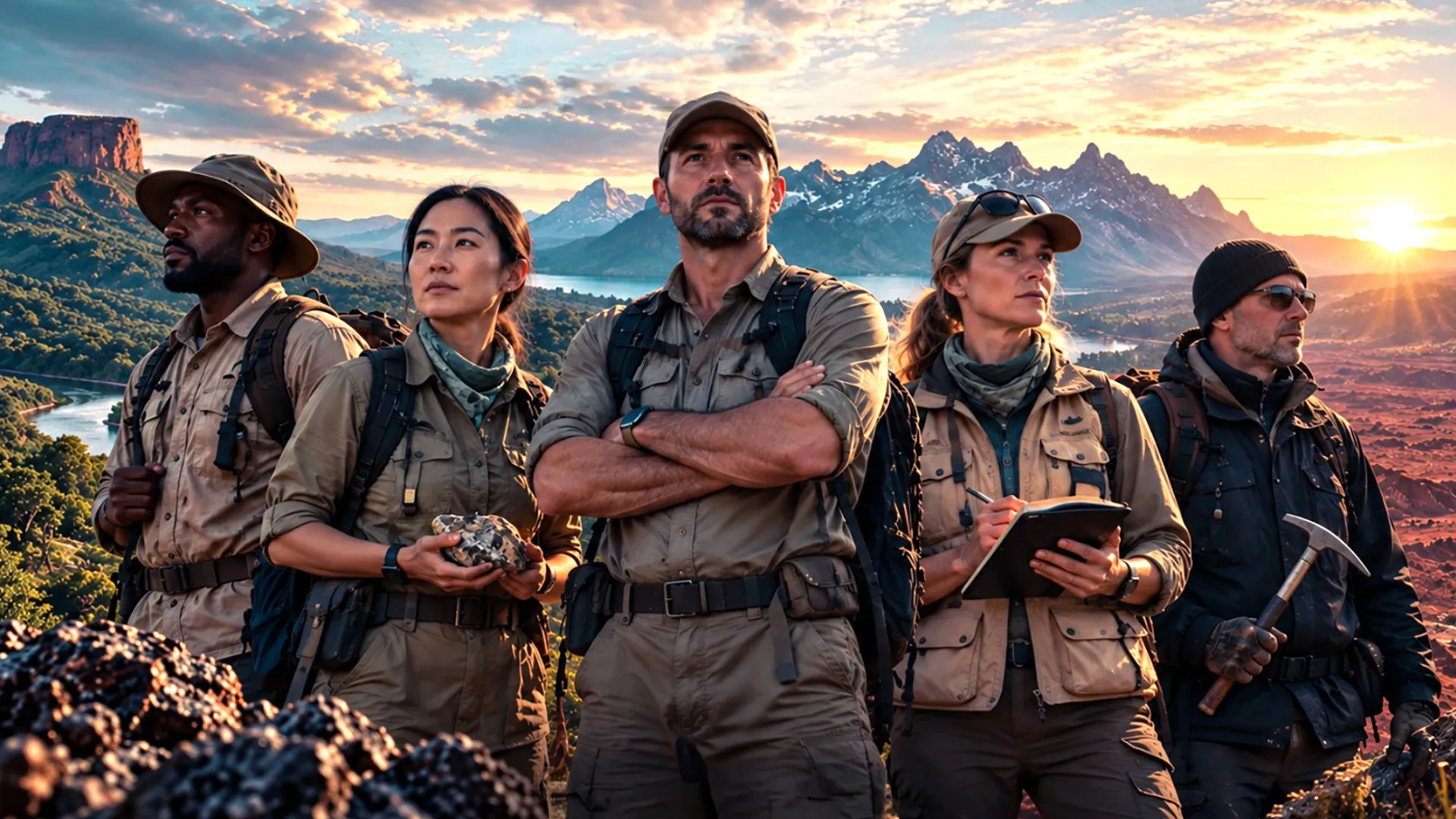
Take from the “Legends of Geology” teaser. (Photo: Reproduction / Core Case).
Long before a deposit is transformed into an operating mine, there were professionals willing to decipher rocks across continents and generations. It is from this premise that Core Case launches the teaser for the “LEGENDS OF GEOLOGY” campaign, an initiative dedicated to honoring the geologists whose discoveries and research shaped geological understanding and boosted the mineral industry.
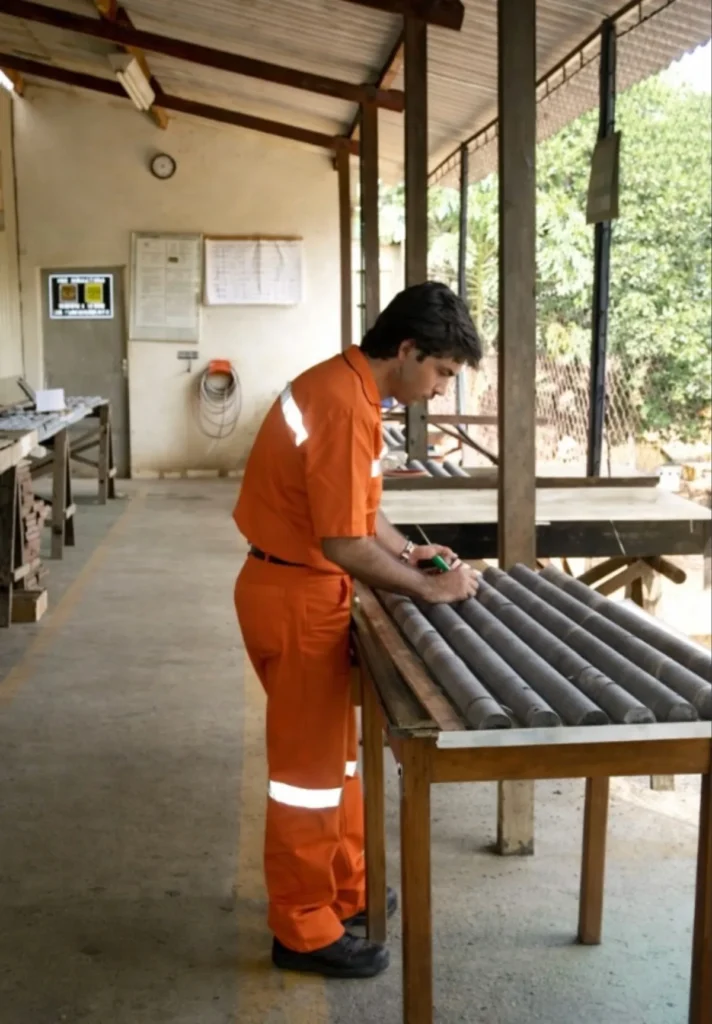
Take from the “Legends of Geology” teaser. (Photo: Reproduction / Core Case).
With an official launch scheduled for March 2027 during PDAC in Canada, the project will pay tribute to prominent national and international geology professionals. The video manifesto anticipates the tone of the campaign: “Same curiosity, same passion, same purpose. Different rocks, a shared vision; different soils, the same calling. Discoveries deserve to be preserved”.
Preserving memories and legacies
Recognized in the mineral sector for the conservation and management of geological collections, Core Case assumes with this project the mission of being a guardian not only of physical samples, but also of the historical memory of geosciences.
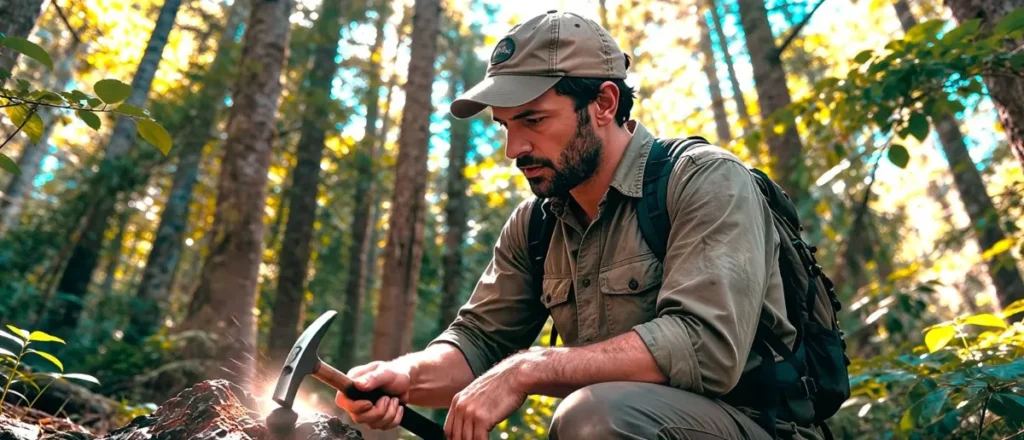
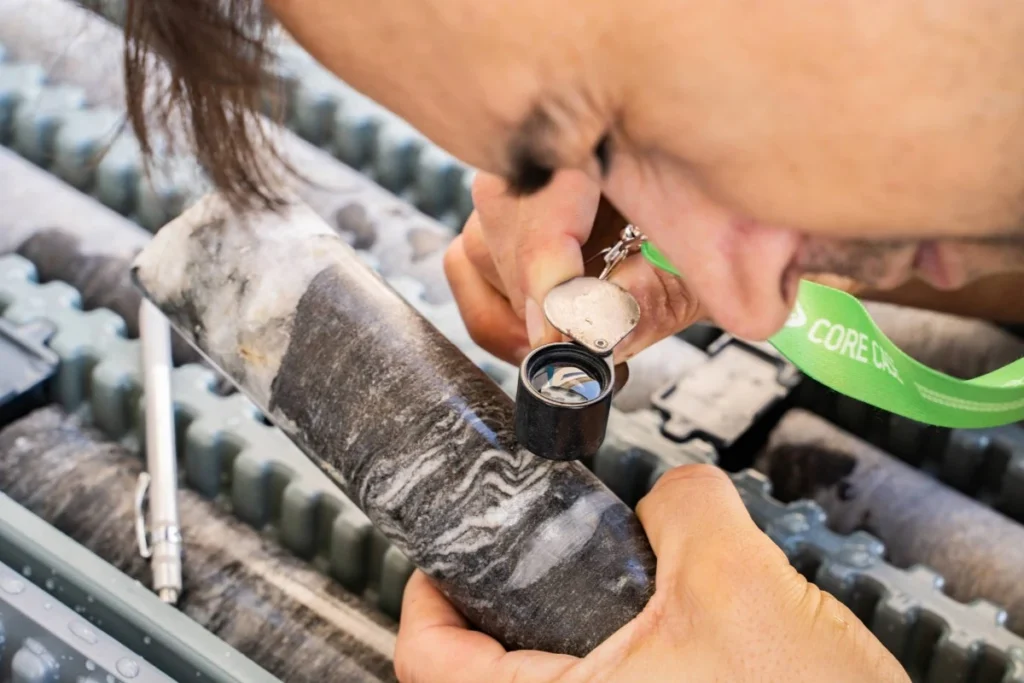
Take from the “Legends of Geology” teaser. (Photo: Reproduction / Core Case).
Throughout 2027, the campaign will bring to light the trajectories of names that have marked and continue to mark the history of mineral exploration abroad.
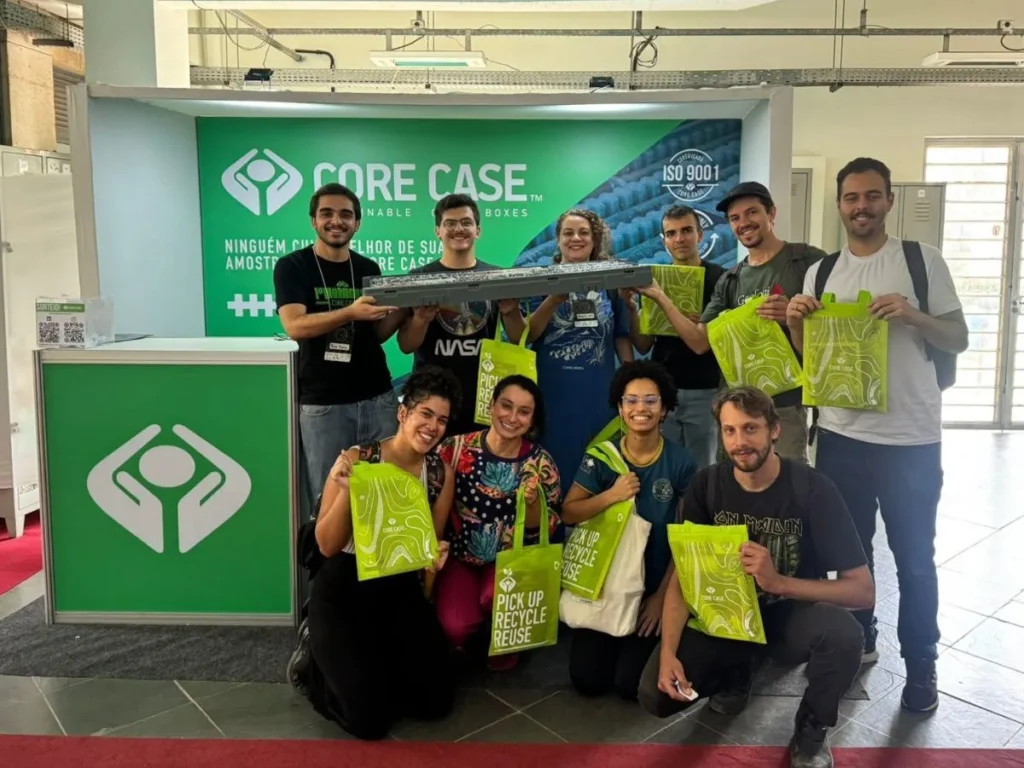
Take from the “Legends of Geology” teaser. (Photo: Reproduction / Core Case).
From theory to the field
For Core Case director and geologist, Daniel Bortowski, the motivation behind the tribute stems from respect for the path paved by professionals in the field:
Geologist and Core Case director, Daniel Bortowski, in the field (Photo: Reproduction / Core Case).
“The idea of creating Legends of Geology was born from my own career as a geologist and the admiration I have always had for the professionals who helped build geological knowledge and transform the history of mineral exploration,” he explains. “We often know about the major deposits and discoveries that marked global mining, but we know little about the people, challenges, and stories behind those achievements.”
(Photo: Reproduction / Core Case).
The initiative promises to go beyond honoring big names in geology and mining. “We want to preserve their stories, share experiences, and, above all, inspire new generations of geologists and industry professionals. We believe that recognizing those who paved the way in the past is also a way to contribute to the future of our industry,” clarifies the Core Case director.
Geology Week at the Federal University of Minas Gerais, in 2025. (Photo: Reproduction / Core Case).
“Our intention is for Legends of Geology, starting during PDAC 2027 in Canada, to become an ongoing Core Case initiative, bringing together professionals from different countries and generations around something that connects us: a passion for geology and discovery.”
The teaser video is now available on Core Case’s YouTube channel, marking the start of the countdown to the official premiere in 2027.
The connection with Core Case: by geologists, for geologists
Core Case founders, Flávio Ramos and Daniel Bortowski. (Photo: Reproduction / Core Case).
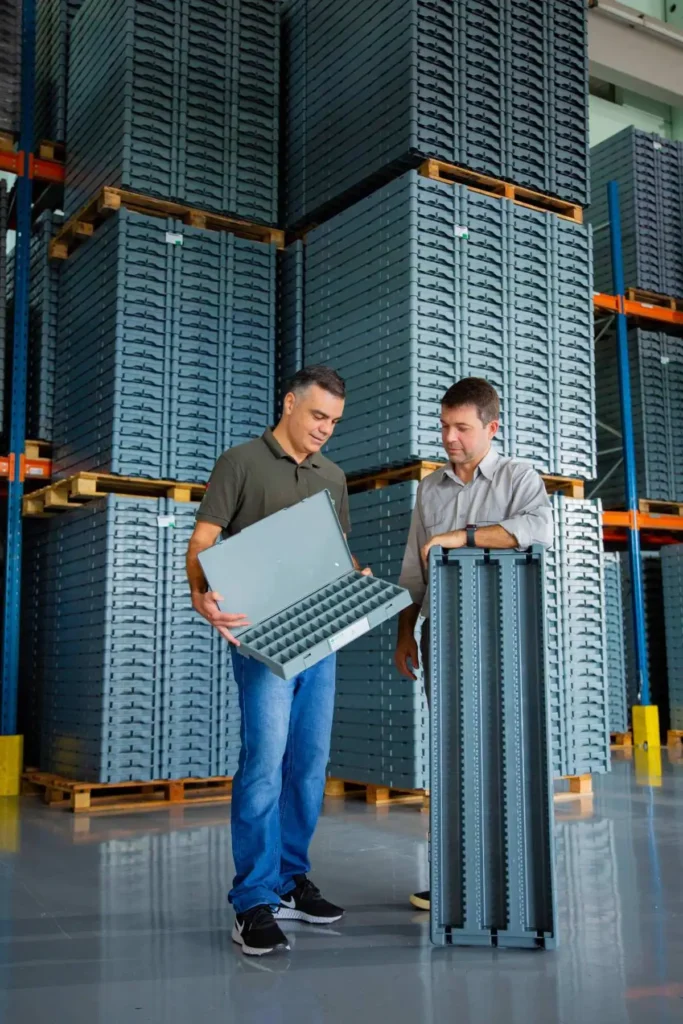
Founded in 2010, Core Case was born with the purpose of improving core sample storage and management in an ergonomic, durable, and sustainable manner. A pioneer in developing core boxes made from 100% recycled plastic and field-to-warehouse traceability technologies (Smart Case), the company has established itself as a global benchmark in the sector, reaching nearly 4 million units sold across more than 15 countries. With operations in Brazil and Canada, the company’s work reflects its core pillar: a vision built “by geologists, for geologists,” dedicated to protecting data and the heritage of mineral research.
The evolution from “Back to the Core” to the tribute to Legends
Take from the “Back To The Core” campaign. (Photo: Reproduction / Core Case).
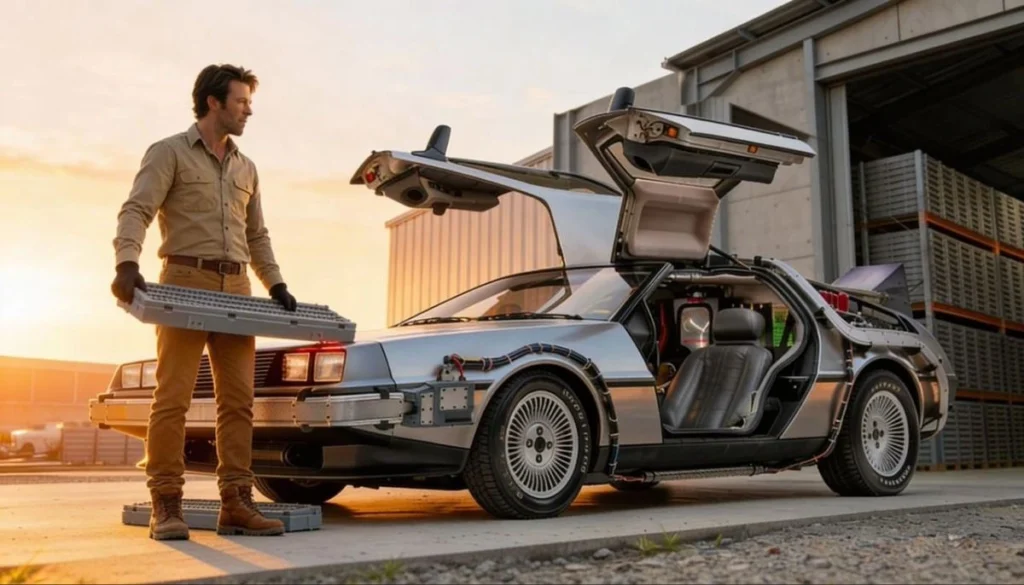
LEGENDS OF GEOLOGY succeeds one of Core Case’s significant campaign milestones: “BACK TO THE CORE”, launched in 2026 at PDAC. The initiative combined nostalgia and technology by using the iconic DeLorean DMC-12 car as a symbol, referencing the return focused on the preservation and excellence of geological core samples.
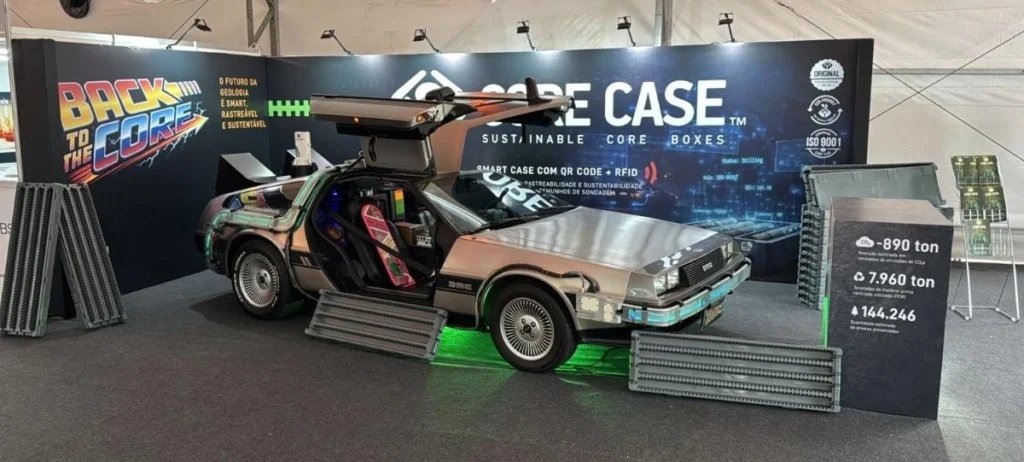
Photo of one of Core Case’s booths at Simexmin 2026, featuring the DeLorean from the movie “Back to the Future”. (Photo: Reproduction / Core Case).
The campaign resonated by bringing a real replica of the DeLorean to the halls of PDAC 2026 in Toronto (CA), and to the booth at Simexmin 2026 in Ouro Preto (BR). Now, Core Case evolves its narrative from technological impact to a tribute centered on people and the human heritage that builds global mining.
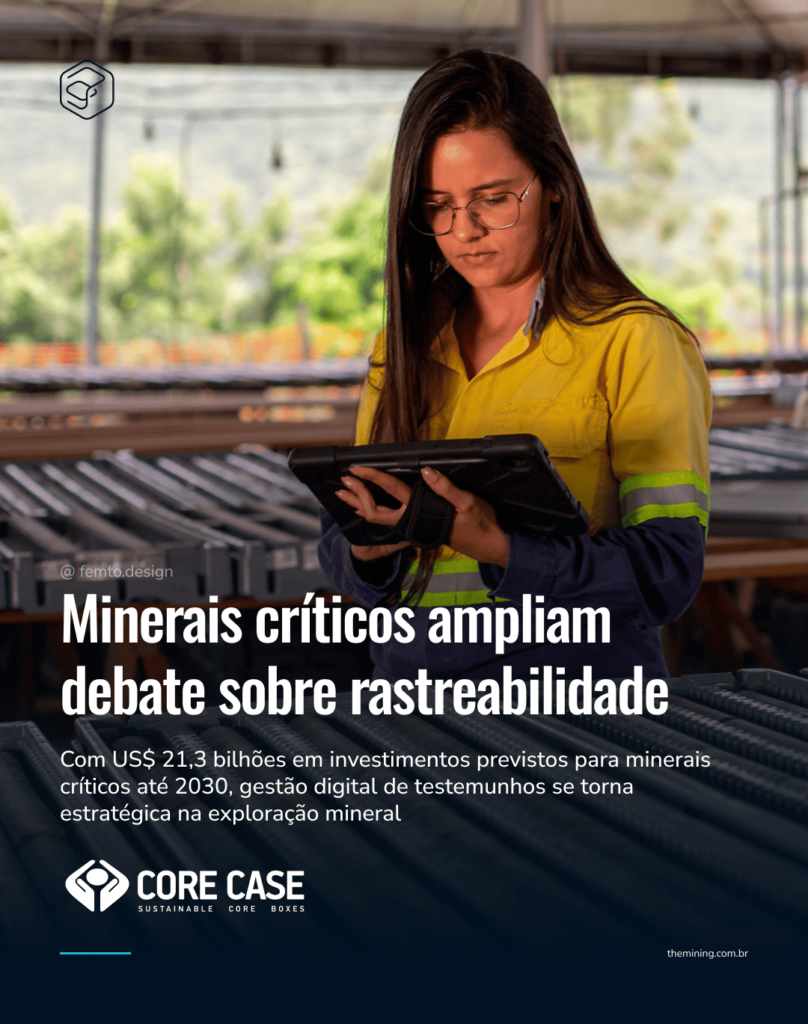
With US$21.3 billion in investments planned through 2030 and a new national policy for the sector, Brazil is stepping up the race for lithium, copper, nickel, graphite, niobium and rare earths. But turning geological potential into a mining project requires something less visible: preserving the identity, integrity and traceability of the information produced by drilling. That is where sample control technologies, such as Smart Case, are gaining ground in mineral exploration.
In September 2026, when Brazil established its National Policy on Critical and Strategic Minerals, a word rarely associated with the traditional image of mining appeared several times in the new framework: traceability.
Law 15,506 calls for the creation of a system capable of tracking the critical minerals chain, recording transactions and the agents involved, and keeping auditable information on origin, composition and destination. Identification mechanisms must be secure, verifiable and technologically capable of preserving data integrity. Regulations have yet to define how this will work in practice.
The law looks at the mineral’s production chain. However, long before a ton of lithium, copper or rare earth concentrate needs to be traced, there is another object whose identity must be preserved: the sample that proves these minerals exist in a given area.
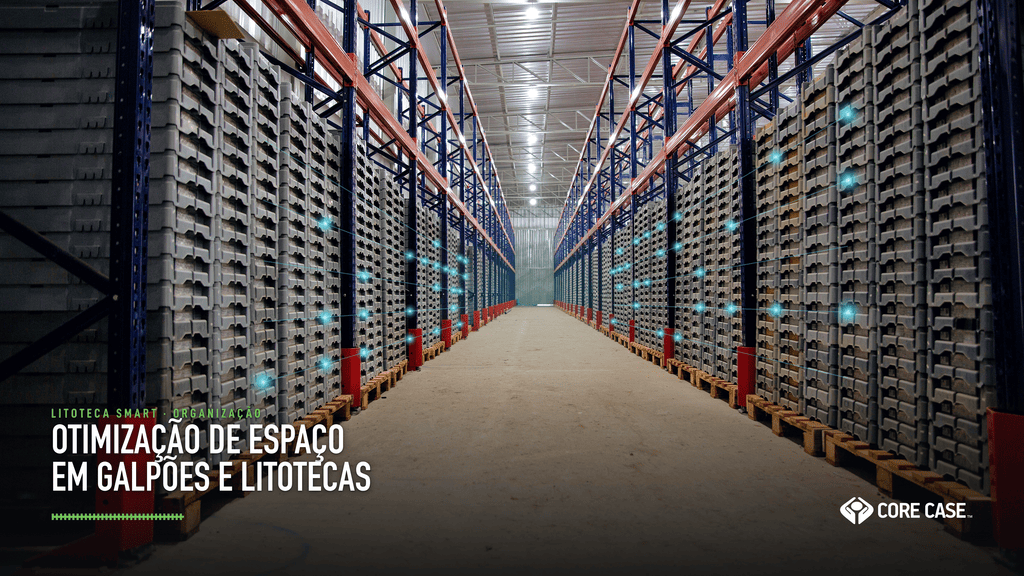
At this stage, new discussions are emerging around the modernization of core sheds, which are becoming essential to the technological development of mining.
Brazil has reasons to pay attention to the topic. The Brazilian Mining Institute (IBRAM) estimates US$76.9 billion in investments in the sector between 2026 and 2030. Of that total, US$21.3 billion is tied to the group IBRAM classifies as critical minerals, including copper, nickel, rare earths, graphite, lithium, niobium and zinc. Copper projects alone account for US$8.6 billion; nickel, US$4.7 billion; rare earths, US$2.4 billion; and lithium, about US$1.2 billion.
This interest is backed by a significant mineral base. USGS data show that Brazil accounted for approximately 93% of global niobium production in 2024, was the sixth-largest lithium producer, and ranked among the leading producers of graphite and nickel.
None of these positions diminishes the importance of drilling, the essential procedure for investigating the subsurface through the extraction and analysis of samples that identify and qualify mineral deposits.
The critical mineral starts as information
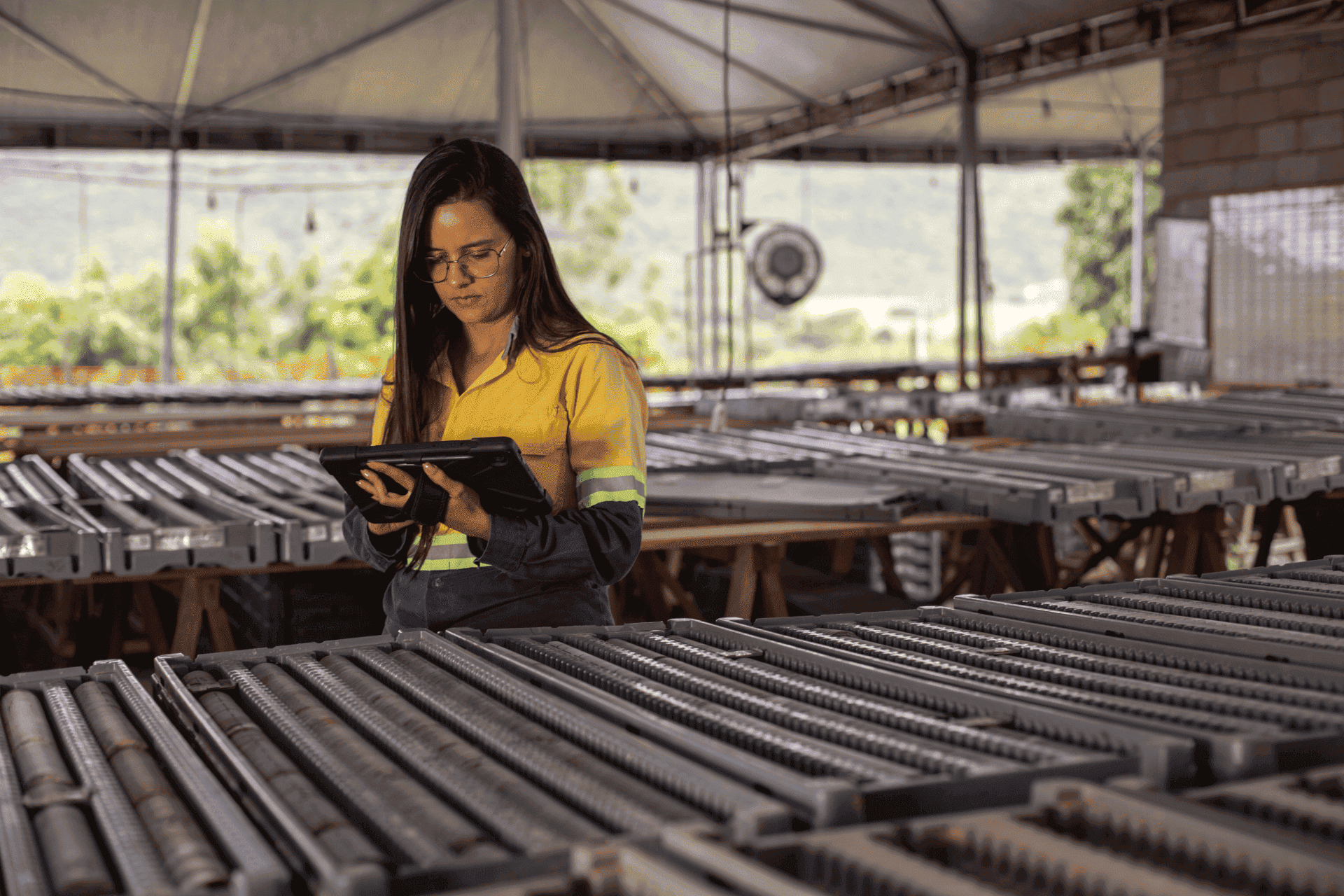
In mineral exploration, a diamond drill cuts through rock and recovers continuous cylinders: the drill cores. They allow the geologist to observe lithology, alteration, structures, mineralization and other features that, combined with laboratory analyses, feed geological models and future resource estimates.
The economic result may only appear years later. The information starts in that cylinder of rock.
That is why the problem is not just pulling a sample out of the ground. It is preserving the link between which rock was taken, from which hole, at what depth, how it was handled, which part went for analysis and which part remained in storage.
The main international mineral reporting systems address this issue explicitly. The JORC Code includes among its criteria sample security, audits and reviews of sampling techniques, and mechanisms to prevent transcription or keying errors from compromising the database used in resource estimation.
In the Canadian system, NI 43-101F1 sets aside specific items for sample preparation, analysis and security, as well as data verification. The Canadian Institute of Mining’s best practice guidelines go further and recommend that the chain of custody of samples be established and recorded.
This changes the way we look at a core library. It is not simply a warehouse of boxes holding old rocks. It is a physical archive of a project’s geology, one that is also being digitized.
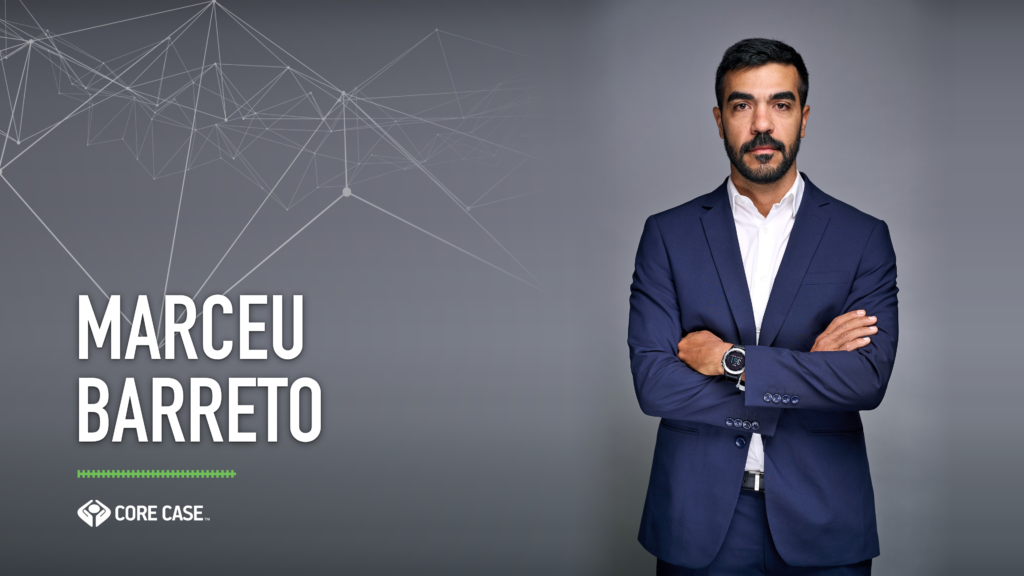
“Considering that the main asset of these exploration projects is drilling, and considering that investors want some degree of reliability and certainty that there is, in fact, ore there before they commit capital, we start from the premise that your set of drill holes and cores is the greatest asset of these projects. And if we are saying the core is all that, why do we sometimes neglect the way we store it? Smart Case is an evolution of the box, and that is where we come in, precisely to address this pain point: the lack of reliability in how the collection is stored, where the cores are and how to prove the steps that were taken. It is a core logistics management software — not a geological database — where we store and manage when the hole was drilled, where it was delivered, the backlog, the team’s activities and final storage. A project where everything is well stored, with digital and reliable information, will add value when seeking investment or selling the asset. Without this management, the investor cannot audit, which greatly increases the project’s risk or may even require re-drilling at an extremely high cost.” – Marcéu Barreto, geologist, MBA in Project Management and Technology Projects Manager at Core Case, explains the role of this technological transformation and the value of the geological collection for the market.
When each box gets an identity
Core Case started in 2010 manufacturing core boxes for drill samples. The most technologically interesting step in its trajectory came when the container stopped being treated merely as a storage object and began to carry a digital identity as well.
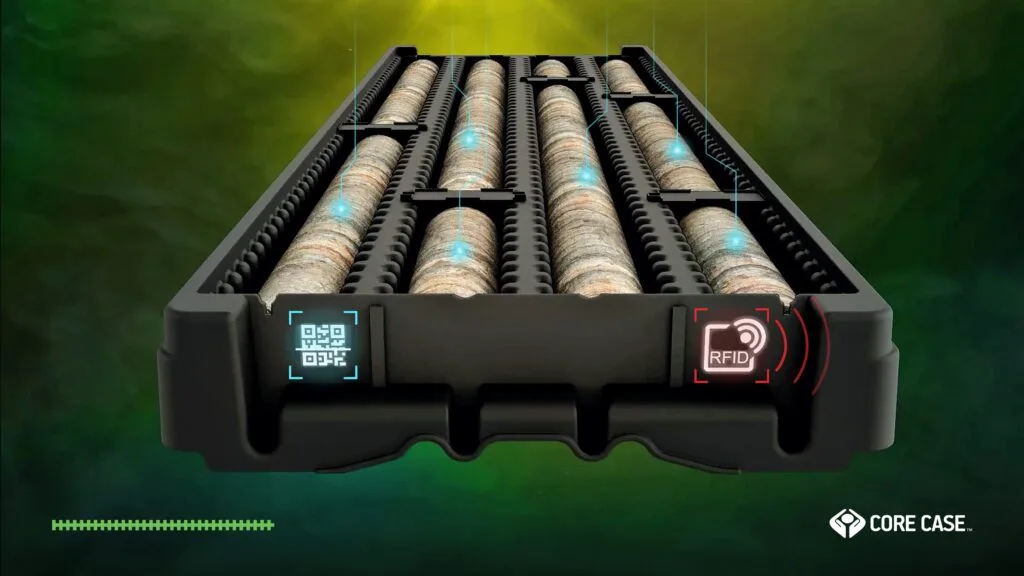
With Smart Case, according to the manufacturer, each box can leave the factory with a unique QR Code and RFID tag. These identifiers are linked to Manager, Core Case’s software that records information on drill holes, cores, inventory, consumption, movements and core shed activities. The system runs in the cloud and can be accessed via web and mobile app.
The difference seems small until you picture an exploration campaign with tens of thousands of meters drilled and thousands of boxes moved between the drill pad, the logging shed, the cutting/sampling area, storage and the historical archive.
In the conventional process, part of this information may depend on handwritten numbers, labels, spreadsheets and successive transcriptions. Every human intervention adds a chance of error: a swapped box, a mistyped ID, an interval linked to the wrong record, or simply a sample that takes a long time to locate years later.
The logic behind Smart Case is to create a persistent association between the physical container and its electronic record.
The QR Code makes it possible to access the box’s individual identity visually. RFID adds radio-frequency identification. Manager organizes the information layer linked to these identifiers. Rather than thinking of it simply as “a box with a chip”, then, the relevant concept is the connection between object, identity and database.
The solution aligns with a broader trend in mining: digitizing stages that remained analog even after the adoption of 3D modeling, remote sensing, geological databases and increasingly sophisticated software.
Technology does not turn bad data into good data
This advance calls for an important distinction.
Core Case states that Smart Case strengthens QA/QC practices and supports requirements related to NI 43-101 and JORC. “Supports” is the right verb.
None of these reporting systems requires RFID, QR Codes or any particular box. Nor do they certify validation mechanisms as “JORC compliant” or “NI 43-101 compliant”.
Electronic identification does not fix poorly planned drilling. It does not make an unrepresentative sample representative. It does not automatically detect a core recovery problem, it does not replace standards, blanks and duplicates in the lab, and it does not interpret the geology.
What it can do is strengthen another component of the process: documenting identity and movement, reducing certain manual transcriptions, and making the connection between a physical sample and its associated information more structured.
This boundary matters because it allows the technology to be assessed for what it actually delivers.
CIM guidelines state that the chain of custody of samples must be established and recorded. JORC asks how sample security is ensured and how transcription errors are prevented from corrupting the data. The Canadian form requires the Qualified Person (QP) to assess the adequacy of security, preparation and verification procedures. A digital identification system can help answer part of these questions – but responsibility still lies with the technical process and the professionals who carry it out.
Why this matters even more for critical minerals
The growth of critical minerals adds scale to the challenge.
A new generation of projects is being evaluated in Brazil precisely as investors, governments and consuming industries pay closer attention to origin, security of supply, processing, environmental and social criteria, and the reliability of supply chains.
Law 15,506 reflects part of this movement. Article 44 establishes that the future Brazilian system must record transactions, allow information to be audited and use secure identification mechanisms. It also allows for technological solutions to ensure data integrity, traceability and tamper-proofing.
It would be incorrect to say that this provision applies to Smart Case. The traceability created by the law is aimed at the critical minerals production chain, while Core Case’s technology operates at an earlier stage, related to drill cores and drilling information.
The overlap reveals a broader transformation. Across different parts of mining, there is a growing demand to know what a material is, where it came from, where it has been and what information is associated with it.
For the mineral product, this becomes a regulatory and commercial requirement. In exploration, it shows up as sample security, chain of custody and data integrity. The technological logic is similar, even when the systems are different.
The box as data infrastructure
Core Case did not start as a software company. It started by manufacturing the box that holds the rock, injection-molded from recycled plastic. By adding RFID, QR Codes and a management platform, it began operating at the boundary between industrial product and information infrastructure.
The move is representative of a broader shift among mining suppliers. Equipment is no longer evaluated solely by its mechanical function and is now expected to generate, carry or organize data.
A drill rig produces performance data. Process equipment is fitted with sensors. Fleets are monitored in real time. Stockpiles, tailings dams and slopes are tracked remotely. Digitizing the core box brings the core shed into this same process.
This does not mean every operation needs to adopt RFID, or that Smart Case is the only way to organize a core library. Nor is there, in the public sources consulted, any independent study quantifying how much the system reduces errors or increases productivity in a real mining operation.
This gap prevents commercial benefits from being translated into substantiated results.
But it does not eliminate the technological question the product raises: in an industry that will invest billions of dollars in new deposits, does it still make sense to let a long-lived geological asset depend on predominantly manual identification and handling processes?
The race begins before the mine
The discussion on critical minerals usually ends with reserves, production, refining, batteries, permanent magnets and geopolitics. These are the points of greatest economic visibility.
Mining, however, begins much earlier.
It begins when a company decides where to drill. It continues when the rig recovers the rock, when the geologist logs the core, when part of it goes to the lab and when the results are incorporated into the database. It is from this sequence that the information used to determine whether there is a mineral resource capable of sustaining a venture is born. Smart Case occupies one part of this system, and its emergence is telling.
By giving a core box a digital identity, Core Case brings technology to a stage that for decades was treated essentially as physical storage. It does not make the deposit bigger, it does not improve the grade and it does not guarantee financing. It makes it possible to organize, in a different way, the relationship between the rock and the information that describes its history.
Before a critical mineral becomes a resource, a reserve, a concentrate or a strategic product, it must become reliable geological data. And in an increasingly digital mining industry, even the box where that evidence is stored is becoming part of the technology.
Article originally published by The Mining portal. Read it here.
With gold at the Brazilian Championship and 3rd place in the world rankings, the athlete sponsored by Core Case shows that results in the water are the product of a heavy training routine and discipline.
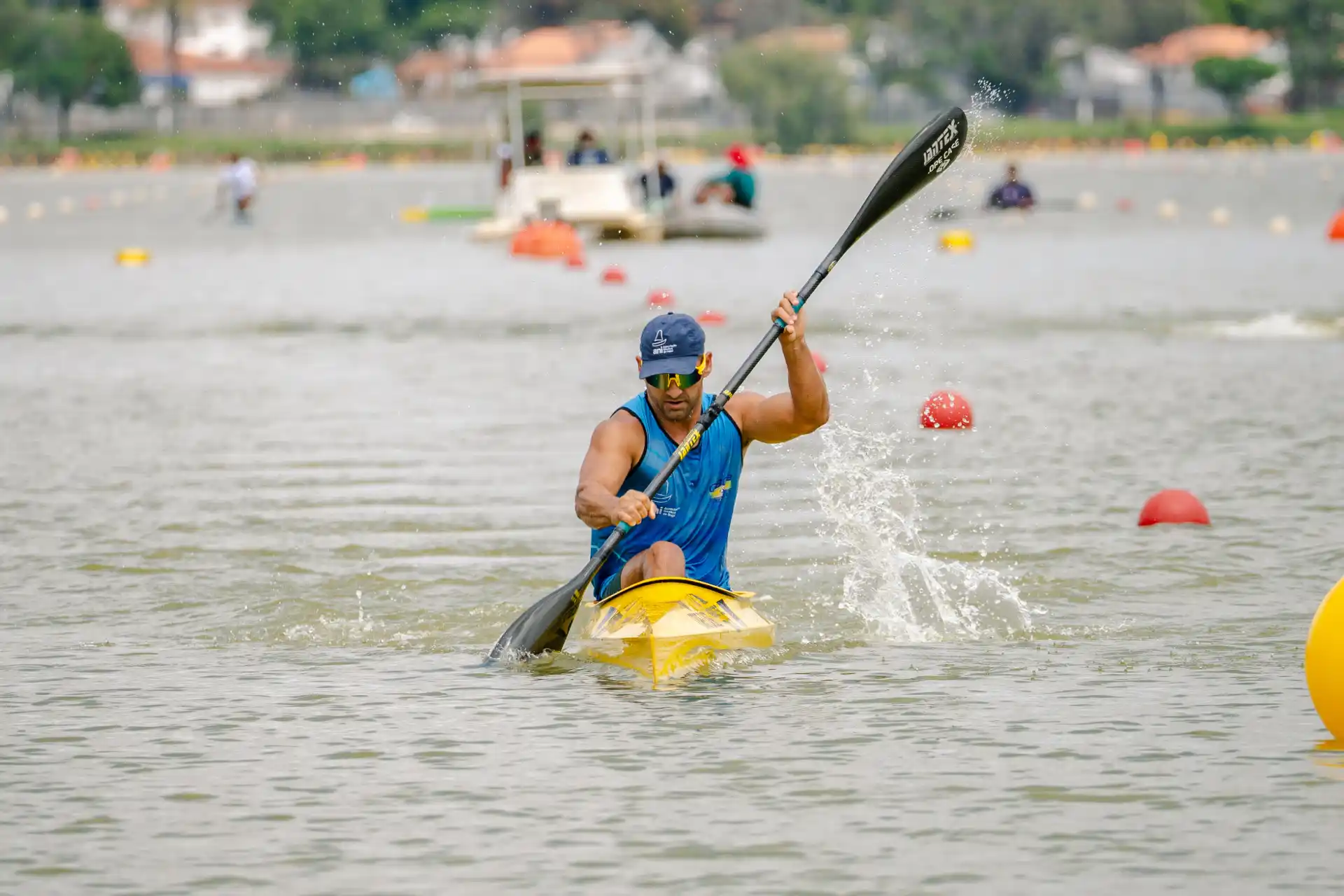
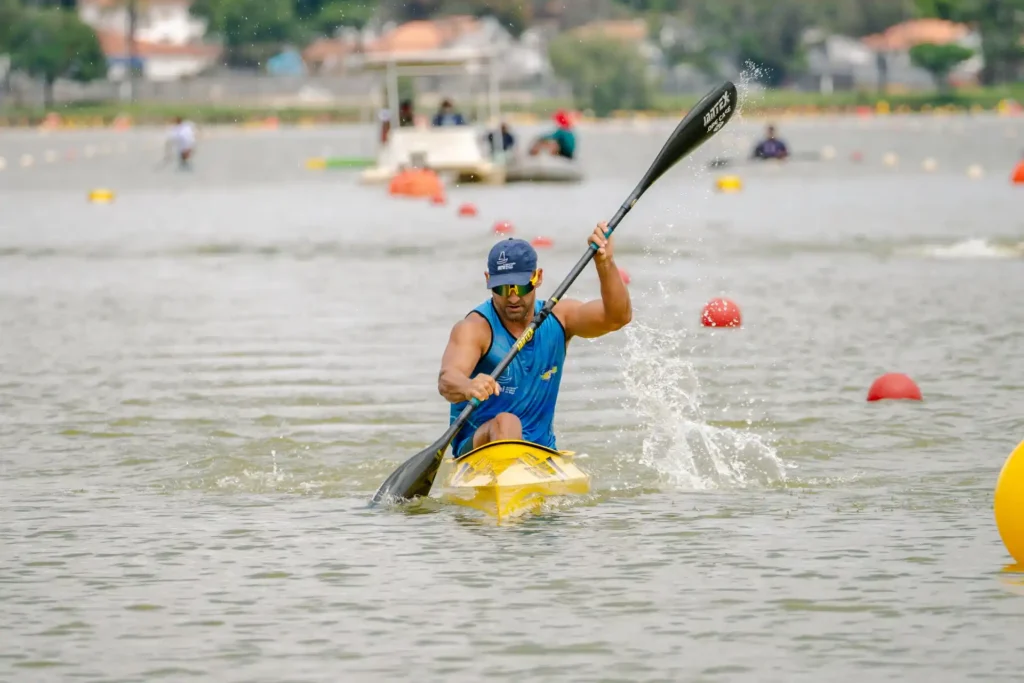
Flavio Reitz in Lagoa Santa. (Photo: Reproduction/Canoagem Brasileira).
In September, Flavio Reitz crossed the finish line of the KL2 200m category in Lagoa Santa (MG) with a time of 40s69, securing another Brazilian title for his record. But for those who only see the medal on the podium, the journey there involved a lot of hard work and dedication.
Just one week before paddling in Minas Gerais, Flavio competed at the World Championships in Poland (where he placed 4th). In the same cycle, he brought home silver from the World Cup in Montreal, Canada. This streak of results placed the Itajaí native in 3rd position in the International Canoe Federation (ICF) world rankings with 3,710 points, a decisive step in the race for a spot at the Los Angeles 2028 Paralympic Games.
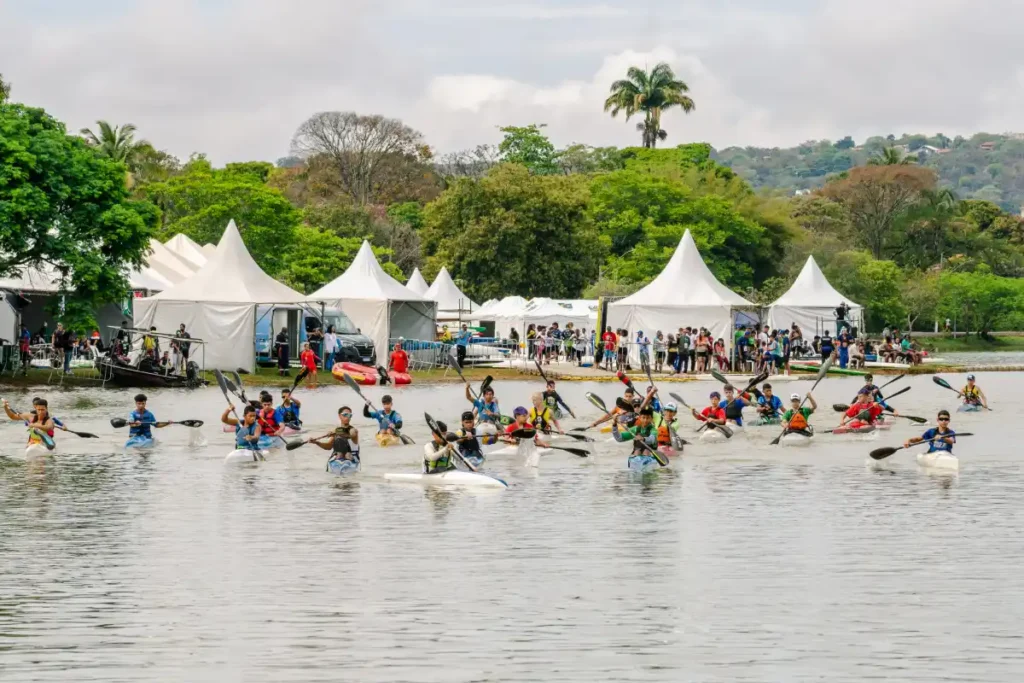
The 2026 Brazilian Sprint Canoe and Paracanoe Championship was held in Lagoa Santa (MG) between September 3 and 6, bringing together over 500 athletes from across the country. (Photo: Reproduction/Canoagem Brasileira).
The Routine Behind the 40 Seconds
Those who follow the trips with the Brazilian National Team on social media can hardly imagine the daily training load. Flavio makes a point of managing expectations:
Athletes at the 2026 Brazilian Sprint Canoe and Paracanoe Championship (Photo: Reproduction/Canoagem Brasileira).
“We end up showing a certain glamour on social media with travel, the Brazilian national team, national and international competitions, but in daily life, it’s a completely different story. It’s a daily routine for most of the year, Monday to Friday, and during some periods on Saturdays as well. We go out on the water to paddle every morning. Monday, Wednesday, and Friday afternoons are reserved for strength training in the gym. During some periods, on Tuesday afternoons, I also paddle to complement and add a bit more volume. On Thursday afternoons, there is swimming to complement cardio. The interval between workouts is meant for resting so I can perform well in the next session.”
Cool Mind Under Pressure
Reitz wrapped up his participation in the championship on a high note in the KL2 200m category, setting a time of 40s69. (Photo: Reproduction/Canoagem Brasileira).
In a 200-meter race that lasts about 40 seconds, any mistake at the start costs you the race.
“I won’t say there’s no nervousness or butterflies in the stomach, but we learn to master and turn that adrenaline and anxiety into something positive so we don’t start feeling sluggish or sleepy and miss the timing. The race is extremely fast, so any error can be critical between fighting for a medal or finishing in the back of the pack. Being alert, focused, aware of your capabilities, and executing in the race what you trained for is the key, always seeking your best performance.”
From High Jump to Paracanoeing
Flavio competed in three Paralympic Games in the high jump before switching to paracanoeing. Changing disciplines meant re-educating his body and changing his training mindset.
“After 12 years practicing track and field, specifically the high jump, making a transition like that demands resilience and persistence. Especially regarding the body parts used in the process: before, I used mainly my legs; today, I use mainly my arms and torso. So this shift required special attention.”
Flavio Reitz competed track and field for 12 years before switching to canoeing. (Photo: Reproduction/Brazilian Paralympic Committee)
“We end up realizing that canoeing has a different physical and psychological strain. The moment you are in contact with nature, you don’t control it; it controls you, and you are forced to adapt to the wind, currents, waves, and debris in the water. Unlike track and field, where the surface is always the same and at most wet from rain, in canoeing, the wind and water level end up interfering. Understanding that we are in a different environment was, I believe, the main point for us to evolve physically and mentally.”
Focus on Los Angeles 2028
Aiming for his fourth Paralympic appearance, Flavio and his coaching staff are focusing their planning on the international qualification cycle, which runs through May 2028.
Paracanoe World Cup at the Olympic course in Montreal. (Photo: Reproduction/Canoagem Brasileira).
“The 2027 competitions (World Championship, World Cups, and Pan American Games) add crucial points. The top 10 in the rankings secure the country’s slot for the Games. The goal is to meet the criteria and make the final list to represent Brazil in Los Angeles.”
Support from Core Case
To dedicate himself exclusively to his training routine and top-tier equipment, Flavio highlights the importance of sponsorship from brands like Core Case.
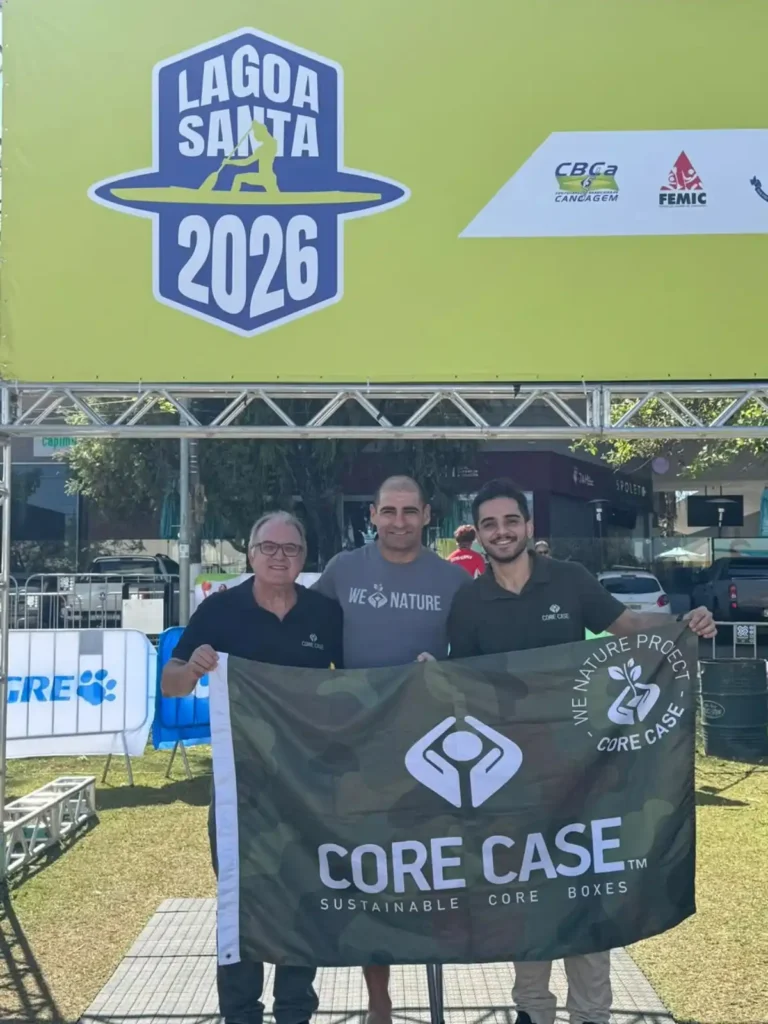
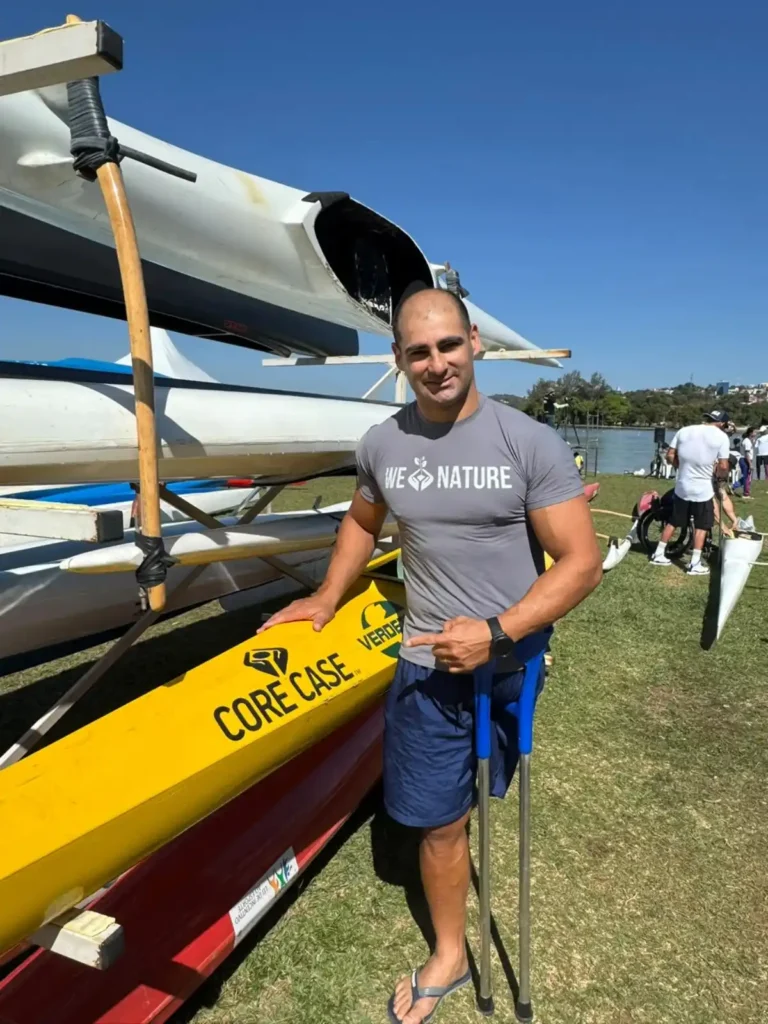
Flavio Reitz with Edson Onofri and Pedro Onofri in Lagoa Santa. (Photo: Reproduction/Core Case).
“Being supported by a company of Core Case’s stature means, first and foremost, recognition of my journey, overcoming my amputation, and being a high-performance athlete capable of representing the country in major competitions. This kind of support from private companies—companies that also value the sporting and social aspects—is of paramount importance. It gives us a foundation so we can focus solely on training; the background, the structure for nutrition, supplementation, uniforms, and equipment are all backed by companies like Core Case”.
Behind the scenes at the tournament in Lagoa Santa. (Photo: Reproduction/Core Case).
The partnership reinforces Core Case’s commitment to promoting transformative initiatives that connect innovation and perseverance.
Core Shock is Core Case’s exclusive system for interval separation in drill core samples. Developed with durable materials, it ensures quick, secure, and intuitive placement—eliminating the use of wooden blocks and improvised solutions once and for all.
Traditional wooden blocks used as depth markers present a critical issue: over time, they can rot, wear down, and lose legibility. This deterioration compromises the reliability of records and puts the accuracy of drilling data at risk. Core Shock addresses this weakness by providing separators made from the same resilient material as our core boxes, ensuring durability and data security under any field condition.
Each separator can be marked manually with permanent markers such as our Core Marker or directly printed using Core Case Tech.
These features, designed by Core Case, allow data to be recorded clearly and permanently, ensuring standardization, traceability, and preventing the loss of essential information over time.
Available in versions tailored to every type of core box, Core Shock maintains data stability and organization throughout the workflow, providing greater reliability for geologists and field teams.
Core Shock is efficiency applied to drilling, preserving information, standardizing operations, and achieving safer results.