Core Case, Autor em Core Case - Page 4 of 4

Core Case

Práticas sustentáveis na mineração

Sustainable Practices in the Mining Industry

The mining industry is important in contemporary societies, supplying the continuous demand for minerals in various branches of the market and promoting economic development. 

However, this continuous increase in demand for natural resources, coupled with population growth and consumerism of today’s society, go against the concept of sustainability. 

For this reason, the theme of sustainable practices in the mining industry is increasingly highlighted, regarding the importance of developing solutions that can be adopted by the industry, generating less environmental and social impact and ensuring the availability of resources for future generations. 

Read this text to the end to learn more about this topic!

UNO Sustainable Development Goals

In the fall of 2015, the world’s heads of state adopted the UN Agenda 2030 with the 17 sustainable development goals. The overall goals of the Agenda are as follows:

  • Eradicate poverty and hunger
  • Ensure human rights for all, achieve social and gender equality
  • Ensure the protection of the planet and its natural resources

The sustainable development goals balance the three dimensions of sustainable development: economic, social, and environmental. 

The 2030 Agenda is a positive step towards a global cooperation and can contribute to a greater realization that require the balance of different social goals – economic sustainability is a prerequisite for social and environmental sustainability and vice versa.

One of the most prominent sectors that require the adoption of sustainable practices is the mining industry.

Mining and sustainability

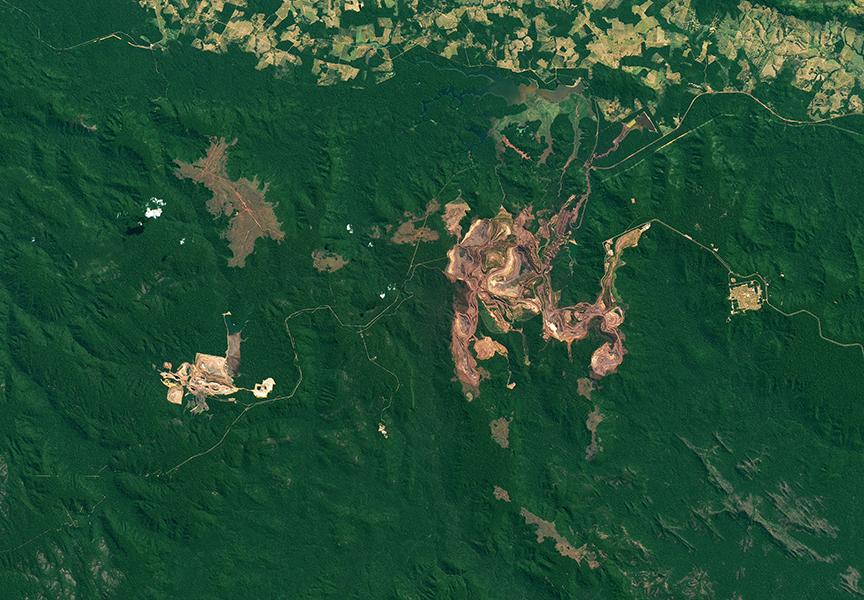
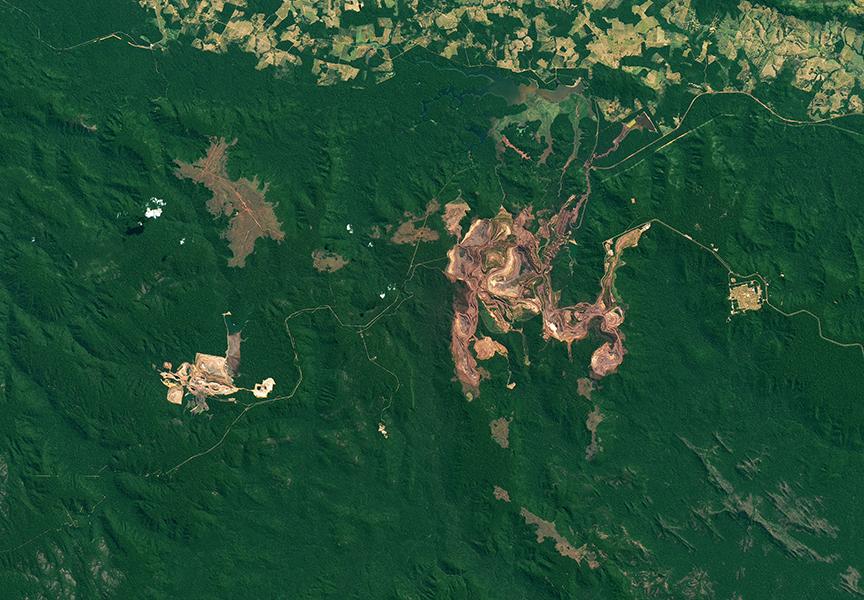
The footprint of mining operations is often visible from outer space, with large excavation areas standing out in a sea of green forest. View of Brazil’s Carajás Mines from space. (Photo: NASA) (https://www.iisd.org/sites/default/files/styles/wysiwyg_desktop/public/2021-10/carajas-brazil-mine.jpg?itok=Dg521UlB

A sustainable view of the mining industry means taking into account the people, the environment, and the economy. 

The human aspects include health, social and cultural elements. It is necessary to take into account the environmental matters such as emissions, waste management, post-extraction remediation, nature conservation, energy use, and climate. Economic aspects include social development, prosperity, competitiveness, resource management, and the circular economy. 

The mining industries affect all three dimensions of sustainability, but the use of mineral resources is indispensable for our society, including to provide raw materials for a more environmentally friendly technological and energy transformation.  

The regulation of mining activities depends mainly on national frameworks and policies, but the implementation of good practices remains problematic. 

In order to effectively shift to “sustainable mining,” governments and companies must recognize the environmental and social impacts of mining and enact laws and regulations that require community consultation throughout the mining life cycle.

How can mining become more environmentally sustainable?

  • Proper disposal and treatment of waste and tailings
  • Reducing water use and waste production
  • Alternative energy sources, such as solar or wind power
  • Battery-powered equipment
  • Use of equipment from recyclable sources 
  • Improvements in the extraction process
  • Appropriate mine closure measures
  • Environmental restoration
  • Recycling

Regarding to energy, a mining company can seek alternative energy sources, such as solar or wind power, as well as use electric-powered equipment and vehicles, reducing the emission of greenhouse gases.

Waste management plans are required to avoid soil, air and water pollution. Such plans are also in place to properly store the large volumes of waste produced in the mines.

The use of cleaner production techniques, environmental control technologies, using waste as a raw material, and process re-engineering are other ways to reduce waste production from mines.

Proper waste disposal is crucial to reducing the environmental impact of mines. Companies can invest in equipment that helps transform waste into reusable materials.

Importance of sustainable vision for mining

In addition to the importance of reducing the environmental and social impacts of mining, the industry itself can also benefit from adopting a sustainable vision for the industry.

Mining companies can find the unexpected benefit of financial gains from improved sustainability. 

While green policies may seem expensive, they actually can provide a competitive advantage to the company. Also, the ability to recycle and reduce waste may lead to an improved bottom line.

Ultimately, for mining companies to thrive in today’s political, social, economic, and environmental scenario, sustainable practices must be at the heart of operations. 

Many companies are starting to understand that their economic feasibility relies on the adoption of an environmentally and socially responsible approach at all operation levels.

Preservation is our Core business

CORE CASE is a Brazilian-Canadian company with 11 years of activities that consolidated its position in the mining market and is present in the most important companies in this industry.

Cases and accessories supplied by Core Case are produced using 100% recycled and recyclable plastic (Polypropylene – PP), have an ergonomic shape, are resistant, light, and easy to transport, besides being more durable than boxes made of wood and other materials.
If you want to know more about our services, contact us! https://corecase.com/br/contato/

Referências

https://www.ilo.org/wcmsp5/groups/public/—ed_emp/—emp_ent/—multi/documents/publication/wcms_592317.pdf

https://www.sei.org/projects-and-tools/projects/the-mining-industry-in-a-sustainable-future/

https://www.sa-green-info.co.za/portal/article/1633/how-can-mining-become-more-environmentally-sustainable

https://www.iisd.org/articles/how-advance-sustainable-mining

https://www.mining-technology.com/sponsored/the-importance-of-sustainability-in-mining-operations/

Sustainable Practices in the Mining Industry Read More »

ESG in Mining – sector significance and initiatives

ESG is a term that you probably heard not long ago, right? 

Even though it is used frequently at present, it is not such a new term. It was used for the first time in 2004, in an issue called ‘Who Cares Wins’. 

ESG topics have become stronger along the years and have been referred to more often in Brazil, in specific way, in the last 5 years. The mineral sector is one of the fields that tries to fit and be part of such culture.  

ESG acronyms are closely connected to topics and actions related to the environment, corporate governance and social welfare. 

Companies that do not comply with such principles can be seriously compromised in the future. They cannot be supported by investors, they cannot be appreciated by employees, they cannot be supported by the community they work, among other consequences.  

ESG concept enforcement in your company is essential for a correct, sustainable and lasting future. 

Shall we learn more about the topic?

What is ESG?

The term Environmental, Social and Governance (ESG) has been widely used nowadays and has become a way of rating actions that companies take concerning the environment, community they are related, employees and even with its customers and work partners.

Each one of the elements – environmental, social and governance – includes a series of criteria that can be considered, whether by investors, at the time of assessing a business, or by companies, that wish to adopt a more friendly, sustainable and responsible posture before society.

Three ESG acronym milestones include:

Environmental

Environmental criteria include using renewable energy sources by the company, deploying a waste management program, deforestation issues (if applicable) and its attitude and actions related to climate change issues. Other possible environmental issues include raw material supply and use, for instance.

Social

Social aspects are based on the way the company is related to its employees, partners and investors. Other relevant points include respect to human rights and labor laws, team diversity and labor safety.

Governance

Governance in ESG context is related to how a company is managed by its managers and officers. Governance pillar shall consider interests of every stakeholder, including officers, investors, suppliers or customers.

Why comply with ESG

According to XP Investimentos, in the last years, increasingly more investors are considering the concept of ‘responsible investors’ as a decisive factor to allocate assets and the trend is that this movement becomes standard practice in the next years. 

In investor perspective, companies that are well assessed in ESG become increasingly relevant to investment destination.

Also according to XP, responsible investments have also become gradually strong worldwide in the last two years – globally, more than US$35.3 trillion in investments are managed by institutional funds that set sustainable strategies, standing for ~36% of total assets managed worldwide.

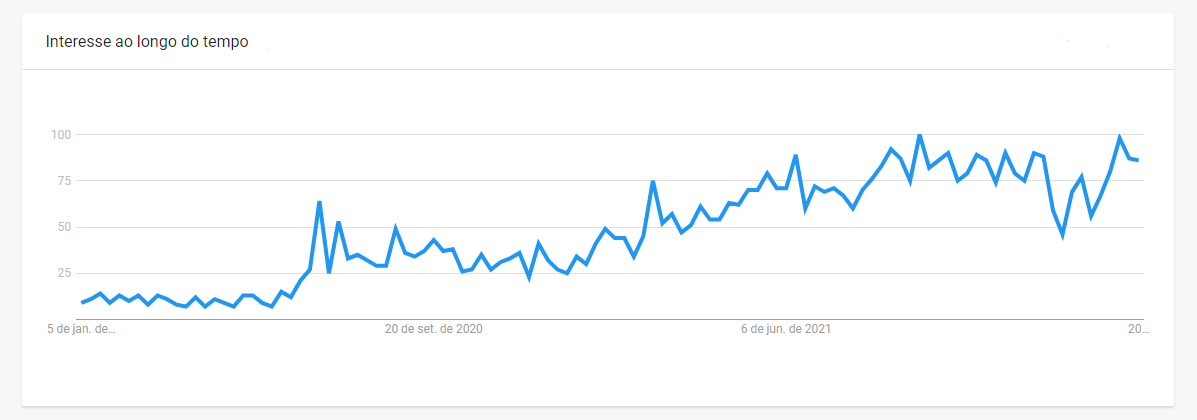
When it comes to Brazil, there is a lot to be done, however, since July 2020, it was possible to realize a change (Figure 1), a significant acceleration in the search for ESG investments.

Figure 1: Search for the term ESG on Google Brazil (Jan/2020 – Feb/2022). Source: Google Trends.

ESG in Mining

In 2019, Brazilian Mining Institute (IBRAM) and mineral sector representatives met to enable mining industry change, and discuss topics related to sustainability and the environment.

After wide debate, Brazil Mining ESG agenda was created, and the document sets forth action pillars to be adopted by mining companies, to improve their indicators.

Mining ESG agenda foresees improving indicators in 12 areas, as follows:

  1. Operating safety;
  2. Dams and tailing disposal structures; 
  3. Labor health and safety; 
  4. Environmental impact mitigation;
  5. Territory local and future development; 
  6. Relationship with communities; 
  7. Communication and reputation; 
  8. Diversity and inclusion;
  9. Innovation;
  10. Water;
  11. Power;
  12. Waste management;

According to IBRAM, Mining is the first sector that releases a wide ESG agenda, and it is a very solid evidence of the commitments the sector has with new postures the world is demanding.

Actions and results achieved so far by mining ESG agenda shall be presented by Exposibram 2022.

Mineral sector ESG initiatives

Amid the need for changes, mineral sector companies have developed projects that comply with ESG pillars.

Know some mineral sector ESG initiatives:

  • Ferbasa: since 1975, it relies on José Carvalho Foundation to care for people. Leader in ferro-alloy production, the company has six schools in four municipalities, benefiting more than 3,500 students;
  • Mineração Caraíba: it develops programs designed to small farmer productivity, fostering education and professional qualification, and access to drinkable water;
  • Yamana Gold: it sponsors Yamana Social and Environmental Development Institute, developed a composting plant in partnership with Recicla Jacobina cooperative;
  • Atlantic Nickel: it preservers 750 hectares of Mata Atlântica and keeps a plant nursery that has produced more than 56 thousand replanting seed stocks;
  • Vanádio de Maracás: it provides equipment and inputs to Active Women project, benefiting 110 women with homemade soap workshops, and free dressmaking course;

Core Case – a company that supports and complies with ESG pillars

Since its establishment, Core Case carries with it ESG pillars. The company was established with the goal of producing cases to store boring cores in 100% recycled plastic. This target has been achieve, and within 10 years, Core Case has become a reference in Brazil. Check a few figures:

Apart from sustainable cases for boring cores, Core Case performs actions that enable developing projects linked to corporate governance, environmental and social sustainability. See some company projects and initiatives:

ENVIRONMENT

– Products manufactured with 100% recycled and recyclable raw material;

– Zero deforestation;

We Nature (Clean Beach) Project;

– Eco Bus Store;

– Core Case Collection products with production low environmental impact;

– Zero Garbage Certification.

SOCIAL

– Campaigns with always present social engagement of other local institutions, for better action usage;

– Good Coats. Incentive to exchange used product for a new one with discount;

– Clean Beach Project; Introduction to local community of each region to collect garbage and environmental education.

GOVERNANCE

– Commitment with every stakeholder (suppliers, customers, community, etc.);

– Product use manuals for better user ergonomics;

– Production (ISO 9001) and operating procedure standardization;

– Transparency, legality and fiscal responsibility in every business field.

Support to projects, companies and initiatives which essence is ESG pillars.

If you want to learn more on Core Case action, contact us.

Brazilian Mining leadership in ESG practice implementation can enable significantly visibility increase and sector acceptance that, despite being relevant, it is still widely criticized by society.


References:

XP Expert. https://conteudos.xpi.com.br/esg/esg-de-a-a-z-tudo-o-que-voce-precisa-saber-sobre-o-tema/#:~:text=Tr%C3%AAs%20principais%20raz%C3%B5es%20do%20porqu%C3%AA,sido%20um%20sinal%20particularmente%20eficaz 

Forbes. https://www.forbes.com/advisor/investing/esg-investing/

IBRAM. https://portaldamineracao.com.br/o-que-e-esg-da-mineracao/

IBRAM. https://ibram.org.br/noticia/esg-pavimentar-mineracao-do-futuro/

Correio 24 Horas. https://www.correio24horas.com.br/noticia/nid/iniciativas-inspiradoras/ 

Core Case. https://corecase.com/br/ 

ESG in Mining – sector significance and initiatives Read More »

What is drilling in mining and what are the main types

In order to understand natural massives, information is required by means of drilling (samplings and assays) that enable identifying different soil/rock types and mineralogical, structural, mechanical strength and permeability characteristics.

The sampling performed shall represent the natural massive surveyed, enabling essential geological and geotechnical information achievement to develop a project.

If you are interested at this topic, keep on reading this material, let´s approach the following topics:

  1. What is Drilling in Mining
  2. Drilling Types
  3. How to choose drilling type for your project

Shall we go?

What is Drilling in mining

Drilling is executing bores in soil or rock, and sample/core, product generated in drilling, provides information to the region surveyed. It is a very significant stage, for several projects, in civil construction, hydrology, mining or geotechnics, for instance.

Drilling is required to:

  • Water catchment projects by means of artesian wells;
  • Constructions that need better region soil knowledge;
  • Studies related to oil and natural gas;
  • Ore deposit survey (greenfield or brownfield);
  • Among others.

Drilling Types

There are several drilling types and each one has a specific function. 

Main drilling types include :

  • Auger drilling;
  • SPT percussion drilling;
  • Rotary drilling;
  • Mixed drilling;
  • Geophysical drilling;

Auger drilling 

It is a survey method that uses auger as drilling tool. Auger is a soil sampler type comprised by sharp blades, that can be comprised by two pieces, in convex (shell auger) or single shape, in helical shape. 

This drilling type is widely used in sanitation and road works.

SPT percussion drilling

Also known as SPT (Standard Penetration Test) drilling, it is a soil survey method which drilling progress is performed through auger or washing, and a sampler driving is used to measure penetration strength indexes, achieve samples, assess water level and execute several assays in situ.

Strike number required to drill the rock enables soil strength assessment. This drilling type is widely used in engineering works.

Rotary drilling

It is a motomechanized set designed to drill rocky massives and achieve rocky material samples with cylindrical shape, core calls. Soils and other materials can also be sampled.

Through rotary drilling, it is possible to achieve great subsoil depths.

It is one of the most widely used methods to rate rocky massives.

Mixed drilling

Mixed drilling, as per its name, is a joint rotary drilling and SPT drilling usage; It is a method that uses percussion drilling to soil section and rotary drilling to rocky section.

Geophysical drilling

Unlike options above mentioned, geophysical drilling does not take soil or rock samples of survey area. The measurements are indirect through seismic, electrical, electromagnetic, potential (magnetic and gravimetric), radiometric, geothermal surveys and methods, etc.

This method can be used to mining, geotechnics and artesian well projects, for instance.

How to choose the best drilling method

The drilling type to be applied in your project can be set forth according to several factors, including:

  • Region soil/rock type;
  • Place infrastructure, access roads and accessibility;
  • Ore type to be surveyed; 
  • Companies operating in region of interest;
  • Bibliography available of the area where the project is to be developed;

It is worth noting that soil drilling/samples must be stored in safe and contamination-free places. In case this action is executed correctly, all work performed previously can be impacted.

The drilling provides basic data that will supply work conceptions foundation and underground and outdoor excavations, slope cut angle, work costs in different project stages, stability calculation, recovery and remedy sizing of contaminated lands, etc. Thus, they are essential for a reliable project and that is concerned with generated data quality.


Rely with Core Case, we have the optimal solution to assist in soil drilling and sample storage for your project.

REFERENCES

Drilling Manual – ABGE 2013

Soil drilling types: what is your work best methodology? Access at: https://blog.apl.eng.br/tipos-de-sondagem-de-solo-qual-a-melhor-metodologia-para-sua-obra/ Mining Drilling. Access at: https://www.geoscan.com.br/blog/sondagem-na-mineracao/


Mining drilling: Methods and Equipment. Access at: https://sagaconsultoria.com/sondagem-na-mineracao-metodos-e-equipamentos/

What is drilling in mining and what are the main types Read More »

We Nature Project collects 200 kilos of garbage at Atalaia beach

200 KILOS OF GARBAGE IN 150 METERS!

This was the result of today’s action carried out by Eco Local Brazil NGO with the help of Sustainable Itajaí Institute (INIS), Ubaitaba Rowing and Marine Preservation Base Team and Atalaia Surf School (ESA)

In a 2 hour effort, our team, made of supporters and volunteers, was able to cover a 150 meter zone of the Itajaí Bay, where approximately 200 kilos of garbage was collected.

The collected residues are plastics, bottles, and polystyrene that float easily and are deposited on the shores, arriving through the ocean and rivers. We also found fishing items, various objects, and cigarette butts left by people who visit bay.

In hard-to-reach areas we were able to collect more than 50 kilos of garbage. This was only possible with the help of Ubaitaba Rowing and Marine Preservation Base Team using the Hawaiian canoe to take out the residues.

This is one more action of We Nature Project, which is carried out by Core Case in partnership with the Eco Local Brasil NGO.

We Nature Project collects 200 kilos of garbage at Atalaia beach Read More »

Rare earth elements – what they are, applications, and world market

Also known as the gold of the 21st century, Rare Earth Elements are widely used in high-tech equipment such as catalysts, solar cells, magnets, batteries, and lasers. 

Because of this, government agencies in several countries have started to encourage the development of the production chain of this mineral commodity.

In Brazil, one of these initiatives is the National Mining Plan 2030, strategic tool to guide medium and long term policies that can contribute to the mineral sector being a foundation for the sustainable development of the Country.

Let’s learn a little more about these elements?

What are the Rare Earth Elements?

The Rare Earth Elements are a group of seventeen elements, fifteen of which belong to the lanthanide group [elements with atomic number (Z) between 57 and 71, i.e. from lanthanum – La to lutetium – Lu], which are joined by scandium (Z = 21) and yttrium (Z = 39), included because they have physical-chemical properties similar to the REEs.

 Yttrium, Lanthanum and Neodymium. Source: Rocio et al. (2012).

REE do not occur as free metals in the earth’s crust, due to their behavior

The geochemical concentrations occur as a mixture of various REEs in minerals. These elements are found as components of accessory minerals, in the form of inclusions, filling fractures in other minerals and/or as replacement elements in the mineral.

The geochemical similarity of all the REEs allows for substitution between them in the structure crystalline mineral. This results in their wide distribution in the earth’s crust and the formation of minerals composed of several of the REE. 

Despite these similarities in geochemical properties, the metallurgical, chemical, catalytic, electrical, magnetic, and optical properties vary subtly from one element to another.

REE minerals can be easily exploited, such as monazite from placer deposits. The separation of REEs from other elements is relatively easy, however their separation into individual oxides and/or metals are complex and expensive processes due to the small differences in their chemical behaviors.

Applications of Rare Earth Elements

REE are considered strategic elements because of their wide application in high-tech products. Its importance in modern industry is due to its numerous applications in metallurgy, wind and nuclear power, the oil industry, mining, and agriculture, among others. 

Check out some applications of the Rare Earth Elements:

  • NdFeB alloy – to produce super magnets, widely used in electric cars, power systems, and high-speed trains; 
  • Europium – on computer and television screens; 
  • Lutetium, cerium, scandium, lanthanum and neodymium – separation of components of Petroleum;
  • Lanthanum – solar energy;
  • Tulio – X-Ray devices.

World Rare Earth Market

Brazil was one of the largest producers of monazite (rare earth phosphate, uranium and thorium) until the middle of the last century, replaced by the US in the 1980s, which came to dominate the market.

Monazite crystal (João Torres Mine, Muqui, Espírito Santo). Source: Rob Lavinski & irocks.com.

Starting in 1984, China began producing REEs, sharing the world market with the US, and from 1990 on, gradually began to dominate the market.

Brazil currently has the world’s third largest known reserve of rare earths, but this wealth is not exploited due to the cost of extraction and separation technology, which forces the country to import these elements to use as raw material in the industries.

The world’s largest known reserves of REE are located in China, Vietnam, Brazil, Russia, and India, respectively.

Country

Reserves (Million tons – Mt)

China

44

Vietnam

22

Brazil

21

Russia

12

India

6.9

The world’s largest reserves of REE. Source: U.S.GEOLOGICAL SURVEY, 2022

Regarding production, China continues to stand out and produced about 140 Mt in 2020. 

It is worth mentioning that there is a worldwide effort to develop the production chain of

REE in view of its importance in high-tech productsand clean energy

According to Fernando Landgraf (Escola Politécnica USP), the world market for rare earths is relatively small in financial terms, moving about $5 billion per year.

The viability of REE extraction projects depends on important points to be highlighted, such as: small market, high production costs, technological and environmental issues.

Rare Earth Deposits in Brazil

The known deposits and occurrences in the country are distributed nationwide. The most economically important are associated with the alkaline carbonate complexes, mainly of the Igneous Province of Alto do Paranaíba.

REE deposits occur in naturally rich rocks influenced by rock-forming processes, such as magmatic enrichment by hydrothermal fluids, magmatic segregation and/or redistribution and concentration by superficial processes.

Walters et al. (2010) proposes the simplified division of REE deposits into two main categories: 

  1. primary – associated with igneous rocks and hydrothermal processes;
  2. secondary – formed by concentration through sedimentary and weathering processes.

The table below shows the Brazilian REE deposits and their classifications.

Primary

Association

Types

Examples

Carbonatite

Magmatic / Veins and Stockworks

Araxá (MG), Catalão (GO), Seis Lagos (AM)

Peralkalkaline rocks subsaturated in silica

Plutons/stocks and dikes 

Repartimento (RR), Morro do Ferro (MG)

Granite Rocks

Differentiated Granites

Pitinga (AM), Serra Dourada (GO), Granitos Rondonianos (RO)

Secondary

Placer marinho

Sedimentary

Buena (RJ), Guarapari (ES), Cumuruxativa (BA)

Placer fluvial

Sedimentary

São Gonçalo do Sapucaí (MG), Pitinga (AM)

Clays with adsorbed ions

Perfil laterítico

Serra Dourada (GO)

Classification of the Brazilian REE deposits. Source: Walters et al. (2010).

Challenges of rare earth elements production in Brazil

The Brazilian potential for RRE is great. Today, the country has the second largest reserve world with 21 Mt of mineable reserves of rare earth oxides (REO). 

This scenario, however, does not put Brazil at an advantage in relation to the other countries, since there is a need for strong investment in the development of the technological routes of each deposit. This is because each mineralization requires routes appropriate to the type of ore in order to be economically viable, as they are expensive, low yielding and highly polluting processes.

Despite the growth in consumption of clean energy products and electric cars, which use REO in their manufacture, the demand for this mineral good will not show a significant increase in order to make the different projects that are underway in theworld.


Did you like this content?

We indicate two more readings that may be interesting to you:

Lithium: understand why this element is increasingly relevant in mining

Mining and Clean Energy

Rare earth elements – what they are, applications, and world market Read More »

Scroll to Top