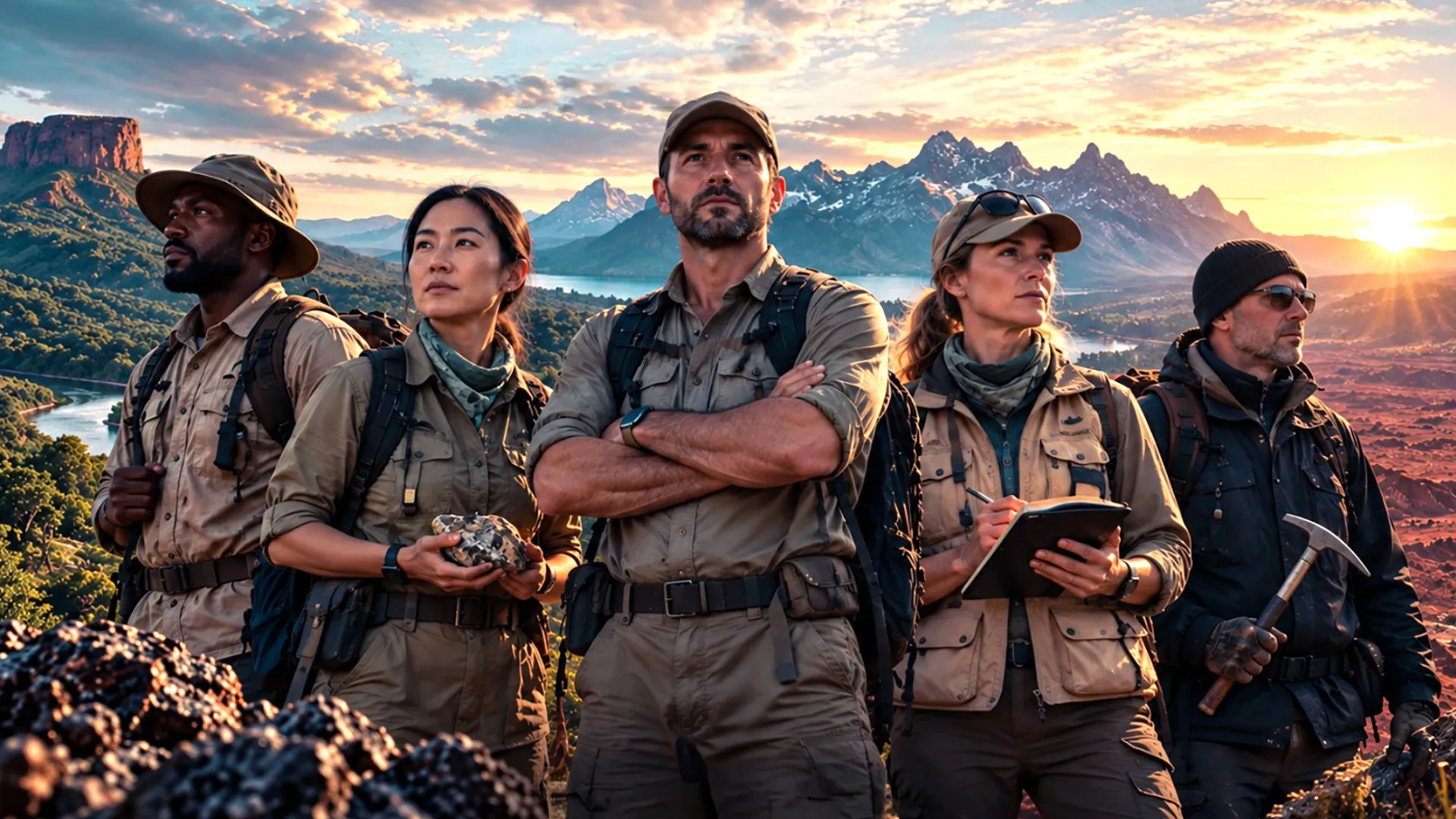
The initiative, which officially debuts at PDAC 2027 in Toronto, honors emblematic figures in mining, highlighting the value of preserving memory and geological data.
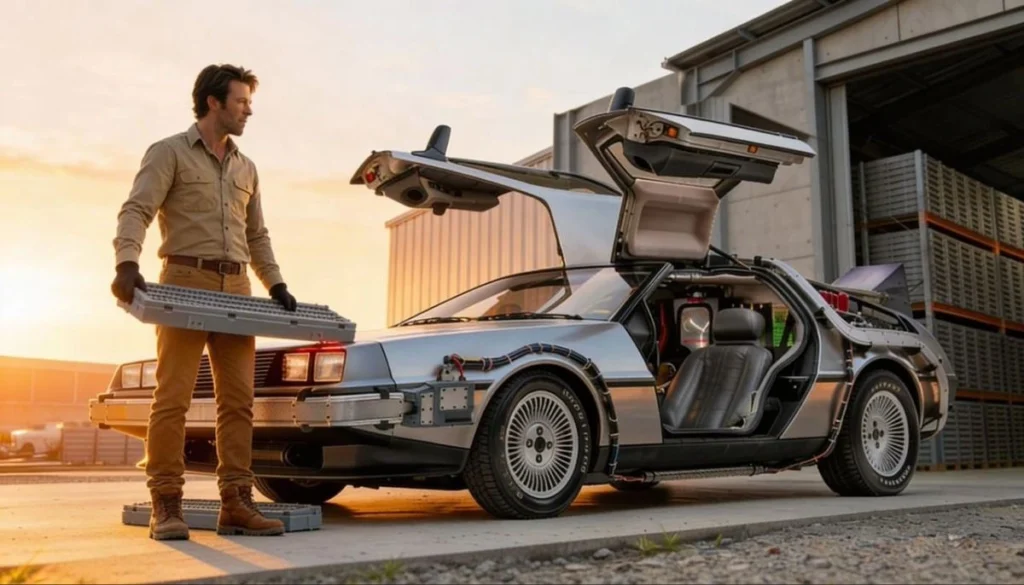
Take from the “Legends of Geology” teaser. (Photo: Reproduction / Core Case).
Long before a deposit is transformed into an operating mine, there were professionals willing to decipher rocks across continents and generations. It is from this premise that Core Case launches the teaser for the “LEGENDS OF GEOLOGY” campaign, an initiative dedicated to honoring the geologists whose discoveries and research shaped geological understanding and boosted the mineral industry.
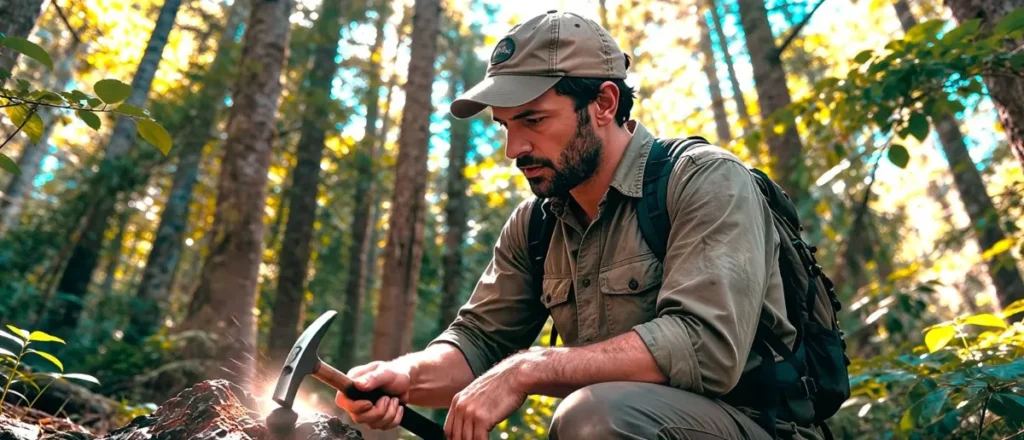
Take from the “Legends of Geology” teaser. (Photo: Reproduction / Core Case).
With an official launch scheduled for March 2027 during PDAC in Canada, the project will pay tribute to prominent national and international geology professionals. The video manifesto anticipates the tone of the campaign: “Same curiosity, same passion, same purpose. Different rocks, a shared vision; different soils, the same calling. Discoveries deserve to be preserved”.
Preserving memories and legacies
Recognized in the mineral sector for the conservation and management of geological collections, Core Case assumes with this project the mission of being a guardian not only of physical samples, but also of the historical memory of geosciences.
Take from the “Legends of Geology” teaser. (Photo: Reproduction / Core Case).
Throughout 2027, the campaign will bring to light the trajectories of names that have marked and continue to mark the history of mineral exploration abroad.
Take from the “Legends of Geology” teaser. (Photo: Reproduction / Core Case).
From theory to the field
For Core Case director and geologist, Daniel Bortowski, the motivation behind the tribute stems from respect for the path paved by professionals in the field:
Geologist and Core Case director, Daniel Bortowski, in the field (Photo: Reproduction / Core Case).
“The idea of creating Legends of Geology was born from my own career as a geologist and the admiration I have always had for the professionals who helped build geological knowledge and transform the history of mineral exploration,” he explains. “We often know about the major deposits and discoveries that marked global mining, but we know little about the people, challenges, and stories behind those achievements.”
(Photo: Reproduction / Core Case).
The initiative promises to go beyond honoring big names in geology and mining. “We want to preserve their stories, share experiences, and, above all, inspire new generations of geologists and industry professionals. We believe that recognizing those who paved the way in the past is also a way to contribute to the future of our industry,” clarifies the Core Case director.
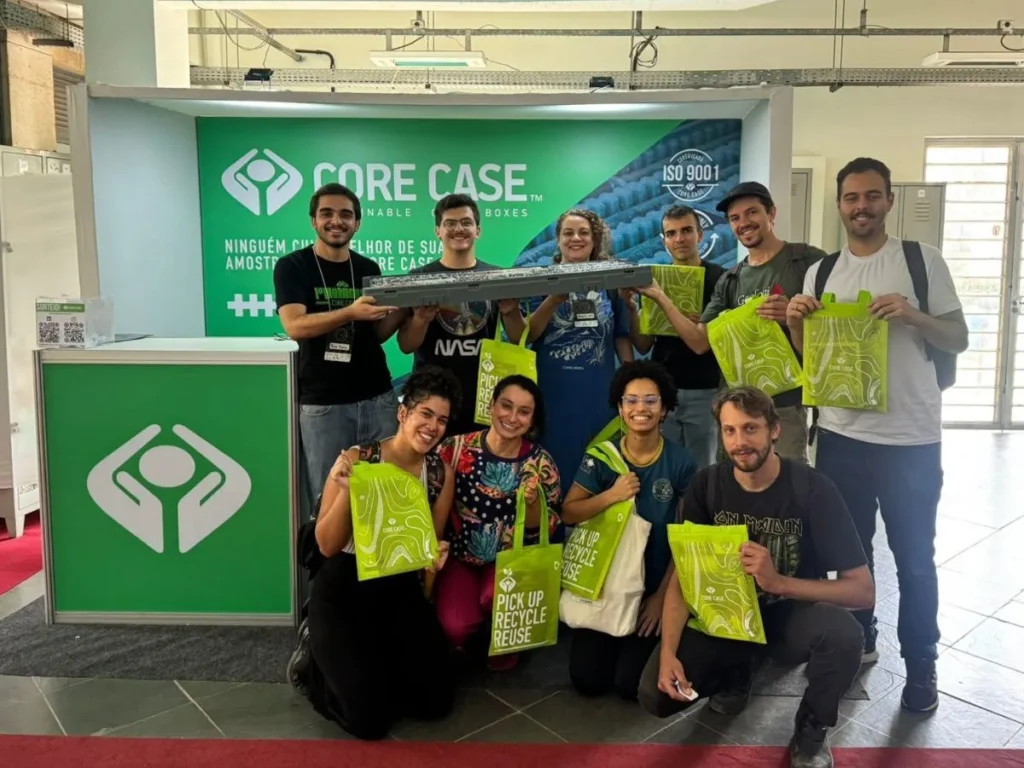
Geology Week at the Federal University of Minas Gerais, in 2025. (Photo: Reproduction / Core Case).
“Our intention is for Legends of Geology, starting during PDAC 2027 in Canada, to become an ongoing Core Case initiative, bringing together professionals from different countries and generations around something that connects us: a passion for geology and discovery.”
The teaser video is now available on Core Case’s YouTube channel, marking the start of the countdown to the official premiere in 2027.
The connection with Core Case: by geologists, for geologists
Core Case founders, Flávio Ramos and Daniel Bortowski. (Photo: Reproduction / Core Case).
Founded in 2010, Core Case was born with the purpose of improving core sample storage and management in an ergonomic, durable, and sustainable manner. A pioneer in developing core boxes made from 100% recycled plastic and field-to-warehouse traceability technologies (Smart Case), the company has established itself as a global benchmark in the sector, reaching nearly 4 million units sold across more than 15 countries. With operations in Brazil and Canada, the company’s work reflects its core pillar: a vision built “by geologists, for geologists,” dedicated to protecting data and the heritage of mineral research.
The evolution from “Back to the Core” to the tribute to Legends
Take from the “Back To The Core” campaign. (Photo: Reproduction / Core Case).
LEGENDS OF GEOLOGY succeeds one of Core Case’s significant campaign milestones: “BACK TO THE CORE”, launched in 2026 at PDAC. The initiative combined nostalgia and technology by using the iconic DeLorean DMC-12 car as a symbol, referencing the return focused on the preservation and excellence of geological core samples.
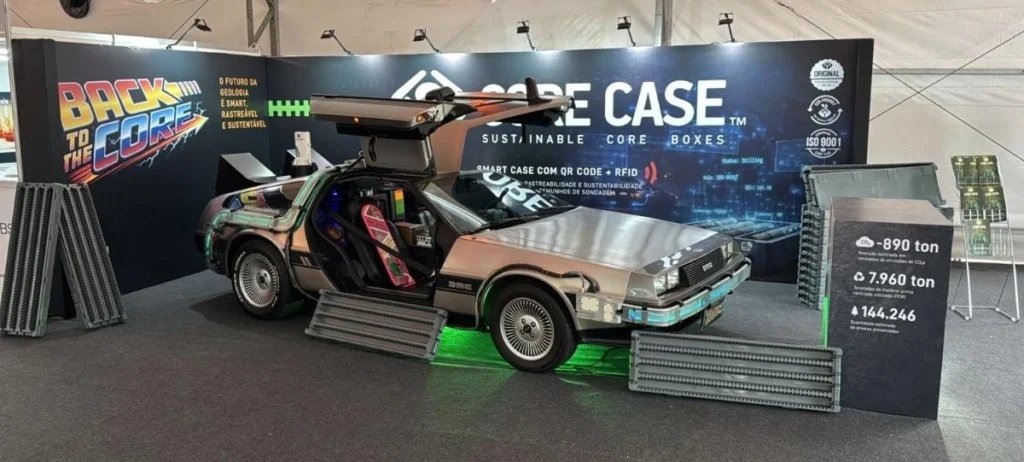
Photo of one of Core Case’s booths at Simexmin 2026, featuring the DeLorean from the movie “Back to the Future”. (Photo: Reproduction / Core Case).
The campaign resonated by bringing a real replica of the DeLorean to the halls of PDAC 2026 in Toronto (CA), and to the booth at Simexmin 2026 in Ouro Preto (BR). Now, Core Case evolves its narrative from technological impact to a tribute centered on people and the human heritage that builds global mining.
With US$21.3 billion in investments planned through 2030 and a new national policy for the sector, Brazil is stepping up the race for lithium, copper, nickel, graphite, niobium and rare earths. But turning geological potential into a mining project requires something less visible: preserving the identity, integrity and traceability of the information produced by drilling. That is where sample control technologies, such as Smart Case, are gaining ground in mineral exploration.
In September 2026, when Brazil established its National Policy on Critical and Strategic Minerals, a word rarely associated with the traditional image of mining appeared several times in the new framework: traceability.
Law 15,506 calls for the creation of a system capable of tracking the critical minerals chain, recording transactions and the agents involved, and keeping auditable information on origin, composition and destination. Identification mechanisms must be secure, verifiable and technologically capable of preserving data integrity. Regulations have yet to define how this will work in practice.
The law looks at the mineral’s production chain. However, long before a ton of lithium, copper or rare earth concentrate needs to be traced, there is another object whose identity must be preserved: the sample that proves these minerals exist in a given area.
At this stage, new discussions are emerging around the modernization of core sheds, which are becoming essential to the technological development of mining.
Brazil has reasons to pay attention to the topic. The Brazilian Mining Institute (IBRAM) estimates US$76.9 billion in investments in the sector between 2026 and 2030. Of that total, US$21.3 billion is tied to the group IBRAM classifies as critical minerals, including copper, nickel, rare earths, graphite, lithium, niobium and zinc. Copper projects alone account for US$8.6 billion; nickel, US$4.7 billion; rare earths, US$2.4 billion; and lithium, about US$1.2 billion.
This interest is backed by a significant mineral base. USGS data show that Brazil accounted for approximately 93% of global niobium production in 2024, was the sixth-largest lithium producer, and ranked among the leading producers of graphite and nickel.
None of these positions diminishes the importance of drilling, the essential procedure for investigating the subsurface through the extraction and analysis of samples that identify and qualify mineral deposits.
The critical mineral starts as information
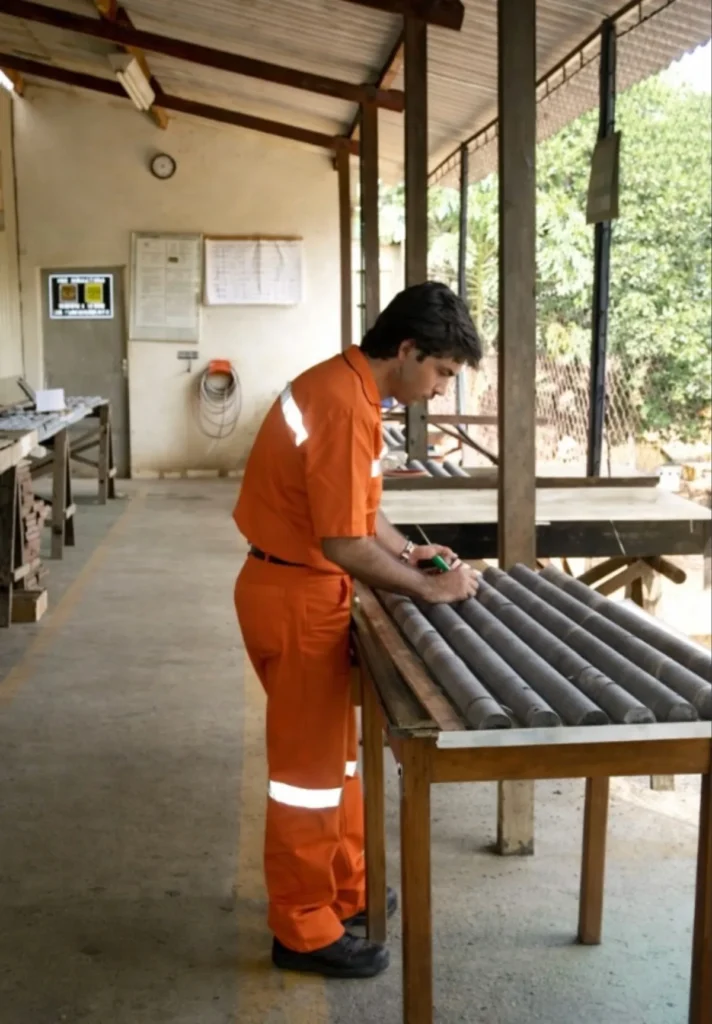
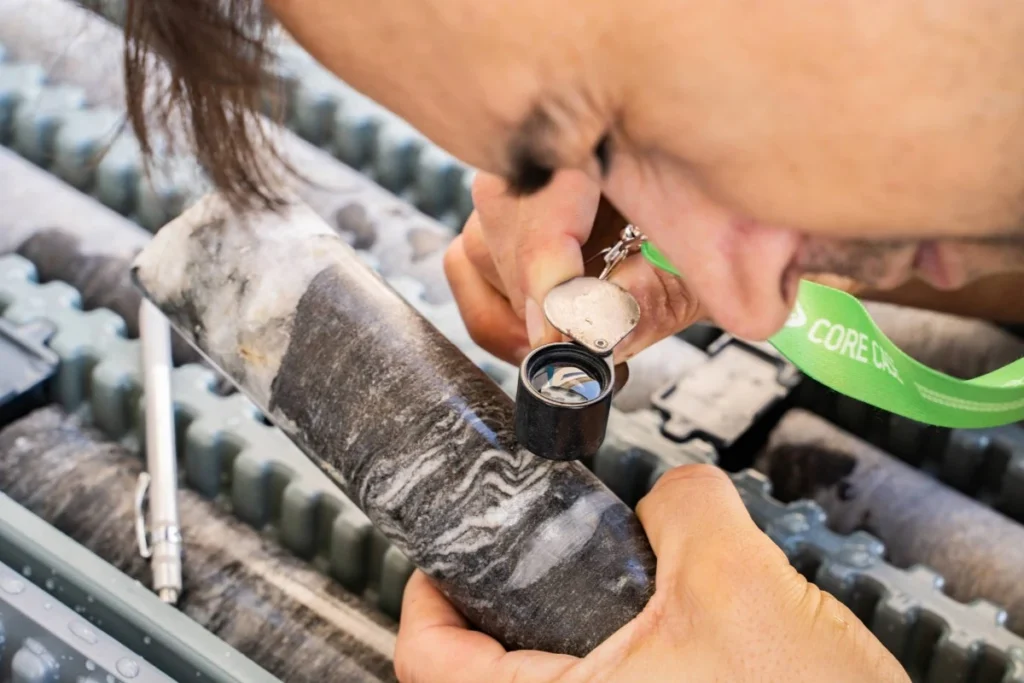
In mineral exploration, a diamond drill cuts through rock and recovers continuous cylinders: the drill cores. They allow the geologist to observe lithology, alteration, structures, mineralization and other features that, combined with laboratory analyses, feed geological models and future resource estimates.
The economic result may only appear years later. The information starts in that cylinder of rock.
That is why the problem is not just pulling a sample out of the ground. It is preserving the link between which rock was taken, from which hole, at what depth, how it was handled, which part went for analysis and which part remained in storage.
The main international mineral reporting systems address this issue explicitly. The JORC Code includes among its criteria sample security, audits and reviews of sampling techniques, and mechanisms to prevent transcription or keying errors from compromising the database used in resource estimation.
In the Canadian system, NI 43-101F1 sets aside specific items for sample preparation, analysis and security, as well as data verification. The Canadian Institute of Mining’s best practice guidelines go further and recommend that the chain of custody of samples be established and recorded.
This changes the way we look at a core library. It is not simply a warehouse of boxes holding old rocks. It is a physical archive of a project’s geology, one that is also being digitized.
“Considering that the main asset of these exploration projects is drilling, and considering that investors want some degree of reliability and certainty that there is, in fact, ore there before they commit capital, we start from the premise that your set of drill holes and cores is the greatest asset of these projects. And if we are saying the core is all that, why do we sometimes neglect the way we store it? Smart Case is an evolution of the box, and that is where we come in, precisely to address this pain point: the lack of reliability in how the collection is stored, where the cores are and how to prove the steps that were taken. It is a core logistics management software — not a geological database — where we store and manage when the hole was drilled, where it was delivered, the backlog, the team’s activities and final storage. A project where everything is well stored, with digital and reliable information, will add value when seeking investment or selling the asset. Without this management, the investor cannot audit, which greatly increases the project’s risk or may even require re-drilling at an extremely high cost.” – Marcéu Barreto, geologist, MBA in Project Management and Technology Projects Manager at Core Case, explains the role of this technological transformation and the value of the geological collection for the market.
When each box gets an identity
Core Case started in 2010 manufacturing core boxes for drill samples. The most technologically interesting step in its trajectory came when the container stopped being treated merely as a storage object and began to carry a digital identity as well.
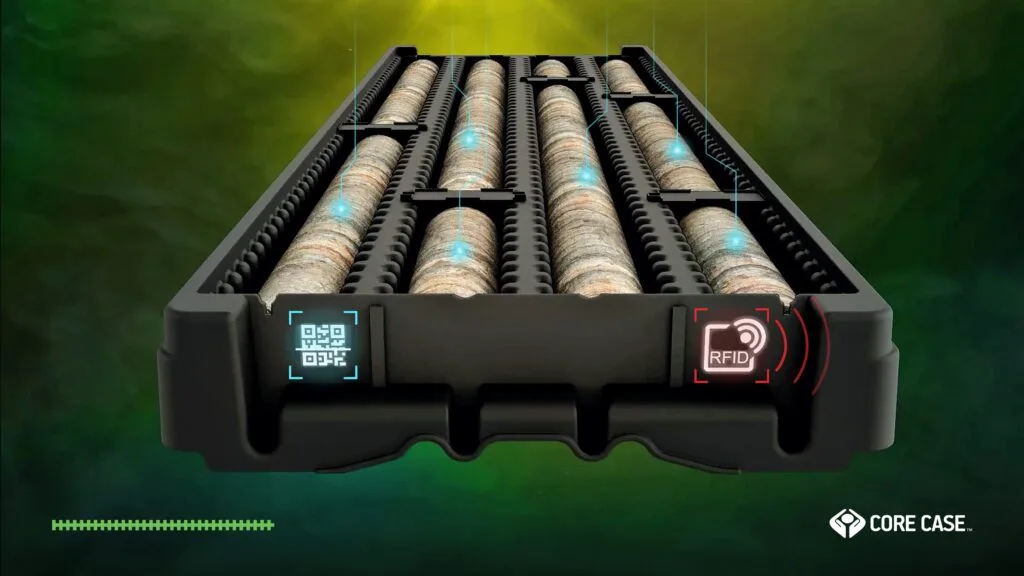
With Smart Case, according to the manufacturer, each box can leave the factory with a unique QR Code and RFID tag. These identifiers are linked to Manager, Core Case’s software that records information on drill holes, cores, inventory, consumption, movements and core shed activities. The system runs in the cloud and can be accessed via web and mobile app.
The difference seems small until you picture an exploration campaign with tens of thousands of meters drilled and thousands of boxes moved between the drill pad, the logging shed, the cutting/sampling area, storage and the historical archive.
In the conventional process, part of this information may depend on handwritten numbers, labels, spreadsheets and successive transcriptions. Every human intervention adds a chance of error: a swapped box, a mistyped ID, an interval linked to the wrong record, or simply a sample that takes a long time to locate years later.
The logic behind Smart Case is to create a persistent association between the physical container and its electronic record.
The QR Code makes it possible to access the box’s individual identity visually. RFID adds radio-frequency identification. Manager organizes the information layer linked to these identifiers. Rather than thinking of it simply as “a box with a chip”, then, the relevant concept is the connection between object, identity and database.
The solution aligns with a broader trend in mining: digitizing stages that remained analog even after the adoption of 3D modeling, remote sensing, geological databases and increasingly sophisticated software.
Technology does not turn bad data into good data
This advance calls for an important distinction.
Core Case states that Smart Case strengthens QA/QC practices and supports requirements related to NI 43-101 and JORC. “Supports” is the right verb.
None of these reporting systems requires RFID, QR Codes or any particular box. Nor do they certify validation mechanisms as “JORC compliant” or “NI 43-101 compliant”.
Electronic identification does not fix poorly planned drilling. It does not make an unrepresentative sample representative. It does not automatically detect a core recovery problem, it does not replace standards, blanks and duplicates in the lab, and it does not interpret the geology.
What it can do is strengthen another component of the process: documenting identity and movement, reducing certain manual transcriptions, and making the connection between a physical sample and its associated information more structured.
This boundary matters because it allows the technology to be assessed for what it actually delivers.
CIM guidelines state that the chain of custody of samples must be established and recorded. JORC asks how sample security is ensured and how transcription errors are prevented from corrupting the data. The Canadian form requires the Qualified Person (QP) to assess the adequacy of security, preparation and verification procedures. A digital identification system can help answer part of these questions – but responsibility still lies with the technical process and the professionals who carry it out.
Why this matters even more for critical minerals
The growth of critical minerals adds scale to the challenge.
A new generation of projects is being evaluated in Brazil precisely as investors, governments and consuming industries pay closer attention to origin, security of supply, processing, environmental and social criteria, and the reliability of supply chains.
Law 15,506 reflects part of this movement. Article 44 establishes that the future Brazilian system must record transactions, allow information to be audited and use secure identification mechanisms. It also allows for technological solutions to ensure data integrity, traceability and tamper-proofing.
It would be incorrect to say that this provision applies to Smart Case. The traceability created by the law is aimed at the critical minerals production chain, while Core Case’s technology operates at an earlier stage, related to drill cores and drilling information.
The overlap reveals a broader transformation. Across different parts of mining, there is a growing demand to know what a material is, where it came from, where it has been and what information is associated with it.
For the mineral product, this becomes a regulatory and commercial requirement. In exploration, it shows up as sample security, chain of custody and data integrity. The technological logic is similar, even when the systems are different.
The box as data infrastructure
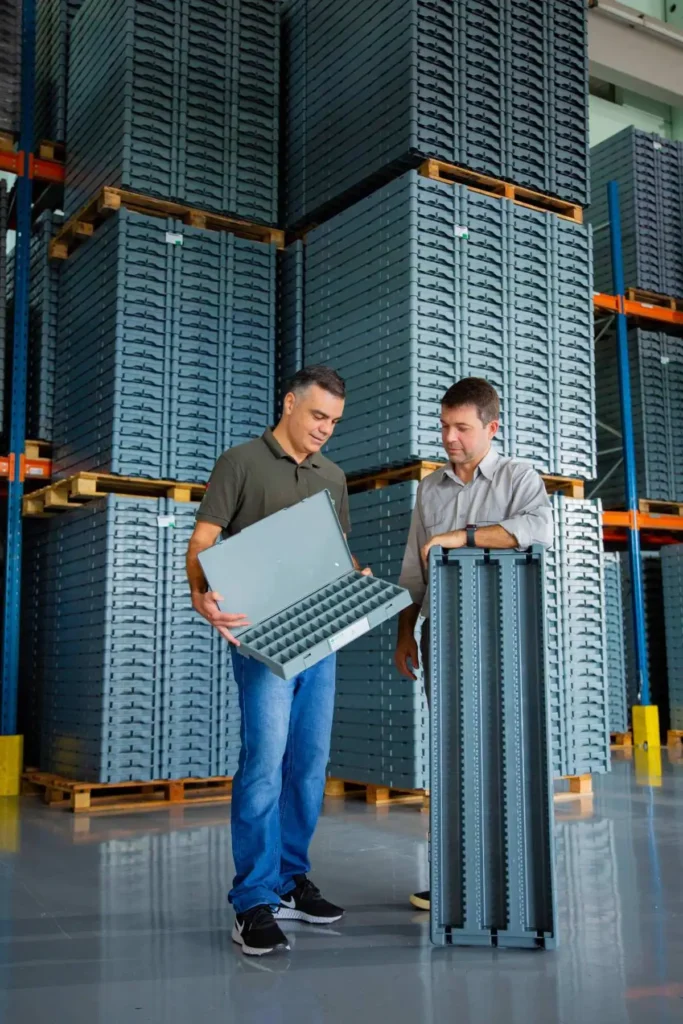
Core Case did not start as a software company. It started by manufacturing the box that holds the rock, injection-molded from recycled plastic. By adding RFID, QR Codes and a management platform, it began operating at the boundary between industrial product and information infrastructure.
The move is representative of a broader shift among mining suppliers. Equipment is no longer evaluated solely by its mechanical function and is now expected to generate, carry or organize data.
A drill rig produces performance data. Process equipment is fitted with sensors. Fleets are monitored in real time. Stockpiles, tailings dams and slopes are tracked remotely. Digitizing the core box brings the core shed into this same process.
This does not mean every operation needs to adopt RFID, or that Smart Case is the only way to organize a core library. Nor is there, in the public sources consulted, any independent study quantifying how much the system reduces errors or increases productivity in a real mining operation.
This gap prevents commercial benefits from being translated into substantiated results.
But it does not eliminate the technological question the product raises: in an industry that will invest billions of dollars in new deposits, does it still make sense to let a long-lived geological asset depend on predominantly manual identification and handling processes?
The race begins before the mine
The discussion on critical minerals usually ends with reserves, production, refining, batteries, permanent magnets and geopolitics. These are the points of greatest economic visibility.
Mining, however, begins much earlier.
It begins when a company decides where to drill. It continues when the rig recovers the rock, when the geologist logs the core, when part of it goes to the lab and when the results are incorporated into the database. It is from this sequence that the information used to determine whether there is a mineral resource capable of sustaining a venture is born. Smart Case occupies one part of this system, and its emergence is telling.
By giving a core box a digital identity, Core Case brings technology to a stage that for decades was treated essentially as physical storage. It does not make the deposit bigger, it does not improve the grade and it does not guarantee financing. It makes it possible to organize, in a different way, the relationship between the rock and the information that describes its history.
Before a critical mineral becomes a resource, a reserve, a concentrate or a strategic product, it must become reliable geological data. And in an increasingly digital mining industry, even the box where that evidence is stored is becoming part of the technology.
Article originally published by The Mining portal. Read it here.
The search for innovations to enhance geoscience data acquisition and management is a reality in mining companies. Therefore, we have selected five trends and technologies in drilling technology.
Among these trends, the following are highlighted:
automation and robotics
data optimization and analysis
implementation of artificial intelligence
adoption of technologies and good practices aimed at ESG preservation
digital transformation technologies aimed at obtaining data directly from the drilling source with production logs
Drilling is an Essential Process
Currently, drilling is an essential process for the geological understanding of a mine or mineral exploration project. Mining companies invest substantial resources in drilling programs every year. Thus, core samples comprise one of the few certainty resources on subsurface geology.
Geologists are able to describe, analyze and extract chemical, physical and lithological features from there and can have an estimate on mineral resources and several other geologies, mine and mining site routines. Therefore, any deviations taking place during the drilling stage can have an impact on various process throughout the mining chain.
In summary, the importance of drilling is such that new management trends and technologies are emerging more and more. Here are some of them.
Automation, Robotics, Scanners and Sensors
The use of automated machines, sensors and scanners that record high quality images is a growing trend in warehouses.
This equipment enables geology teams to extract more information from samples. They promote efficiency gains, decrease manual inputs, organization and data standardization.
This hardware can be equipped with a number of sensors. In addition to traditional RGB, spectral, hyper-spectral and laser band sensors to scan 3D core samples.
Solutions include from image recording and processing to software with artificial intelligence based on computational vision. This brings several insights that would otherwise be difficult for geologists’ eyes (and magnifiers).
Moreover, the use of automated robots in combination with rolling system workbenches enable case handling in warehouses.
Efficiency is key. This includes the adoption of practices and technologies to enable digital and direct recording of drilling information. For instance, core sample cases can be identified with QR CODES and RFID in addition to header physical engravings. This enables machines and software to later identify cases without the need of operator inputs.
Artificial Intelligence
Another major trend is the use of artificial intelligence algorithms to acquire drilling core samples. The use of machine learning is already a reality. It brings numerous use opportunities within the mining value chain, especially for geology teams.
From sample images it is possible to train computational vision models to partition and classify several parameters. For instance, identification of flaws, cracks, texture and lithological classification.
However, computational vision can be used in many other geological or geotechnical classifications. It is possible to optimize several processes such as extracting the size of core samples in the case to check for development and recovery.
These algorithms use background data and descriptions and can be retrofitted from new geologist inputs. However, in order for artificial intelligence models to be effective, it is essential to acquire images in a uniform and high quality manner.
A common scenario in several projects is the progression of geologic interpretation. Over time there are changes to the terms used, acronyms and description format. Moreover, new important geologic markers can be discovered and become the basis to outline mineralized bodies in current interpretation.
Geologists often need to endeavor to gather legacy and new descriptions in building and updating geologic models. This process frequently needs trips to the warehouse, looking for old drilling cases to reinterpret or reassess.
Artificial intelligence models can help in this scenario. Old core sample images can be used in AI models to extract geological indicators that weren’t noted in the past.
However, every technology has its limit. Old pictures may not have the required quality for good algorithm response. A spectral sensor would be needed to obtain the required data.
This trend is not about replacing geologists by algorithms, but to expand their capabilities and possibilities. By exploring AI resources, they can achieve more assertive results and optimize them.
Sustainability, Governance and ESG
The mining industry is ever more committed to conservation, employee safety and ESG matters. This includes the implementation of practices to assess the environmental impact of value chain activities and to measure their implications.
Mining companies have adopted the use of ESG Analytics solutions to identify opportunities for improvement in drilling operational chains. And by complying with such guidelines, they propose actions to reduce waste, environmental and social impacts.
An innovation example in this regard is the adoption of Core Case sample packages. This product has revolutionized the industry by replacing old wood cases by recycled plastic cases. This replacement reduces wood use as a drilling input and contributes to plastic decrease and removal from nature.
Moreover, the recycled plastic cases manufactured by Core Case are more resistant and durable than wooden cases. This eliminates future waste by replacing cases, which have systems to ensure better worker safety and comfort. Such as stacking, pallet and handling protections.
Infrastructure
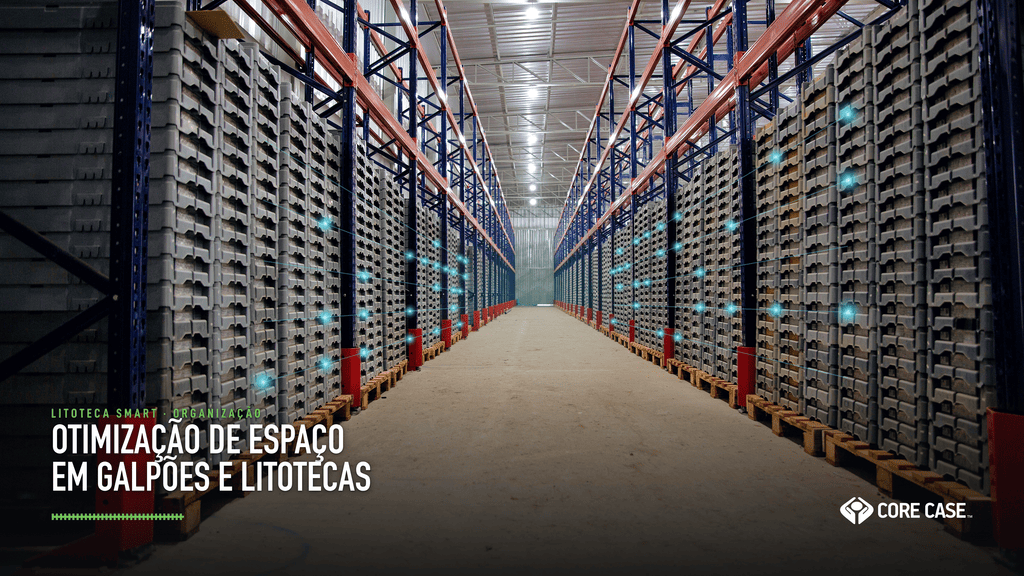
A common occurrence in mining companies is the lack of sufficient warehouse space to store drill core. This makes them use warehouse external space which is constantly surrounded by case and pallet piles. This causes deterioration of identification and loss of core sample information.
Thus, a significant effort is being made by handling and transport personnel to manage storage rooms and absorb case streams. Frequent handling to reorganize storage rooms can result in the loss of core samples and valuable geologic information.
The trend in large mining companies is the creation of large central storage warehouses. Large enough to accommodate and store several projects or mines. These structures include solutions and technologies to facilitate and optimize core sample use and handling. Work benches with rolling systems, pallet holders, robotization and automatic, etc.
In this context, the implementation of tools to manage warehouse inventories and document case transfers and handling is essential.
Digital transformation, integrated systems and real-time data management
Drilling is a key method to acquire geologic information required for the exploitation, planning and operation of any mining enterprise.
However, it is characterized by its high costs and a complex activity chain. It includes sample extraction and case identification, transport, warehouse handling, description, sawing, sampling activities, analyses and storage.
In most companies, these activities are performed by several teams, both internal and external. Many of these processes are managed by sorted tools, whether physical or digital. However, this approach fragments and hinders integrated management of drilling operations.
In this sense, there are growing investments in integrated management systems that enable full process visibility throughout the chain.
The implementation of 4.0 industry technologies, IoT devices, Business Intelligence, analytics and management and control solutions is a reality.
Real-time data analysis tools enable timely problem identification for decision-making and correction purposes.
Core Case Tech’s CORE MANAGER allows users to track core sample cases from the moment they are stored to their final storage location. It optimizes inventory management, handling and drilling warehouse activities by using QR CODE and RFID technologies embedded in the cases.
Digital data collection and integrated management aim at increasing the efficiency of drilling operations. They reduce losses, waste, deviations and data errors from drilling by digitizing the controls.
A New Drilling Era
The drilling status quo is changing. It can be concluded that these five trends and technologies in drilling management show that the process can be understood differently. Large mining companies are aware of the trends that promise to revolutionize management, eliminating old, rudimentary practices.
In Brazil, the term “garimpo” (mineral prospection) or “garimpagem” (prospecting activities) is usually associated with the activity of extracting valuable mineral resources such as gold in a rustic and irregular way, with a dismissive meaning. Cases such as Serra Pelada, in Carajás, broaden this view.
But it is important to know that the activity of mining is only one form of exploitation of mineral resources, among many others. And, furthermore, it is a duly regulated and inspected practice that moves the Brazilian economy significantly every year.
To learn more about mineral prospection in Brazil, read our content to the end!
Definition of mineral prospection
We can define mineral prospection (garimpo), in general, as the practice of exploitation of mineral resources in nature that occurs with investments considered low scale and simple technology, which can be mechanized, but usually occurs manually.
These characteristics are justified by the geology of the mineral deposits targeted for mining, which are usually outcropping on the surface, facilitating open-pit mining, or in some cases, through galleries that expose the rock located at a shallow depth.
Mining prospection in Brazil
In Brazil, the practice of mining is historically known due to its contribution to the national development of our civilization, and the first records of the activity in the country date back to the 16th century.
The mineral reserve exploitation through mining activity is responsible for ensuring raw materials for various other industry segments, highlighting its importance.
According to recent data, mining is constantly growing in Brazil unlike large-scale industrial mining, concentrated mainly in Minas Gerais, and Brazilian states of Pará and Mato Grosso stand out due to a major presence of mining enterprises.
Regularization of the activity
The regularization, as well as the inspection of mining undertakings in Brazil is carried out by the National Mining Agency (ANM), formerly the National Department of Mineral Production (DNPM).
The authorizing title for mining granted by the regulatory agency for these enterprises is called Mining Permit (PLG), and the exploration is subject to some specific rules, such as not using explosives, not performing underground mining and not exceeding the limit of the saprolite.
The list of minerals considered “mineable” by the regulatory agency is not short, including diamonds, minerals from the mica group, gold, quartz and its varieties, and so on.
The Mining Permit (PLG) can be applied for by any Brazilian individual or cooperative of miners, and is valid for 5 years, always renewable for an equal term at the discretion of the ANM.
In addition, the size of the mining areas is established by the norms of the National Mining Agency, with a maximum of 50 hectares being allowed for individual applicants and 1,000 hectares when granted to a mining cooperative.
Positive impacts of mining activity
Mining, when done legally, has a number of positive aspects, since besides being a basic industry, mining is an important source of income for the country. Some benefits are:
Tax collection: The mining enterprises collect taxes for the federal government, states and municipalities, cooperating in a relevant way to the economy, mainly in the regions where they are located.
Job creation: The sector contributes by creating a number of direct and indirect jobs, ensuring income for many families.
Infrastructure: The installation of new infrastructure is a recurring need in mining projects, since they are usually located in remote areas. Therefore, they provide opportunities for beneficial works for the town and local community, such as new roads, energy services, commerce, and so on.
Sustainable Exploration: In order to regularize a mining enterprise, it is necessary to prove through environmental licenses actions that minimize the environmental damage caused, ensuring that the mining activity will occur in accordance with sustainable development.
All this means that mining is transformed into wealth, acting as a major vector for regional and national development.
Core Case supports the legal and sustainable mining
Core Case is present wherever there is quality mining carried out responsibly!
Our values are based on developing intelligent, technological, and economically sustainable solutions so that mining enterprises can grow more and more and contribute to the national development, without giving up the environmental responsibility that is increasingly necessary!
As well as in 2022, ESG remains one of the biggest challenges for the mining and metals sector.
As the issue becomes a priority for all stakeholders, the industry is adjusting to ESG factors with corporate strategies, decision-making and reports.
The difference in the long run will come to those who invest in all aspects: social, environmental and governance. The mining sector needs to go further and take a holistic view to gain the investor and community´s trust in which it operates.
Check out the main opportunities and challenges in ESG for the mining sector according to a study by Ernst & Young (EY).
Water management
76% of the respondents cited water management as the main challenge in ESG, and this result has an intense relationship with climate change and concerns about water scarcity that increase year by year.
The close relationship between organizations and government needs to be a priority for mining companies. Together, they can develop plans and initiatives that aim at care and conscious use of resource within organizations.
Circular economy
Circular economy is a concept that associates economic development with a better use of natural resources, through new business models and optimization in manufacturing processes with less dependence on virgin raw material, prioritizing more durable, recyclable and renewable inputs.
This concept goes beyond the scope and focus of waste and recycling management actions, aiming at a broad scope that includes from redesigning processes, products and business models, to optimizing resources use.
Traditionally, mining operations follow a linear process of searching, mining, processing and disposing. A circular economy example in this sector can be the creation of by-products from mining tailings, which can be used both in the mining sector and in other industries.
Biodiversity
Mining companies are under increasing pressure to assess biodiversity risks in their businesses. According to EY’s research, miners will need to demonstrate that mines are considering the long-term impact on biodiversity.
In addition to avoiding negative consequences, miners must also articulate their net positive impact. An action in this case may be preserving forests in the enterprise vicinity, creating parks, zoos and social projects to preserve the local biodiversity.
Data released with credibility and clarity
Organizations around the World Report ESG information through different initiatives and programs. One of the best known and used in Brazil is GRI (Global Reporting Initiative), which enables companies of any size, sector or country to disclose their economic, environmental and social impacts, explaining how they are managed internally.
These reports purpose is ensuring quality and comparability of information that can support the stakeholders decision-making, especially investors, in targeting and allocating capital.
Around the world, regulation of carbon emissions, sustainability and social governance is increasing, and in the mining sector this is no different.
Although regulation on risk management and sustainability reporting is only starting in many countries, there is still no global regulatory standard for mandatory reporting on ESG topics, which makes it difficult to compare companies in a global investment portfolio.
To resolve this issue, IFRS Foundation Trustees formed the ISSB (International Sustainability Standards Board), which aims to develop minimum standards of information and sustainability reports to be used for decision-making in the capital market.
By complying with the new standards and expectations, the mining sector will have an obligation to improve the availability, accuracy, reliability and clarity of the data presented to all.
Mine Closure
This is one of the great industry challenges, the management of existing assets.
A proactive approach to mine closure begins when planning is carried out since the beginning of the enterprise.
Designing a mine with closure in mind allows for continued engagement of owners, employees and communities, creating opportunities for progressive activities closure.
Mine closure impacts a wide range of stakeholders and expectations are rising about how miners mitigate these impacts, including socioeconomic effects on communities.
Improving diversity, equity and inclusion
The main problems include:
Female participation increase: companies still struggle to attract, retain and promote women, depriving them of the spotlight as well as the proven benefits of a more gender-diverse workforce;
Safety and support for the local community: companies need to change the way mining sites are built and operated to improve safety and support for all workers. For example, the construction of local kindergartens and schools could attract different people to mining and provide a positive contribution to the community.
Building a brand with purpose: mining must do more to build a brand aligned with the purpose and values of the next talent generation.
Health and Safety
During the COVID-19 pandemic, many companies have boosted worker health support, but the industry still needs to do more to improve psychological health and safety.
Fly-in fly-out employees, for example, face challenges getting support, a problem that has increased with pandemic-related seclusion and isolation. Bullying and harassment are also other points that are linked to ongoing issues around a lack of diversity, inclusion and respect.
The recently published standard ISO 45003:2021 is a globally recognized framework of how to manage and protect mental well-being at work. It can be an opportunity to reform the safety culture in mining.
Another factor to consider is reintegration into the workforce. Data show that 90% of people who suffer a physical injury return to work within 90 days, but only 50% of people who took leave because of mental health problems returned after six months.
Mining and metals companies need to develop an approach to reintegrate these workers, especially when work is a causal factor behind their illness. This can include, for example, reviewing workloads, creating a support network and ensuring a mentally safe workplace. As physical injuries at work can also trigger mental health challenges, offering physical and mental health support can help employees return to work and full health.
Core Case - a company aligned with ESG pillars
Since the conception, Core Case carries with it the ESG pillars. The company was born to produce cases for survey cores storage in 100% recycled plastic. This goal was achieved and over the 12 years of history, Core Case has become a reference in Brazil.
In addition to the sustainable cases for survey testimonies, Core Case develops actions that favor the development of projects related to corporate governance, environmental and social sustainability.
In addition, we emphasize that the role of Brazilian mining in implementing ESG practices can contribute significantly to an increase in the sector visibility and acceptance, which, despite being so relevant, are still widely criticized by society.
Reference
Top 10 business risks and opportunities for mining and metals in 2023. Ernest & Young.
In recent years, the use of wood for transporting and storing drill cores has come under increasing scrutiny, mainly due to increasingly stringent environmental and occupational safety laws and after QA/QC -related good practices became more widely known and were required in audits in the mining industry.
As we have covered in our blog, drilling is drilling holes in soil or rock and provides valuable information about a mineral deposit.
Any undertaking, be it in the mining, geotechnical, or hydrogeological sector, has a duty to ensure the quality and reliability of these materials. It is from them that various geological characteristics are evaluated with respect to a project.
The correct storage of these materials is required according to the mineral legislation, and is a fundamental requirement for a company to remain competitive in the market.
Having said this, let’s list some points that can make you evaluate the use of boxes made of wood for the storage of core samples. Check it out
Origin of the raw material
Assessing the origin of the material/product used in your company is very important, and with wood it can be no different.
Native wood of legal origin comes from a cut authorized by the competent environmental agency and has a transport and storage license document.
Have you already certified that the wood used in the core sample boxes you use in your project is in fact legalized?
Durability
A very important topic to be considered when purchasing a product is the material’s useful life.
And here we highlight this topic not only because of the financial costs, but also because of the excessive disposal of materials that we cannot reuse, which directly harms the environment.
Wooden boxes are not very efficient in contact with insects and when they are subjected to sun and weather, which can lead to high product turnover, improper disposal and high costs with the storage of core samples.
Ergonomics and work safety
Boxes made of wood are usually very heavy. To its original weight we must add the weight of the core samples that will be stored inside, which can jeopardize the health and safety of the employees that handle these materials.
The norms related to ergonomics were created so that the collaborators are subjected to fewer risks in the work environment and are comfortable to perform their activities.
In addition, we should point out that some dangerous animals such as snakes, spiders, and scorpions can “hide” in wood, posing great risk to the staff.
Paying attention to the health and safety of employees, cost reduction, and legality of your enterprise can be the key to develop a serious and consolidated company in the market.
We are the Core Case. Where there is quality mining, we are present!
You may have heard the term “Patent” or even that a product is “Patented”. But what does that really mean?
According to the INPI (National Institute of Industrial Property), a patent is a temporary property title over an invention or utility model, granted by the State to inventors or authors or other natural or legal persons holding rights over the creation.
With this right, the inventor or patent holder has the right to prevent third parties, without their consent, from producing, using, offering for sale, selling or importing a product subject to their patent and/or a process or a product obtained directly through a process. patented by him.
To innovate is to risk to transform
Innovation is in our DNA.
Regardless of the sector, the biggest challenge for a company is to create value and make a difference in the consumer’s life with an original and authentic proposal, which is capable of representing, in fact, the essence and vision of the brand, and solving it completely. your client’s pain.
Creating something new is not easy, but innovating is a choice for companies that want to stand out and leave a positive legacy for those who trust their solutions.
The use of wooden boxes for transport and packaging of drill cores used in the mineral sector brought operational difficulties, common in many companies in the mining sector.
To offer a new alternative to the market and solve this problem, Core Case developed solutions and plastic products with the same purpose, but with several advantages.
And that’s where the Patent comes into play.
Core Case product innovations are protected by Patents and Industrial Design Registration in Brazil and abroad, in addition to having ISO 9001 Quality Certification.
Petro Case – one of the Core Case solutions that has been patented.
INNOVATION is one of the pillars that accompanies Core Case, and protecting our creation is fundamental.
However, does this benefit only favor the company or does it also provide benefits to the consumer?
Benefits of purchasing a patented product
1.Transparency and security
From the moment the inventor receives his patent, he is obliged to disclose in detail all the technical content of the patented material/product. In other words, this guarantees transparency and provides security to the consumer, as he will be sure that he has all the necessary information when purchasing such a product.
2.Increase in qualified competition
By purchasing a product that has a patent, you are informing the market that it is necessary to develop high quality products and encourage competitors to seek technological alternatives to stand out in the market.
3.Guarantee of exclusivity
By placing your trust in patented products, you guarantee that you are not purchasing a solution that is considered a “copy” and that you are in fact investing in something exclusive in the market and that will bring the best solutions for your business.
Core Case continues to invest heavily in technology and innovation with the intention of making its products more and more suited to the needs of the sector, while fully respecting the environment.
Did you already know the benefits of the patent?
Discover our solutions and be surprised.
Where there is quality mining, there is Core Case.
In Brazil, the first survey with the objective of finding Petroleum was carried out in São Paulo, between 1892-1896, by Eugênio Ferreira de Camargo. It reached a depth of 488 meters, but the well produced only sulfurous water. It was only in 1938 that oil was discovered in Lobato, Bahia.
In 1968, the first oil field was discovered on the Brazilian continental shelf, in Sergipe. Since then, many wells have been drilled.
Would you like to know more about the oil, extraction steps, drilling and samples generated in this process? Read this content until the end.
A Brief Introduction on Petroleum
Petroleum is a complex mixture of hydrocarbons and varying amounts of non-hydrocarbons. In short, it is generated from the transformation of organic matter accumulated in sedimentary rocks, when subjected to appropriate thermal conditions.
Oil platform.
When it occurs in the liquid state in subsurface or surface reservoirs, it is called oil (or crude oil, to differentiate it from refined oil).
The mixture of hydrocarbons that is in the gas state on subsurface and turns into liquid on the surface is known a condensate.
Now the term natural gas refers to the fraction of oil that occurs in the gaseous state or in solution in oil in subsurface reservoirs.
Oil extraction steps
Oil is an abundant natural resource, but its research involves high costs and complex studies.
An oil well can be considered as an engineering project, thus, it requires that a series of premises and variables be obeyed, so that the intervention is optimized in time, cost and adequate safety.
Drilling equipment.
Oil, like any mineral good, has well-defined stages for its extraction to be carried out. Here we can briefly summarize 3 of them: prospecting, drilling and extraction.
Prospection
This step is the first to be carried out and aims to carry out studies and apply methods that identify the existence of oil in a given location. These analyses are carried out in sedimentary basins and several direct and indirect methods are used. For this, geologists, geophysicists and paleontologists, among other specialists, gather to carry out the necessary research.
Drilling
At this stage, oil deposits are discovered and several wells are drilled in the surroundings to define the limits of the deposit and assess the volume of reserves. Drilling is a destructive process, where a drill bit advances over the rock formation, breaking it into centimeter to millimeter fragments.
It can be done on land, using drilling rigs, or at sea, with the help of offshore platforms, depending on where the mineral is found.
Extraction
Extraction is influenced by the amount of gas accumulated in the deposit. If it is large, it will be able to push the oil to the surface, without the need for pumping, at least in the initial phase of production, simply by installing a pipe that communicates the well with the outside. If the gas pressure is weak or zero, extraction pumps will be needed.
Types of perforation
During this process, several drillings can and should be carried out in the project in order to find new oil deposits or even to understand in detail the extent of the current explored deposit. Check out some types of perforations:
Pioneer well: well drilled at the beginning of research for oil/natural gas;
Stratigraphic well: aims to map the stratigraphy of the region;
Extension or delimitation well: as the name implies, this type of well is made to enlarge or demarcate the limits of a deposit;
Adjacent Pioneer Well: aims to discover new deposits close to an area that has already been explored;
Well for shallower deposits: this is done with the aim of finding out if there are shallower deposits than those already discovered in a given area;
Well for a deeper deposit: this is done with the aim of discovering if there are deeper deposits than those already discovered in a given area;
Production or development well: well that allows the drainage of oil from a field;
Injection well or injector: aims to increase or improve the recovery of oil and natural gas from a reservoir;
In addition to the concepts mentioned above, we can classify the type of drilling according to the direction:
Vertical well: probe and target (or objective) are vertical;
Directional well: any well in which drilling is not performed vertically;
Horizontal well: made horizontally, especially to ensure better use of oil.
Samples of rocks and fluids generated in the oil and natural gas exploration and production process
Samples are portions of rock, sediment or fluid extracted from the well, from the ocean floor surface or from the land surface.
According to the ANP, the following samplesare collected within the scope of oil and natural gas exploration and production activities in Brazilian sedimentary basins:
Core samples and their respective plugs;
Gutter samples;
Side samples;
Fluid samples;
Rocks or sediments obtained from land or ocean floor surveys.
Thin, biostratigraphic blades and polished sections;
Fractions, generally cylindrical, obtained from cores and normally used in petrophysical tests to determine the porosity and permeability of a reservoir rock.
Gutter samples
Biostratigraphic: Type of blade that is prepared with special techniques for the preservation, concentration and recovery of the fossiliferous content of a rock. The analysis of such blades essentially aims at the relative dating and the determination of the sedimentation paleoenvironment.
Thin: A type of blade that is prepared with rock fragments polished to a thin thickness and intended for observation with a transmitted light petrographic microscope (provided with adaptations for microscopic analysis of rocks).
Both aim to determine the mineralogical content of the rock and its microstructures.
Side samples
Samples obtained from the wall of the well, approximately cylindrical in shape, whose acquisition aims to preserve the structure of the rock and provide security as to the depth of the extraction.
Fluids
Substances that do not resist tangential or shear forces, deforming continuously and taking the shape of the container in which it is contained. Examples: water, gas and oil.
Core sample
Sample obtained in a well, usually of cylindrical shape, whose acquisition aims to sample specific strata of rock, preserving its structural characteristics, and with precision in the extraction depth.
Core Case and its performance in the Oil and Gas sector
CORE CASE is a Brazilian-Canadian company with 11 years of existence that has consolidated itself in the mining market and is present in the most important companies in the segment.
Our purpose is to add value to the production process of the largest companies in the extraction of natural resources (mining, oil and gas), prioritizing long-term sustainability.
See in the video below the solutions we have developed for the oil and gas sector.
Agribusiness and mining are the two of the most relevant industries to the Brazilian economy. According to a research conducted by Cepea (Center for Advanced Studies in Applied Economics), of Esalq/USP, in a partnership with CNA (Confederation of Agriculture and Livestock of Brazil), the Agribusiness industry grew 8.36% in 2021, reaching a 27.4% share in the country’s GDP.
As for income in the mining industry, it grew 62% in 2021, compared to 2020, reaching R$ 339 billion Reais.
Especially due to fertilizers, mining and agribusiness are extremely closely related, to know more, read this article through the end!
Agricultural commodities and fertilizers
Fertilizers are products that provide nutrients for plants to develop, largely used in several cultures for maintaining the soil and improving foods. NPK (Nitrogen, Phosphorus and Potassium) is one of the best known fertilizers in the world, and Brazil depends on 90% of the Potassium and 70% of Nitrogen, and 50% of Phosphorus, in terms of importation.
Therefore, mining and the extraction of these natural substances are directly related to the development of agribusiness, considering that the decrease in the production of these fertilizers directly affects the agribusiness.
Soil Remineralization Rock Flour
The rock flour or soil remineralization technique consists in applying fine-grained, silt-sized particles of rock in the soil, for recomposing the fraction of minerals that have been weathered or mined and which carry relevant nutrients to plants (VAN STRAATEN, 2007).
These nutrients can be categorized as:
Macronutrients: K, P, Ca, MG and S;
Micronutrients: B, Cl, Cu, Fe and beneficial elements such Silica.
These remineralizing agents, for originating from silicate minerals, have a wider variety of secondary nutrients and micronutrients relative to soluble fertilizers.
Overall, the SGB-CPRM research has been showing that alkaline volcanic rock, such as phonolites, kamafugites and some basalts have shown very good results as remineralizers, as well as biotite schists.
Moreover, mineral input can be used for correcting soil acidity, among other practices. That contributes to the sustainable development of agriculture, and also to afford more autonomy to that industry. Regulatory Directive No. 5, of 2016, issued by the Ministry of Agriculture, Livestock and Supply (MAPA) sets the rules for remineralizers, access the link to learn more.
Future Trend
According to some studies and projections of the Ministry of Agriculture, Brazil is likely to have a 27% increase in food production over the next decade, which will increase the need for NPKs and other natural input and application thereof in the agribusiness.
Therefore, the Brazilian Geological Service carried out a mining prospection campaign focused on these inputs in 2020.
For Potassium, the potential of potassium salt deposits was expanded in 70% due to occurrences originated in the Amazonas Bay, which may be geologically similar to other areas that are the world’s top potassium producers, such as Russia and Canada.
As for Phosphate, the carbonatite project was discovered in Rio Grande do Sul in 2009, which has recently had its interim license approved, projecting investments of over R$ 400 million Reais.
Serra Geral Group Agrominerals Project
Last year, SGB-CPRM presented the “Serra Geral Group Agrominerals Project” project in Rio Grande do Sul, which characterized part of the state of the continental basalt Paraná-Etendeka province, of Cretaceous age.
The project was developed for research into alternative sources of agricultural nutrients and soil correctives originating from volcanic rocks from the northern portion of the state, part of the Agromineral Potential Assessment of Brazil, whose objective is
surveying and assessing sources of minerals and rocks for use in the remineralization and soil conditioning technique all across the national territory, focused on materials available in piles of mining tailings.
For this specific study, a field survey was conducted between July 2012 and June 2014, focused on collecting quantities of samples of rock, fine-grade and Zeolites for agronomic testing.
Lithostratigraphic scheme of the Serra Geral group in Rio Grande do Sul and distribution of sampled points. Source: https://rigeo.cprm.gov.br/handle/doc/22373
Were performed:
Petrographic analysis;
Petrographic analysis;
analysis by electron microscopy screening;
X-ray diffractometry analysis;
reflectance spectroscopy (RE) analysis
After all the analysis and lab work, rock samples were characterized according to their potential to build agrominerals, including, in this case, soil remineralizers, soil conditioners, fertilizers or beneficial elements.
The presence of heavy metal Cd in part of the basalt samples in the region ultimately showed restrictions relative to care necessary for preserving food safety in employing these rocks in agriculture.
The work showed the region has potential, but that more specific research must still be conducted for attesting whether or not this material can be used. For seeing the full paper, click this link.
As seen before in future trends and due to the 2022 fertilizer crisis, considering the Ukraine and Russia conflict, the prices of this input has been approximately 78% above the 2021 average. This event proved how important it is investing in this area and how relevant it is, not only for Brazil, but to the entire world.
Therefore, investing in research and prospection of minerals focused on this type of fertilizer and agrominerals is growing more important by the day, and by doing that, the country will know better the potential of its reserves and which areas must be the focus of study and research for this agenda.
Core Case was highlighted at TOP 10 Mining Tech Award – Company in APAC 2022, and this is yet another recognition for a work that strives for process improvement, sustainability, and application of cutting-edge technologies in the mining industry.
The award is granted by important international media Metals & Mining Review that operates in the technology and mining industry identifying the most relevant companies for professionals and their industry. Published in Florida, present in Europe and also in emerging countries.
Core Case is bringing a much-needed sustainable transformation to the minerals mining industry with its environmentally-friendly, recycled plastic boxes for storing geological core samples. With an emphasis on innovation and environmental responsibility, Core Case’s boxes are designed by geologists with extensive experience in mineral extraction. The core boxes not only help reduce plastic waste through recycling, but also diminish the detrimental environmental impact of using wood products. It’s no surprise Core Case has become a forerunner in adherence to ESG norms.
To drive environment-consciousness in its product lines further, Core Case will continue to leverage sustainable
technology
Pioneering in recycled raw materials use
TOP 10 Mining Tech – Company in APAC 2022.
In a unique and visionary environmentally-conscious move, Core Case was one of the early pioneers in using recycled plastics—as opposed to virgin plastic—to build its core boxes. Since the company’s inception 11 years ago, Core Case has been firm in its approach to enabling eco-friendly, sustainable mining operations by leveraging sophisticated recycling technologies and materials. In the initial stages, procuring recycled materials and processing them to produce core boxes was a challenge.
Moving ahead of its initial product line, Core Case today has access to vast amounts of recyclable plastics courtesy of its suppliers and top-notch in-house recycling processes. This has enabled the company to build its robust product line of core boxes, namely Generation I, Generation II, Adapt, Petro Case (for the oil and gas industry) and Chip Case (for RC drilling).
Its team of qualified professionals determines and identifies the parameters of the plastics to be used in core box production, analyzes the recycled raw materials for core box manufacturing, and establishes routines for quality testing, post-production, in the company’s laboratory.
Customer Centricity
The company is defined not just by its innovative, sustainable approach to enabling efficiencies in the mineral extraction industry but also by its customercentric operational processes that enable meeting customers’ varied sample storage requirements well within deadlines.
A notable illustration of Core Case’s dedication to going the extra mile is its Adapt product line. A leading national mining company in Brazil needed adjustable core boxes to boost their sample storage capacity, as well as make it easier to stack the boxes in warehouses. In response to the client’s customization request, Core Case designed and developed the Adapt line. The company modified its existing core boxes by adding a detachable adapter that helps reduce box size. The adapter allows the adjustment of samples storage space in the boxes as per their solid and soft states. This tailor-made product enabled the customer to triple their storage capacity in the warehouse, compared to conventional wooden boxes. The success of this product prompted Core Case to transform it into an entirely new product line.
Material analysis laboratory
The latest addition to Core Case’s offerings is its technology division and business branch, Core Case Tech, launched to improve geological core sample data collection and access. The object of this system is to save time, reduce and, if possible, eliminate any possibility of errors that might occur while taking and recording the information generated by taking core samples: such as the description, sampling details and final storage. The management system is able to help workers who are out in the field, where samples are stored or in the office, by using electronic resources to analyze the geological information and that of the sample. It saves time and creates confidence in the data, by removing many of the inherent mistakes that can result from the conventional process.
A future focused on sustainable technology and expansion
To drive environment-consciousness in its product lines further, Core Case will continue to leverage sustainable technology. “Our focus will be on aligning our product to technology that provides more security, sustainability, and agility when it comes to mining-related processes,” states Flávio Ramos, Administrative Director at Core Case.
Core Case also looks forward to spreading its footprint into more foreign markets. Already well-established in Brazil and commencing business operations in Canada, the company plans to gain a stronger foothold in the Latin American market. With that goal, Core Case will also oversee the development of products better suited to international mining markets. In essence, Core Case will continue on its mission to bring novel, sustainable geological core sample storage solutions to the mining and related industries, transforming and augmenting drilling, extraction, and sampling operations across the mineral exploration sector.