With gold at the Brazilian Championship and 3rd place in the world rankings, the athlete sponsored by Core Case shows that results in the water are the product of a heavy training routine and discipline.
Flavio Reitz in Lagoa Santa. (Photo: Reproduction/Canoagem Brasileira).
In September, Flavio Reitz crossed the finish line of the KL2 200m category in Lagoa Santa (MG) with a time of 40s69, securing another Brazilian title for his record. But for those who only see the medal on the podium, the journey there involved a lot of hard work and dedication.
Just one week before paddling in Minas Gerais, Flavio competed at the World Championships in Poland (where he placed 4th). In the same cycle, he brought home silver from the World Cup in Montreal, Canada. This streak of results placed the Itajaí native in 3rd position in the International Canoe Federation (ICF) world rankings with 3,710 points, a decisive step in the race for a spot at the Los Angeles 2028 Paralympic Games.
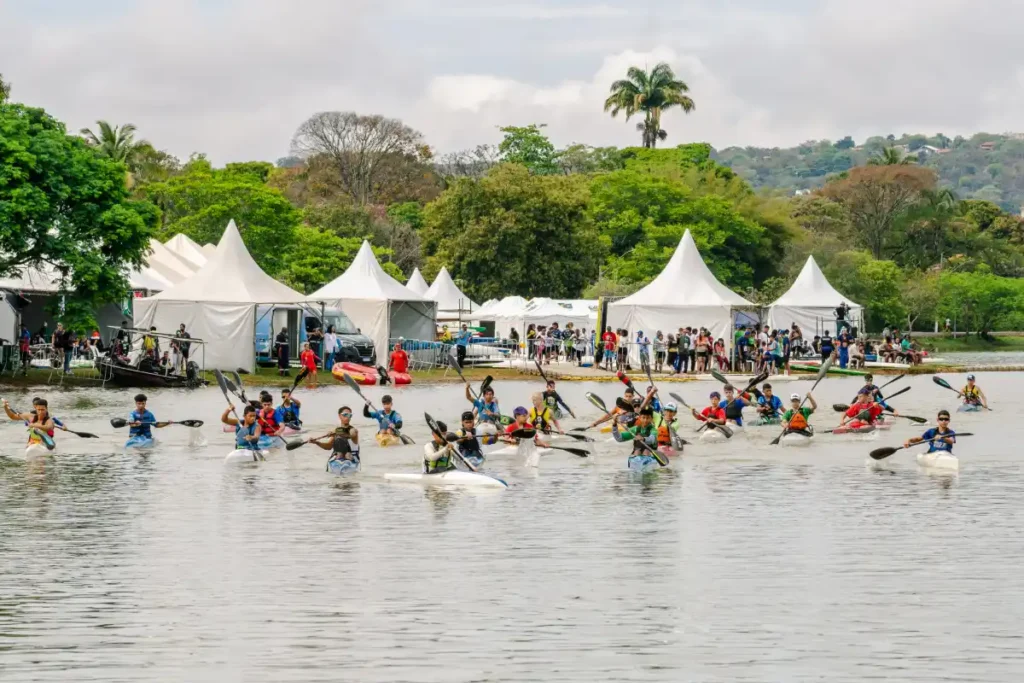
The 2026 Brazilian Sprint Canoe and Paracanoe Championship was held in Lagoa Santa (MG) between September 3 and 6, bringing together over 500 athletes from across the country. (Photo: Reproduction/Canoagem Brasileira).
The Routine Behind the 40 Seconds
Those who follow the trips with the Brazilian National Team on social media can hardly imagine the daily training load. Flavio makes a point of managing expectations:
Athletes at the 2026 Brazilian Sprint Canoe and Paracanoe Championship (Photo: Reproduction/Canoagem Brasileira).
“We end up showing a certain glamour on social media with travel, the Brazilian national team, national and international competitions, but in daily life, it’s a completely different story. It’s a daily routine for most of the year, Monday to Friday, and during some periods on Saturdays as well. We go out on the water to paddle every morning. Monday, Wednesday, and Friday afternoons are reserved for strength training in the gym. During some periods, on Tuesday afternoons, I also paddle to complement and add a bit more volume. On Thursday afternoons, there is swimming to complement cardio. The interval between workouts is meant for resting so I can perform well in the next session.”
Cool Mind Under Pressure
Reitz wrapped up his participation in the championship on a high note in the KL2 200m category, setting a time of 40s69. (Photo: Reproduction/Canoagem Brasileira).
In a 200-meter race that lasts about 40 seconds, any mistake at the start costs you the race.
“I won’t say there’s no nervousness or butterflies in the stomach, but we learn to master and turn that adrenaline and anxiety into something positive so we don’t start feeling sluggish or sleepy and miss the timing. The race is extremely fast, so any error can be critical between fighting for a medal or finishing in the back of the pack. Being alert, focused, aware of your capabilities, and executing in the race what you trained for is the key, always seeking your best performance.”
From High Jump to Paracanoeing
Flavio competed in three Paralympic Games in the high jump before switching to paracanoeing. Changing disciplines meant re-educating his body and changing his training mindset.
“After 12 years practicing track and field, specifically the high jump, making a transition like that demands resilience and persistence. Especially regarding the body parts used in the process: before, I used mainly my legs; today, I use mainly my arms and torso. So this shift required special attention.”
Flavio Reitz competed track and field for 12 years before switching to canoeing. (Photo: Reproduction/Brazilian Paralympic Committee)
“We end up realizing that canoeing has a different physical and psychological strain. The moment you are in contact with nature, you don’t control it; it controls you, and you are forced to adapt to the wind, currents, waves, and debris in the water. Unlike track and field, where the surface is always the same and at most wet from rain, in canoeing, the wind and water level end up interfering. Understanding that we are in a different environment was, I believe, the main point for us to evolve physically and mentally.”
Focus on Los Angeles 2028
Aiming for his fourth Paralympic appearance, Flavio and his coaching staff are focusing their planning on the international qualification cycle, which runs through May 2028.
Paracanoe World Cup at the Olympic course in Montreal. (Photo: Reproduction/Canoagem Brasileira).
“The 2027 competitions (World Championship, World Cups, and Pan American Games) add crucial points. The top 10 in the rankings secure the country’s slot for the Games. The goal is to meet the criteria and make the final list to represent Brazil in Los Angeles.”
Support from Core Case
To dedicate himself exclusively to his training routine and top-tier equipment, Flavio highlights the importance of sponsorship from brands like Core Case.
Flavio Reitz with Edson Onofri and Pedro Onofri in Lagoa Santa. (Photo: Reproduction/Core Case).
“Being supported by a company of Core Case’s stature means, first and foremost, recognition of my journey, overcoming my amputation, and being a high-performance athlete capable of representing the country in major competitions. This kind of support from private companies—companies that also value the sporting and social aspects—is of paramount importance. It gives us a foundation so we can focus solely on training; the background, the structure for nutrition, supplementation, uniforms, and equipment are all backed by companies like Core Case”.
Behind the scenes at the tournament in Lagoa Santa. (Photo: Reproduction/Core Case).
The partnership reinforces Core Case’s commitment to promoting transformative initiatives that connect innovation and perseverance.
Sustainability has always been part of the way Core Case develops its products, its processes, and its long-term vision for the mining industry. Now, that commitment has reached a new stage.
Core Case offset 100% of the CO₂e emissions identified for its annual production, making this operation CO₂ neutral and adding a new dimension to its environmental commitment, which already includes the use of recycled raw materials, the development of long-life products, and processes focused on reducing environmental impacts.
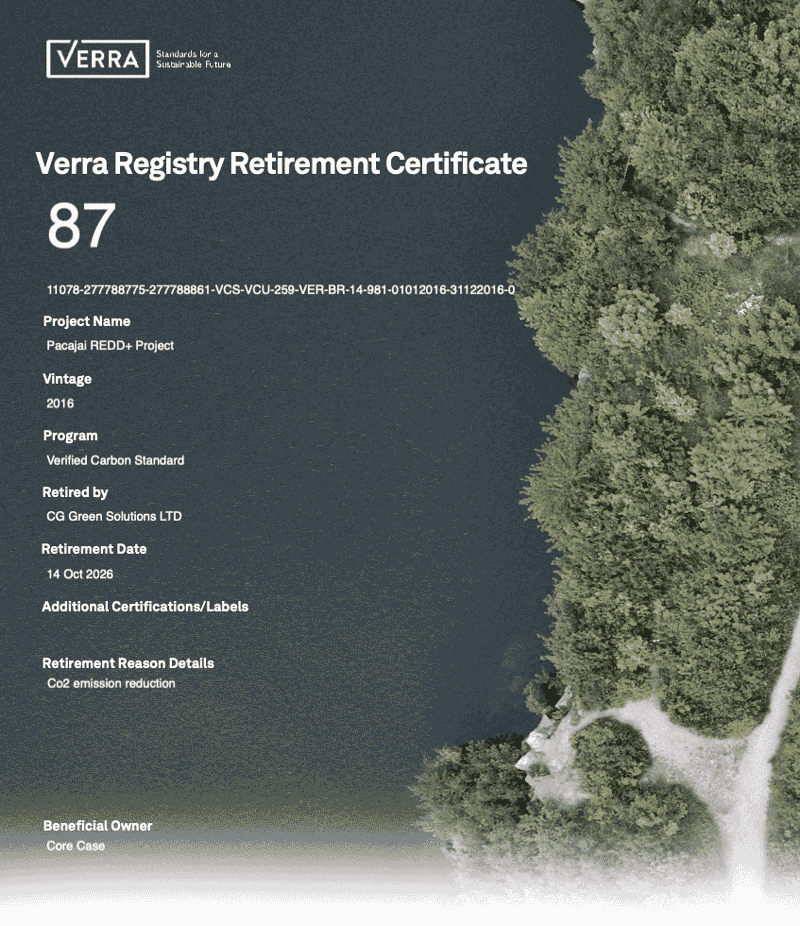
The offsetting was carried out using credits that follow the Verified Carbon Standard (VCS), developed by Verra, one of the leading international references in the voluntary carbon market.
Each Verified Carbon Unit (VCU) represents one tonne of CO₂ equivalent reduced or removed from the atmosphere. Verra’s system establishes criteria for validation, verification, registration, and traceability, helping provide greater transparency and reliability throughout the offsetting process.
Offsetting emissions does not mean stopping efforts to reduce them. It also means taking responsibility for emissions that are still part of the operation, while new efficiency and reduction measures continue to be developed.
From Offsetting to Restoration
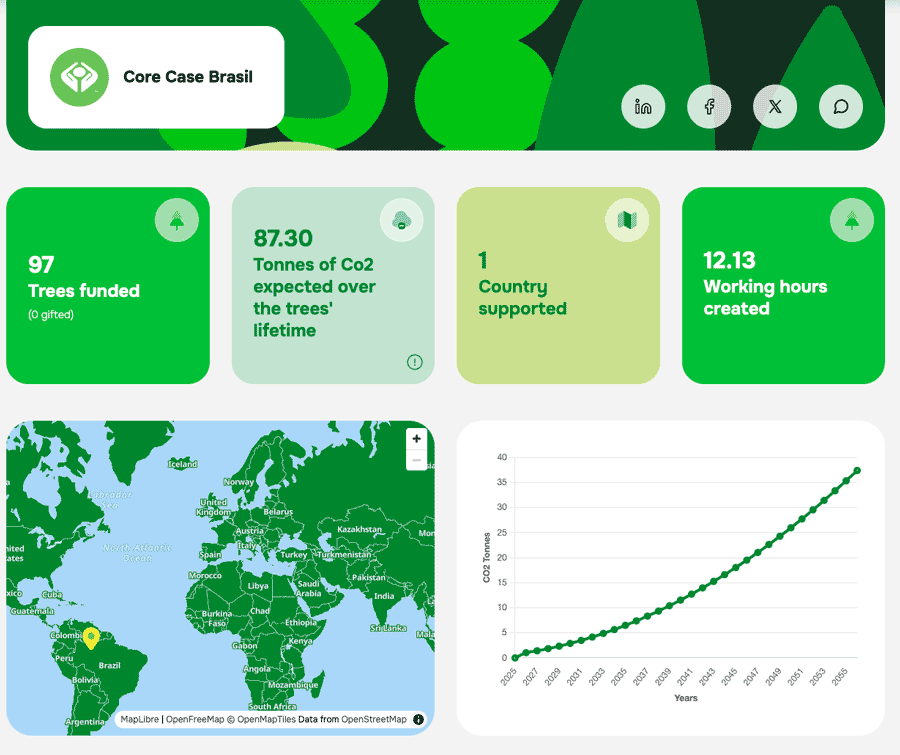
In addition to offsetting emissions, Core Case has also begun supporting a reforestation project in Brazil through Evertreen.
The program focuses on restoring degraded areas through the planting of native species, contributing to carbon capture, biodiversity recovery, and the regeneration of Brazilian ecosystems.
Core Case’s participation can be followed through its own area on the platform, the Core Case Forest, making this contribution visible and connecting the company’s climate commitment with a concrete environmental restoration initiative.
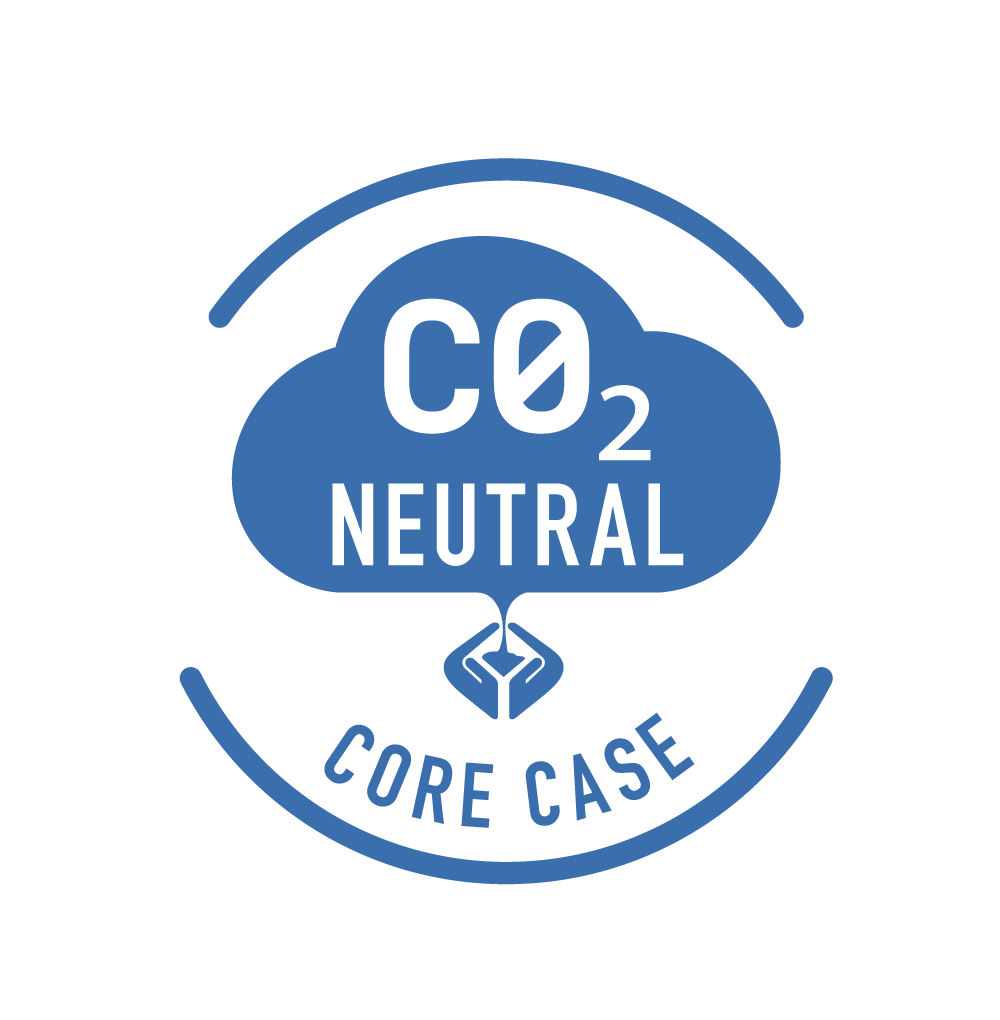
The offsetting of 100% of the CO₂e emissions identified for Core Case’s annual production is now represented by the CO₂ Neutral seal.
The seal reflects a concrete commitment to environmental responsibility, making visible an initiative that involves measurement, offsetting, and the ongoing management of emissions associated with production.
A Natural Evolution of Our Purpose
For Core Case, making its production CO₂ neutral is not an isolated action. It is part of a strategy that begins even before manufacturing.
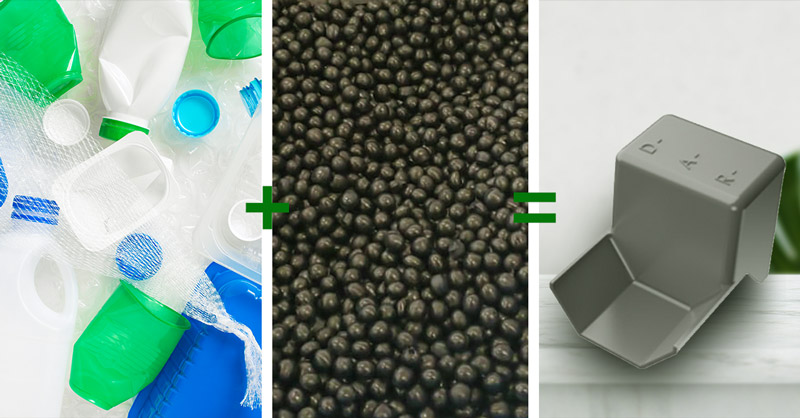
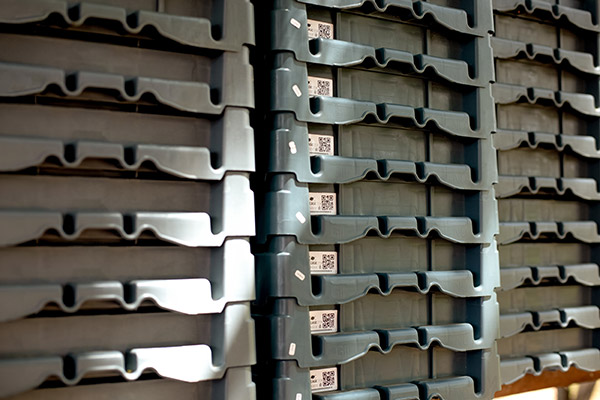
Our core boxes are made from 100% recycled polypropylene, can be recycled again after use, and are designed to remain in operation for many years, reducing the need for frequent replacement and contributing to more efficient use of resources.
The factory is certified to ISO 9001 and ISO 14001, reinforcing quality management, the recovery and use of waste generated during the production process, and the proper final disposal of any remaining waste. Now, the full offsetting of the emissions identified for annual production adds a new dimension to this commitment.
Recycled raw materials;
Long service life;
CO₂- neutral annual production;
100% of emissions offset through verified credits;
More than reducing impacts, we seek to take responsibility for them. Because preservation does not end with the product.
As well as in 2022, ESG remains one of the biggest challenges for the mining and metals sector.
As the issue becomes a priority for all stakeholders, the industry is adjusting to ESG factors with corporate strategies, decision-making and reports.
The difference in the long run will come to those who invest in all aspects: social, environmental and governance. The mining sector needs to go further and take a holistic view to gain the investor and community´s trust in which it operates.
Check out the main opportunities and challenges in ESG for the mining sector according to a study by Ernst & Young (EY).
Water management
76% of the respondents cited water management as the main challenge in ESG, and this result has an intense relationship with climate change and concerns about water scarcity that increase year by year.
The close relationship between organizations and government needs to be a priority for mining companies. Together, they can develop plans and initiatives that aim at care and conscious use of resource within organizations.
Circular economy
Circular economy is a concept that associates economic development with a better use of natural resources, through new business models and optimization in manufacturing processes with less dependence on virgin raw material, prioritizing more durable, recyclable and renewable inputs.
This concept goes beyond the scope and focus of waste and recycling management actions, aiming at a broad scope that includes from redesigning processes, products and business models, to optimizing resources use.
Traditionally, mining operations follow a linear process of searching, mining, processing and disposing. A circular economy example in this sector can be the creation of by-products from mining tailings, which can be used both in the mining sector and in other industries.
Biodiversity
Mining companies are under increasing pressure to assess biodiversity risks in their businesses. According to EY’s research, miners will need to demonstrate that mines are considering the long-term impact on biodiversity.
In addition to avoiding negative consequences, miners must also articulate their net positive impact. An action in this case may be preserving forests in the enterprise vicinity, creating parks, zoos and social projects to preserve the local biodiversity.
Data released with credibility and clarity
Organizations around the World Report ESG information through different initiatives and programs. One of the best known and used in Brazil is GRI (Global Reporting Initiative), which enables companies of any size, sector or country to disclose their economic, environmental and social impacts, explaining how they are managed internally.
These reports purpose is ensuring quality and comparability of information that can support the stakeholders decision-making, especially investors, in targeting and allocating capital.
Around the world, regulation of carbon emissions, sustainability and social governance is increasing, and in the mining sector this is no different.
Although regulation on risk management and sustainability reporting is only starting in many countries, there is still no global regulatory standard for mandatory reporting on ESG topics, which makes it difficult to compare companies in a global investment portfolio.
To resolve this issue, IFRS Foundation Trustees formed the ISSB (International Sustainability Standards Board), which aims to develop minimum standards of information and sustainability reports to be used for decision-making in the capital market.
By complying with the new standards and expectations, the mining sector will have an obligation to improve the availability, accuracy, reliability and clarity of the data presented to all.
Mine Closure
This is one of the great industry challenges, the management of existing assets.
A proactive approach to mine closure begins when planning is carried out since the beginning of the enterprise.
Designing a mine with closure in mind allows for continued engagement of owners, employees and communities, creating opportunities for progressive activities closure.
Mine closure impacts a wide range of stakeholders and expectations are rising about how miners mitigate these impacts, including socioeconomic effects on communities.
Improving diversity, equity and inclusion
The main problems include:
Female participation increase: companies still struggle to attract, retain and promote women, depriving them of the spotlight as well as the proven benefits of a more gender-diverse workforce;
Safety and support for the local community: companies need to change the way mining sites are built and operated to improve safety and support for all workers. For example, the construction of local kindergartens and schools could attract different people to mining and provide a positive contribution to the community.
Building a brand with purpose: mining must do more to build a brand aligned with the purpose and values of the next talent generation.
Health and Safety
During the COVID-19 pandemic, many companies have boosted worker health support, but the industry still needs to do more to improve psychological health and safety.
Fly-in fly-out employees, for example, face challenges getting support, a problem that has increased with pandemic-related seclusion and isolation. Bullying and harassment are also other points that are linked to ongoing issues around a lack of diversity, inclusion and respect.
The recently published standard ISO 45003:2021 is a globally recognized framework of how to manage and protect mental well-being at work. It can be an opportunity to reform the safety culture in mining.
Another factor to consider is reintegration into the workforce. Data show that 90% of people who suffer a physical injury return to work within 90 days, but only 50% of people who took leave because of mental health problems returned after six months.
Mining and metals companies need to develop an approach to reintegrate these workers, especially when work is a causal factor behind their illness. This can include, for example, reviewing workloads, creating a support network and ensuring a mentally safe workplace. As physical injuries at work can also trigger mental health challenges, offering physical and mental health support can help employees return to work and full health.
Core Case - a company aligned with ESG pillars
Since the conception, Core Case carries with it the ESG pillars. The company was born to produce cases for survey cores storage in 100% recycled plastic. This goal was achieved and over the 12 years of history, Core Case has become a reference in Brazil.
In addition to the sustainable cases for survey testimonies, Core Case develops actions that favor the development of projects related to corporate governance, environmental and social sustainability.
In addition, we emphasize that the role of Brazilian mining in implementing ESG practices can contribute significantly to an increase in the sector visibility and acceptance, which, despite being so relevant, are still widely criticized by society.
Reference
Top 10 business risks and opportunities for mining and metals in 2023. Ernest & Young.
Core Case was highlighted at TOP 10 Mining Tech Award – Company in APAC 2022, and this is yet another recognition for a work that strives for process improvement, sustainability, and application of cutting-edge technologies in the mining industry.
The award is granted by important international media Metals & Mining Review that operates in the technology and mining industry identifying the most relevant companies for professionals and their industry. Published in Florida, present in Europe and also in emerging countries.
Core Case is bringing a much-needed sustainable transformation to the minerals mining industry with its environmentally-friendly, recycled plastic boxes for storing geological core samples. With an emphasis on innovation and environmental responsibility, Core Case’s boxes are designed by geologists with extensive experience in mineral extraction. The core boxes not only help reduce plastic waste through recycling, but also diminish the detrimental environmental impact of using wood products. It’s no surprise Core Case has become a forerunner in adherence to ESG norms.
To drive environment-consciousness in its product lines further, Core Case will continue to leverage sustainable
technology
Pioneering in recycled raw materials use
TOP 10 Mining Tech – Company in APAC 2022.
In a unique and visionary environmentally-conscious move, Core Case was one of the early pioneers in using recycled plastics—as opposed to virgin plastic—to build its core boxes. Since the company’s inception 11 years ago, Core Case has been firm in its approach to enabling eco-friendly, sustainable mining operations by leveraging sophisticated recycling technologies and materials. In the initial stages, procuring recycled materials and processing them to produce core boxes was a challenge.
Moving ahead of its initial product line, Core Case today has access to vast amounts of recyclable plastics courtesy of its suppliers and top-notch in-house recycling processes. This has enabled the company to build its robust product line of core boxes, namely Generation I, Generation II, Adapt, Petro Case (for the oil and gas industry) and Chip Case (for RC drilling).
Its team of qualified professionals determines and identifies the parameters of the plastics to be used in core box production, analyzes the recycled raw materials for core box manufacturing, and establishes routines for quality testing, post-production, in the company’s laboratory.
Customer Centricity
The company is defined not just by its innovative, sustainable approach to enabling efficiencies in the mineral extraction industry but also by its customercentric operational processes that enable meeting customers’ varied sample storage requirements well within deadlines.
A notable illustration of Core Case’s dedication to going the extra mile is its Adapt product line. A leading national mining company in Brazil needed adjustable core boxes to boost their sample storage capacity, as well as make it easier to stack the boxes in warehouses. In response to the client’s customization request, Core Case designed and developed the Adapt line. The company modified its existing core boxes by adding a detachable adapter that helps reduce box size. The adapter allows the adjustment of samples storage space in the boxes as per their solid and soft states. This tailor-made product enabled the customer to triple their storage capacity in the warehouse, compared to conventional wooden boxes. The success of this product prompted Core Case to transform it into an entirely new product line.
Material analysis laboratory
The latest addition to Core Case’s offerings is its technology division and business branch, Core Case Tech, launched to improve geological core sample data collection and access. The object of this system is to save time, reduce and, if possible, eliminate any possibility of errors that might occur while taking and recording the information generated by taking core samples: such as the description, sampling details and final storage. The management system is able to help workers who are out in the field, where samples are stored or in the office, by using electronic resources to analyze the geological information and that of the sample. It saves time and creates confidence in the data, by removing many of the inherent mistakes that can result from the conventional process.
A future focused on sustainable technology and expansion
To drive environment-consciousness in its product lines further, Core Case will continue to leverage sustainable technology. “Our focus will be on aligning our product to technology that provides more security, sustainability, and agility when it comes to mining-related processes,” states Flávio Ramos, Administrative Director at Core Case.
Core Case also looks forward to spreading its footprint into more foreign markets. Already well-established in Brazil and commencing business operations in Canada, the company plans to gain a stronger foothold in the Latin American market. With that goal, Core Case will also oversee the development of products better suited to international mining markets. In essence, Core Case will continue on its mission to bring novel, sustainable geological core sample storage solutions to the mining and related industries, transforming and augmenting drilling, extraction, and sampling operations across the mineral exploration sector.
Lithium was discovered in 1818 and is a light metal, commonly found in magma rocks, not occurring freely in nature, as it is a very rare ore. It is worth mentioning that an important Brazilian personality, José Bonifácio de Silva Andrada, discovered 2 lithium minerals, describing, and naming the spodumene and petalite.
According to S&P Global, the demand for lithium should reach 2 million tons by 2030 and in this scenario, Brazil could be one of the main producing countries as it concentrates most of the world’s lithium reserves in Latin America.
This element has even been called the ” 21st century’s white gold” due to the energy matrix transition that the world is going through, it can be used in several renewable energy sources, which should be adopted by most countries in the years to come, being its main use in batteries for electric vehicles. To learn more about lithium, read this content to the end!
Mining in Brazil
In 2008, only 3 countries had 85% of all the lithium ever found until that year in the world, the demand for this ore has started to increase a lot in the last years, due to the energy transition that will happen for cleaner energy sources. In 2020, according to the USGS, Brazil was the fifth largest lithium producer, reaching 1900 tons, Chile reached 18,000 tons, being second and Australia was first reaching 40,000 tons.
Some research suggests that the demand for lithium will increase up to six times by 2050. According to the general director of the SGB-CPRM, today Brazil’s representation in the world production of lithium is only 1.5%, and may reach 5% in about 10 years, even with this increasing global production.
Although this representation is low, there are data from the United States Geological Survey (USGS) published in 2021 that place the country as the seventh in the world to have a greater amount of lithium in its territory. Today it is estimated that 95,000 tons could be exploited with current technologies and laws, in the total available reserves, counting what is currently inaccessible, is estimated at 470,000 tons.
Currently, only two companies produce lithium in Brazil, Companhia Brasileira de Lítio (CBL) and AMG Brasil, and there are a number of companies with projects in progress. Among them is Sigma Lithium, which should start selling ore by the end of 2022 and has invested R$ 2.3 billion in its ventures in the country.
The Jequitinhonha Valley, in Minas Gerais, concentrates most of the known reserves in Brazil, and the extraction of this ore is carried out in small and medium sized quarries. It is important to note that, increasingly, there is an effort by the Ministry of Mines and Energy to map other regions with potential for lithium production and exploration.
New studies for lithium in Brazil
The SGB-CPRM did a first survey in the Jequitinhonha Valley, northeastern Minas Gerais, where the state’s main lithium mining companies are located, the second phase of the project is being completed and is studying occurrences in the states of Rio Grande do Norte and Paraíba, and a third phase should be started to verify occurrences in the state of Ceará.
The purpose of these campaigns is to understand more about the Borborema Pegmatite Province, located between the states of Rio Grande do Norte and Paraíba, and to learn more about the areas already mined, in addition to discovering new deposits.
It is worth mentioning that the time between discovering the lithium in a place and starting production can take up to ten years, because there are some challenges, among them, adding value to the ore that Brazil has not yet mastered, and this is one of the areas where investment will be made.
It grabbed attention from several industries, especially the automotive industry, which is interested in mining lithium because it is crucial to use it in electric vehicles, since, lithium is required to manufacture a battery for this type of vehicles.
Lithium and clean energy
Currently 70% of the world’s lithium is already used for the production of batteries, and a leap in the Brazilian production is expected by 2025, as this demand are increasing, and even more electric vehicles are expected to be running in the country. Tesla, a world leading company in this industry, revealed that almost half of the vehicles it produced in the first half of this year were equipped with iron-lithium phosphate batteries.
In addition to batteries for electric vehicles, it is also used for solar energy, wind power, and nuclear energy reactors. The U.S. Department of Energy considers lithium as one of the 16 key strategic raw materials for energy transition.
Decree allowing the trade of Lithium in Brazil
On July 06, 2022, the Decree no. 11.120 was published in the Brazilian Official Gazette (DOU), promoting the opening and implementation of the Brazilian lithium market. This decree allows foreign trade operations of lithium minerals and ores and their derivatives and has the objective of positioning Brazil as one of the main countries for lithium mining.
Source: Metais BR (https://www.metaisbr.com/wp-content/uploads/Produto-Litium.jpg)
Due to this flexibility, they expect more than 7,000 direct jobs in lithium mining to be created, reaching a total of 84,000 direct and indirect jobs in its production chain. Therefore, lithium will be increasingly strategic not only for the country, and throughout the world in years to come.
Core Case has developed plastic products and solutions for shipping and packing diamond drill core samples. They are produced in 100% recycled and recyclable plastic, with an ergonomic shape, light and easy to transport, and also more durable.
If you or your company work in this industry, be like the largest mining and drilling companies, use Core Case products and ensure the quality of your samples.
The records and materials collected by drilling methods are essential sampling products in a mineral project, which characterize deposit the type and will be used in later analyses.
The drilling and perforation campaigns in a project are high-cost procedures and therefore there must be measures for the proper management of the sampled materials, to better preserve them.
Have you ever thought about how to store drilling records?
Millions of dollars might be spent on a project to make an incredible drilling campaign, but after all the collection procedure, it is decided to store the samples in dubious conditions, opting for wooden boxes that are eventually cheaper.
This factor might be crucial for poor sample management, and significant losses can occur as a result of storage conditions. In other words, it ends up investing heavily in drilling holes, but in storing the data so that it is well packaged and organized for future analyzes and consultations with auditors, it decides to opt only for the economic criterion.
Remember that records are not just your project data, they are the geological legacy of your company’s mineral deposit.
This way, thinking of a smart alternative to store your enterprise’s drilling records is the ideal way to manage your samples!
Core Case plastic boxes - Why use Them
Millions of dollars might be spent on a project to make an incredible drilling campaign, but after all the collection procedure, it is decided to store the samples in dubious conditions, opting for wooden boxes that are eventually cheaper.
Using wooden boxes to transport and storage diamond samples generated a series of difficulties, common to many companies in the mining sector. Core Case developed new products for this task, which offered a new alternative to the market, solving these problems and bringing other benefits.
Main benefits of Core Case plastic cases:
Best cost benefit: Medium and long term use of Core Case products generates a better cost benefit compared to other materials, such as wood or metal.
Economical transport: Core Case plastic boxes are lighter than wood, which significantly reduces the cost during transport.
Sustainability and ESG: Does your business follow ESG strategies? Core Case products are made from 100% recycled materials.
Greater durability: Plastic has a longer shelf life than wooden boxes, especially if properly stored.
Efficient use of space: Core Case products considerably improve the organization of warehouses and storage locations, reducing the need of high investment in infrastructure Greater stacking capacity.
Resistance and no contamination risk: Core Case products present a lower risk of fire when compared to paperboard and wooden boxes. Plastic is an inert material that does not chemically react with other substances. Core Case boxes have holes for water drainage, preventing contamination with the box stacked below.
In the table below we can compare different types of records storage box available on the market.
Core Case’s principle is making everything with 100% recycled materials. Core Case’s purpose is preserving the planet through responsible exploration, promoting sustainability.
We are committed to constantly improve our processes and develop innovative solutions to limit negative environmental impacts (whenever possible), and minimize the waste production that is harmful to the nature.
So, do as the biggest mining and drilling companies, use CORE CASE products and ensure your samples quality.
Mining industry, technological development and sustainability
In addition to the economic benefits of using suitable boxes to store geological drilling records from your mineral enterprise, we know that the mining industry is going through a key moment in the use of new technologies to reduce the environmental impacts generated in the industrial process.
By using plastic boxes produced with 100% recycled material that have greater durability than other materials, your enterprise contributes to the waste reduction disposal to the environment, investing in a material with an innovative proposal to the mineral sector.
Our Core is Preservation
Core Case’s principle is making everything with 100% recycled materials. Core Case’s purpose is preserving the planet through responsible exploration, promoting sustainability.
We are committed to constantly improve our processes and develop innovative solutions to limit negative environmental impacts (whenever possible), and minimize the waste production that is harmful to the nature.
So, do as the biggest mining and drilling companies, use CORE CASE products and ensure your samples quality.
Annually, the Environment Institute of Santa Catarina (IMA) recognizes, through the Fritz Müller Award, companies that stand out for environmental practices. The award is the state’s main honor in this sense, aiming at projects and initiatives that go beyond the current environmental legislation. Project We Nature is one of the 23rd Fritz Müller Award’s winners.
On June 29, 2022, the winners names of the award 23rd edition were announced, which included the registration of 88 projects or actions.
Project We Nature was made possible by the Brazilian-Canadian company Core Case, and won the “Socio-environmental Projects” category.
About Core Case
In short, Core Case has been producing recycled items for the mining sector for over 10 years and, almost three years ago, it launched a line of clothing and accessories focused on sustainability. The brand also developed ecological products made from waste collected in the beach cleaning efforts, by Project We Nature.
We Nature
So, in 2021, as a result of a partnership with NGO Eco Local Brazil, collective efforts carried out by the project were responsible for collecting 43 tons of waste from beaches on the South Coast of Brazil. In addition to collective efforts that engage volunteers and institutions linked to the environmental cause, We Nature also classifies all the material found, giving it the most appropriate destination.
This way, everything is planned. In the moments preceding each action, participants are instructed on how the activity will take place. First, gloves, garbage bags and instructions for collection are distributed. Therefore, these wastes impact on the environment is reinforced. With that, the purpose is making an awareness work. At the end of each action, the residues found are weighed and classified.
Certainly, a very relevant information about this project is that 100% of what is collected in environmental actions is used. In other words, most of the waste is sent for recycling. Items that would normally be discarded in landfills, as they are considered non-recyclable, are transformed into raw material to manufacture tables, benches, and ecological plant pots. This is an innovative process, which makes a big difference in the use of waste and resulted in this important state recognition, making project We Nature one of the 23rd Fritz Müller Award’s winners.
The Fritz Müller Award also highlighted environmental initiatives by Epagri, Portobello, Cooperativa Aurora, Whirlpool, BMW do Brazil, GDC Alimentos S.A (Gomes da Costa), Schulz Compressores, RPPN Catarinense and Escola da Fazenda.
To the extent the demand for renewable energy continues to grow, the mining industry is facing a decisive moment for becoming a recognized contributor in the transition to broader energy.
Mining is fundamental for the growth of renewable energy, since green technology strongly relies on certain metals and minerals – that come from mining.
Therefore, both industries – mining and energy – must undergo adaptations for the growing demand for these materials to be met.
In this text we will approach the main characteristics of the energy transition (the so-called clean energy) and its relation to the mining industry. Read until the end to learn more about this important matter!
Renewable energy in the future
The effects of climate change already affecting several parts of the world and the alerts made by scientists, especially in the last IPCC report point to an alarming situation in the worldwide energy system.
The raising of sea levels, intense heat eaves, loss of habitat and animal species, droughts and floods have led to global pleads to diminish the impacts of climate change – which must happen sooner rather than later.
According to the Paris Agreement and global pressure, governments and large companies are trying to reduce energy-related carbon dioxide emissions. They try to achieve that especially by implementing renewable energy sources, such as wind, solar and hydro.
The International Renewable Energy Agency projects that, for meeting the climate goals, total participation of renewable energy must increase in two thirds by 2050, suggesting that renewable energy may represent 60% or more of the total final consumption in many countries.
This demand means that the sources of renewable energy will have to increase both their capacity and generation. For instance, the global cumulative installed power of onshore wind power will have to be expanded threefold by 2030 and ninefold by 2050.
For offshore wind power, the increase would have to be tenfold by 2030. In terms of solar power, the global capacity will need to grow from a total 480 gigawatts in 2018 to 2,840 gigawatts by 2030 and 8,519 gigawatts by 2050. As for solar power, it is projected to reach 8,519 gigawatts in capacity worldwide by 2050.
These changes are significant and to that effect, companies need to be tuned to current demands which, in addition to being necessary for the environment, impact the economy – ESG’s agenda and sustainability and are attracting more and more investments; therefore, it is necessary for these demands to be broadly met.
Clean energy and dependency on mining
Discussions concerning sustainable energy and the global supply chain are often at odds with the fact that a renewable energy dependency plan relies deeply on the mining industry – since it supplies and metals and minerals necessary for building and operating it.
Solar power relies on the supply of aluminum, copper and certain rare earth elements (including indium and cadmium) for producing photovoltaic panels.
Likewise, wind turbines are made of steel and their manufacturing, consequently, requires the production of iron, but also some rare earth elements, such as neodymium, which are necessary for the magnets used inside the turbine generators.
Overall, copper is essential for the entire energy-generation infrastructure, as well as for electrical vehicle technology (EV).
Rare Earth Materials and wind turbines
For example, the case of rare earth metals, such as dysprosium and neodymium: Both metals are used for making alloys for permanent magnets found in wind turbine generators, with China mining approximately 63% of the global rate earth materials market. Currently, one 5-megawatt wind turbine requires one ton of alloy.
Given future projections for wind power, the global demand for neodymium and dysprosium is projected to increase 2.1 times, with 65% of new turbines installed int he next ten years, incorporating technology that requires rare earth materials.
Copper and wind turbines
Likewise, copper is in high demand due to its high conductivity and durability. Inside an installed wind turbine, the copper content is from 2.5 to 6.4 tons per megawatt, used in the generator, transformers and wiring.
The global wind power market, currently requires an average 450 kilotons of copper a year and that is expected to increase to 600 kilotons per year by 2028. This number will probably be substantially increased, considering that future requirements for renewable energy will lead to larger wind turbines notwithstanding the need for copper for other technologies, such as solar power and electrical vehicles.
The demand for copper due to electrical vehicles alone is likely to increase in 1,700 kilotons by 2027, since electrical vehicles are projected to represent more than 7% of annual vehicles sales until 2025.
Copper and rare earth metals are difficult to replace and reuse thereof depends on recycling initiatives, which means their continued mining is essential to support the renewable energy industry.
Silver and solar panels
Silver, due to its high resistivity, is used in solar cells in the form of a past that collects electricity from the cell, so it may be stored or consumed. The metal is used in 95% of photovoltaic panels installed, which is equivalent to 9% of the total global production of silver.
With the solar power capacity growing rapidly, the demand for silver mining is high.
Storage batteries – copper, lithium, nickel and cobalt
Given its intermittent nature, the increase in the generation of renewable energy will require large power storage units, which, on its turn, will lead to the increase in demand for minerals contained in storage batteries, especially copper, lithium, nickel and cobalt.
However, there is a concern that the fast increase of the demand for these metals cannot be met based on annual production rates. Automakers, such as Tesla and Mercedes-Benz are already cutting down production forecasts due to concerns with the offer.
Mining challenges for clean and sustainable mining
The core objective of the change into renewable energies is the reduction in greenhouse gas, caused by fossil fuels.
However, this change cannot cause even more impacts on the environment we are trying to preserve, and therefore, it requires that mining operations also become more sustainable concurrently with the energy transition process.
Climate change also represents a broader threat to the mining sector. Metals that will probably have an increased demand, due to their importance in the production of renewable energy technology, tend to be concentrated in areas that are more vulnerable to the effects of climate change.
Furthermore, the activities of the mining industry also require energy, and therefore, they are sources of emission of greenhouse gas.
The mining industry, which already has its environmental impacts broadly known by society, has even greater challenges to change this scenario, since the demand for minerals will be continued – as will the need for adaptation into a more sustainable world.
More sustainable mining, cleaner energy and opportunity
The Financial Times reported in September 2019 that the number of institutional investors that committed to completely remove fossil fuels from their portfolios by 2030 soared from 180 in 2014 to over 1,100, representing approximately US$ 11 trillion in assets.
Therefore, at the same time the demand for renewable energy continues to grow, the enthusiasm for investment in fossil fuels and mining is decreasing.
Consequently, the industry challenges are great and it will be necessary implementing continuous adaptations for managing a broad and detailed ESG agenda, thus attracting investment and development that is adequate to current demands.
The mining industry, therefore, must pay attention to opportunities renewable energy present as one of the several solutions for making the industry more sustainable.
One of the top advantages of renewable energy applied to mining is it can supply the energy needs of mining operations in remote areas, where the cost of building the infrastructure necessary for connecting the mine to the grid or building a conventional power plant would be substantial.
Therefore, with the progress in renewable energy technology and the commitment of some of the top players in the industry, the industry is ready for the change and there are many benefits to mining companies moving to renewable energy:
Reduced reliance of fossil fuel that is vulnerable the fluctuations of global prices and reduction in carbon emissions;
Meeting environmental and social criteria (ESG) used for measuring the sustainability of a given project – will be a prerequisite requirement for both investors and creditors.
Our Core is preservation
CORE CASE is a Brazilian-Canadian company founded 11 years ago, which has consolidated itself in the mining market and that is present in the most important companies in the industry.
Core Case’s cases and accessories are produced in 100% recycled and recyclable plastic (Polypropylene – PP), in ergonomic shape, enduring, light and easy to transport, in addition to being more durable than wooden boxes or other materials.
If you want to learn more about our services, contact us!
The mining industry is important in contemporary societies, supplying the continuous demand for minerals in various branches of the market and promoting economic development.
However, this continuous increase in demand for natural resources, coupled with population growth and consumerism of today’s society, go against the concept of sustainability.
For this reason, the theme of sustainable practices in the mining industry is increasingly highlighted, regarding the importance of developing solutions that can be adopted by the industry, generating less environmental and social impact and ensuring the availability of resources for future generations.
Read this text to the end to learn more about this topic!
UNO Sustainable Development Goals
In the fall of 2015, the world’s heads of state adopted the UN Agenda 2030 with the 17 sustainable development goals. The overall goals of the Agenda are as follows:
Eradicate poverty and hunger
Ensure human rights for all, achieve social and gender equality
Ensure the protection of the planet and its natural resources
The sustainable development goals balance the three dimensions of sustainable development: economic, social, and environmental.
The 2030 Agenda is a positive step towards a global cooperation and can contribute to a greater realization that require the balance of different social goals – economic sustainability is a prerequisite for social and environmental sustainability and vice versa.
One of the most prominent sectors that require the adoption of sustainable practices is the mining industry.
A sustainable view of the mining industry means taking into account the people, the environment, and the economy.
The human aspects include health, social and cultural elements. It is necessary to take into account the environmental matters such as emissions, waste management, post-extraction remediation, nature conservation, energy use, and climate. Economic aspects include social development, prosperity, competitiveness, resource management, and the circular economy.
The mining industries affect all three dimensions of sustainability, but the use of mineral resources is indispensable for our society, including to provide raw materials for a more environmentally friendly technological and energy transformation.
The regulation of mining activities depends mainly on national frameworks and policies, but the implementation of good practices remains problematic.
In order to effectively shift to “sustainable mining,” governments and companies must recognize the environmental and social impacts of mining and enact laws and regulations that require community consultation throughout the mining life cycle.
How can mining become more environmentally sustainable?
Proper disposal and treatment of waste and tailings
Reducing water use and waste production
Alternative energy sources, such as solar or wind power
Battery-powered equipment
Use of equipment from recyclable sources
Improvements in the extraction process
Appropriate mine closure measures
Environmental restoration
Recycling
Regarding to energy, a mining company can seek alternative energy sources, such as solar or wind power, as well as use electric-powered equipment and vehicles, reducing the emission of greenhouse gases.
Waste management plans are required to avoid soil, air and water pollution. Such plans are also in place to properly store the large volumes of waste produced in the mines.
The use of cleaner production techniques, environmental control technologies, using waste as a raw material, and process re-engineering are other ways to reduce waste production from mines.
Proper waste disposal is crucial to reducing the environmental impact of mines. Companies can invest in equipment that helps transform waste into reusable materials.
Importance of sustainable vision for mining
In addition to the importance of reducing the environmental and social impacts of mining, the industry itself can also benefit from adopting a sustainable vision for the industry.
Mining companies can find the unexpected benefit of financial gains from improved sustainability.
While green policies may seem expensive, they actually can provide a competitive advantage to the company. Also, the ability to recycle and reduce waste may lead to an improved bottom line.
Ultimately, for mining companies to thrive in today’s political, social, economic, and environmental scenario, sustainable practices must be at the heart of operations.
Many companies are starting to understand that their economic feasibility relies on the adoption of an environmentally and socially responsible approach at all operation levels.
–
Preservation is our Core business
CORE CASE is a Brazilian-Canadian company with 11 years of activities that consolidated its position in the mining market and is present in the most important companies in this industry.
Cases and accessories supplied by Core Case are produced using 100% recycled and recyclable plastic (Polypropylene – PP), have an ergonomic shape, are resistant, light, and easy to transport, besides being more durable than boxes made of wood and other materials. If you want to know more about our services, contact us! https://corecase.com/br/contato/
ESG is a term that you probably heard not long ago, right?
Even though it is used frequently at present, it is not such a new term. It was used for the first time in 2004, in an issue called ‘Who Cares Wins’.
ESG topics have become stronger along the years and have been referred to more often in Brazil, in specific way, in the last 5 years. The mineral sector is one of the fields that tries to fit and be part of such culture.
ESG acronyms are closely connected to topics and actions related to the environment, corporate governance and social welfare.
Companies that do not comply with such principles can be seriously compromised in the future. They cannot be supported by investors, they cannot be appreciated by employees, they cannot be supported by the community they work, among other consequences.
ESG concept enforcement in your company is essential for a correct, sustainable and lasting future.
Shall we learn more about the topic?
What is ESG?
The term Environmental, Social and Governance (ESG) has been widely used nowadays and has become a way of rating actions that companies take concerning the environment, community they are related, employees and even with its customers and work partners.
Each one of the elements – environmental, social and governance – includes a series of criteria that can be considered, whether by investors, at the time of assessing a business, or by companies, that wish to adopt a more friendly, sustainable and responsible posture before society.
Three ESG acronym milestones include:
Environmental
Environmental criteria include using renewable energy sources by the company, deploying a waste management program, deforestation issues (if applicable) and its attitude and actions related to climate change issues. Other possible environmental issues include raw material supply and use, for instance.
Social
Social aspects are based on the way the company is related to its employees, partners and investors. Other relevant points include respect to human rights and labor laws, team diversity and labor safety.
Governance
Governance in ESG context is related to how a company is managed by its managers and officers. Governance pillar shall consider interests of every stakeholder, including officers, investors, suppliers or customers.
Why comply with ESG
According to XP Investimentos, in the last years, increasingly more investors are considering the concept of ‘responsible investors’ as a decisive factor to allocate assets and the trend is that this movement becomes standard practice in the next years.
In investor perspective, companies that are well assessed in ESG become increasingly relevant to investment destination.
Also according to XP, responsible investments have also become gradually strong worldwide in the last two years – globally, more than US$35.3 trillion in investments are managed by institutional funds that set sustainable strategies, standing for ~36% of total assets managed worldwide.
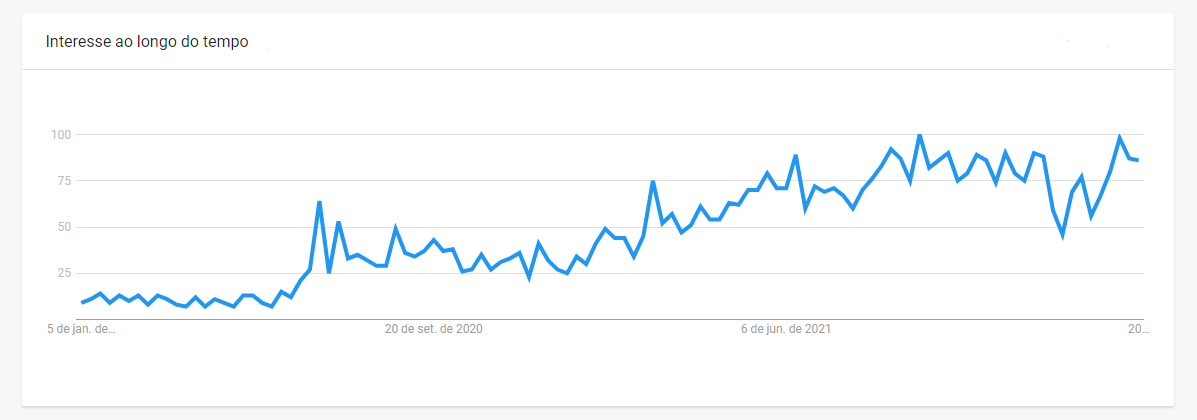
When it comes to Brazil, there is a lot to be done, however, since July 2020, it was possible to realize a change (Figure 1), a significant acceleration in the search for ESG investments.
Figure 1: Search for the term ESG on Google Brazil (Jan/2020 – Feb/2022). Source: Google Trends.
ESG in Mining
In 2019, Brazilian Mining Institute (IBRAM) and mineral sector representatives met to enable mining industry change, and discuss topics related to sustainability and the environment.
After wide debate, Brazil Mining ESG agenda was created, and the document sets forth action pillars to be adopted by mining companies, to improve their indicators.
Mining ESG agenda foresees improving indicators in 12 areas, as follows:
Operating safety;
Dams and tailing disposal structures;
Labor health and safety;
Environmental impact mitigation;
Territory local and future development;
Relationship with communities;
Communication and reputation;
Diversity and inclusion;
Innovation;
Water;
Power;
Waste management;
According to IBRAM, Mining is the first sector that releases a wide ESG agenda, and it is a very solid evidence of the commitments the sector has with new postures the world is demanding.
Actions and results achieved so far by mining ESG agenda shall be presented by Exposibram 2022.
Mineral sector ESG initiatives
Amid the need for changes, mineral sector companies have developed projects that comply with ESG pillars.
Know some mineral sector ESG initiatives:
Ferbasa: since 1975, it relies on José Carvalho Foundation to care for people. Leader in ferro-alloy production, the company has six schools in four municipalities, benefiting more than 3,500 students;
Mineração Caraíba: it develops programs designed to small farmer productivity, fostering education and professional qualification, and access to drinkable water;
Yamana Gold: it sponsors Yamana Social and Environmental Development Institute, developed a composting plant in partnership with Recicla Jacobina cooperative;
Atlantic Nickel: it preservers 750 hectares of Mata Atlântica and keeps a plant nursery that has produced more than 56 thousand replanting seed stocks;
Vanádio de Maracás: it provides equipment and inputs to Active Women project, benefiting 110 women with homemade soap workshops, and free dressmaking course;
Core Case – a company that supports and complies with ESG pillars
Since its establishment, Core Case carries with it ESG pillars. The company was established with the goal of producing cases to store boring cores in 100% recycled plastic. This target has been achieve, and within 10 years, Core Case has become a reference in Brazil. Check a few figures:
Apart from sustainable cases for boring cores, Core Case performs actions that enable developing projects linked to corporate governance, environmental and social sustainability. See some company projects and initiatives:
ENVIRONMENT
– Products manufactured with 100% recycled and recyclable raw material;
– Core Case Collection products with production low environmental impact;
– Zero Garbage Certification.
SOCIAL
– Campaigns with always present social engagement of other local institutions, for better action usage;
– Good Coats. Incentive to exchange used product for a new one with discount;
– Clean Beach Project; Introduction to local community of each region to collect garbage and environmental education.
GOVERNANCE
– Commitment with every stakeholder (suppliers, customers, community, etc.);
– Product use manuals for better user ergonomics;
– Production (ISO 9001) and operating procedure standardization;
– Transparency, legality and fiscal responsibility in every business field.
Support to projects, companies and initiatives which essence is ESG pillars.
If you want to learn more on Core Case action, contact us.
Brazilian Mining leadership in ESG practice implementation can enable significantly visibility increase and sector acceptance that, despite being relevant, it is still widely criticized by society.